
Thailand signs new plant health protocol for China-bound fresh durian
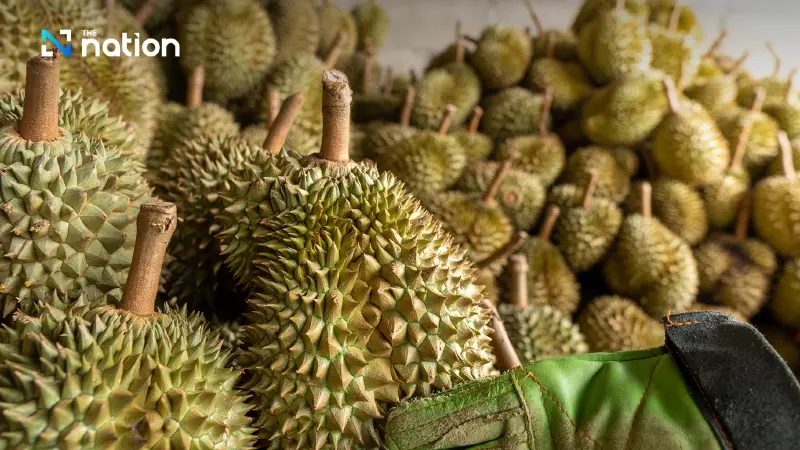


In the first nine months of 2026, Thai durian exports to China exceeded the total for all of 2025. The agreement aims to speed up customs clearance.
- Thailand and China have signed a new protocol establishing updated phytosanitary (plant health) requirements for fresh durian exports.
- The agreement aims to clarify rules, manage quarantine pests, and streamline customs clearance, reducing the risk of shipments being suspended at Chinese borders.
- A key feature of the protocol is enhanced traceability throughout the supply chain to ensure compliance with China's safety standards and build consumer confidence.
- This protocol is crucial for securing trade with China, which is Thailand's largest export market, accounting for over 97% of its fresh durian export value.
Nantapong Chiralerspong, director-general of the Trade Policy and Strategy Office (TPSO), said Chinese Premier Li Qiang visited Thailand from November 13 to 15, 2026.
The visit aimed to strengthen bilateral ties and promote cooperation in areas including security, the economy, trade and investment.
The two countries signed and exchanged eight cooperation documents.
One agreement of particular importance to Thai agriculture and exports is the Protocol on the Phytosanitary Requirements for Export of Fresh Durians from Thailand to China.
It sets out plant health guidelines and procedures for shipping Thai durian to the Chinese market.
Thailand’s Ministry of Agriculture and Cooperatives and the General Administration of Customs of the People’s Republic of China (GACC) worked together on the new protocol, which will replace the previous one.
The protocol aims to clarify the requirements, bring them into line with current trading conditions and set out a systematic approach to managing quarantine pests.
These measures are intended to reassure China, facilitate customs clearance and reduce the risk of Thai durian imports being suspended at Chinese border checkpoints.

In 2025, Thailand exported 979,145 tonnes of fresh durian worth US$3.8269 billion.
Shipments to its largest market totalled 952,627 tonnes and were worth US$3.7222 billion, or 97% of the total value of Thailand’s fresh durian exports.
Reported growth was 1.7%.
In the first nine months of 2026, Thailand exported 1,235,453 tonnes of fresh durian worth US$4.6939 billion.
Of that total, 1,212,514 tonnes worth US$4.6246 billion went to China.
A figure of 30.4% was also reported for the period.
Exports to China over those nine months exceeded the total for all of 2025 because demand for durian had risen there.
The export figures are in line with a forecast in a report from the Department of International Trade Promotion.
China’s durian imports are expected to approach 2 million tonnes in 2026, reflecting the continued popularity of Thai durian despite competition from Vietnam.
Fresh durian imported into China must meet its quality standards and be traceable.
Cadmium contamination has caused quality problems for Thai durian and affected confidence in exports to China.
The protocol can help build confidence among Chinese consumers.
The protocol will help clarify how Thailand’s fresh durian production system works.
It will allow the fruit to be traced back through the supply chain to check compliance with China’s safety standards at each stage.
This will help reduce the risk of consignments being held at Chinese customs, ease the problems such holds cause and speed up clearance.
Thailand already has a system called Durian Trace for tracking its durian exports.
Consumers can use it to check where the fruit came from, which safety standards apply and how well it was transported.
The TPSO also set out policy recommendations to improve the sector’s long-term competitiveness.
It said growers and businesses should follow announcements on the full protocol and its effective date and study the requirements in detail.
They should prepare to register under Good Agricultural Practices (GAP) standards or check the status of their orchard registrations to ensure traceability.
For packing houses and exporters, the recommendations cover preparing for registration, checking compliance with Good Manufacturing Practices (GMP) and ensuring that documents and labels match.
These businesses should upgrade their traceability systems and link records from orchards, packing houses and border checkpoints.
The office also recommended expanding into new markets to reduce reliance on a single market and provide a sustainable income for growers.
