
Oil retreats after nearing $120 as Trump eyes Hormuz control
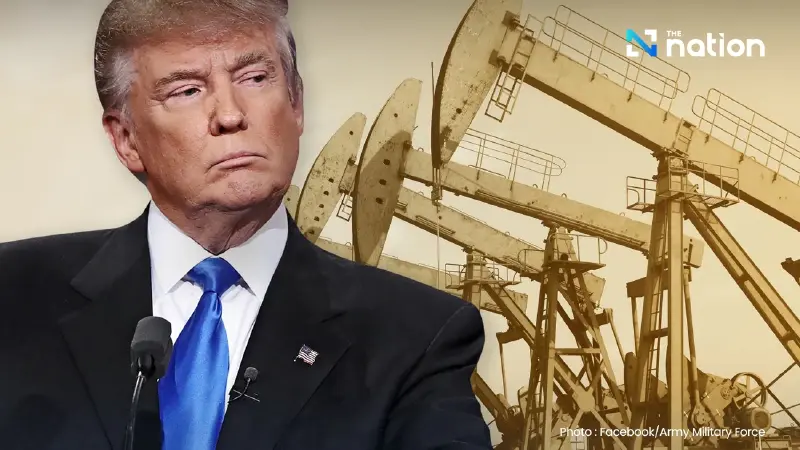


Oil prices fell after nearing $120 a barrel as Donald Trump signalled the US may control the Strait of Hormuz and consider easing Russian oil sanctions
Global oil prices declined in after-hours trading on Monday after briefly approaching US$120 a barrel, following remarks by President Donald Trump that the United States was considering taking control of the Strait of Hormuz, the most important chokepoint for the global crude oil market.

US crude fell 6.19% to US$85.27 a barrel at 3.37pm Eastern Time, while Brent crude, the global benchmark, dropped 4.6% to US$88.43 a barrel.
Trump told CBS News in a telephone interview that ships were still able to pass through the strait, adding that the United States was considering taking control of the area. He also suggested that the war could end soon.
Three sources familiar with the matter told Reuters that Trump was also considering easing sanctions on Russian oil in an effort to cool crude prices in global markets. Earlier, West Texas Intermediate (WTI) crude futures had closed up 4.26% at US$94.77 a barrel.
Oil prices had surged to as high as US$119.48 overnight after Gulf Arab producers reduced production because vessels were unable to pass through the Strait of Hormuz amid threats from Iran.
Matt Smith, an oil market analyst at energy consultancy Kpler, said only a handful of commercial vessels were still sailing through the strait.
Brent crude, the global benchmark, had earlier jumped 6.76% to close at US$98.96 a barrel after touching an intraday high of US$119.50. It marked the first time oil prices had exceeded US$100 a barrel since Russia’s invasion of Ukraine in 2022.
Sources told CNBC that energy ministers from the Group of Seven (G7) were set to hold a virtual meeting on Tuesday morning to discuss the possibility of a coordinated release of oil from strategic reserves. Any decision would likely come after the meeting.
At the same time, G7 finance ministers held a teleconference on Monday to discuss the Iran war. In a joint statement, they said they stood ready to take necessary measures, including supporting global energy supply through actions such as releasing oil reserves.
The G7 comprises Canada, France, Germany, Italy, Japan, the United Kingdom and the United States. The disruption surrounding the Strait of Hormuz has triggered what analysts describe as one of the largest oil supply shocks in history.
Tuesday morning update (March 10, 2026)
Bloomberg reported that WTI for April delivery fell 6.0% to US$89.13 a barrel at 7.30am Singapore time.
Trading on the Nymex exchange was briefly halted by a circuit breaker within the first two minutes of Tuesday’s session due to extreme volatility.
Brent crude for May delivery had closed up 6.8% at US$98.96 a barrel on Monday after reaching an intraday peak of US$119.50.
