
NB.1.8.1 now Thailand’s dominant Covid variant as officials track Singapore surge
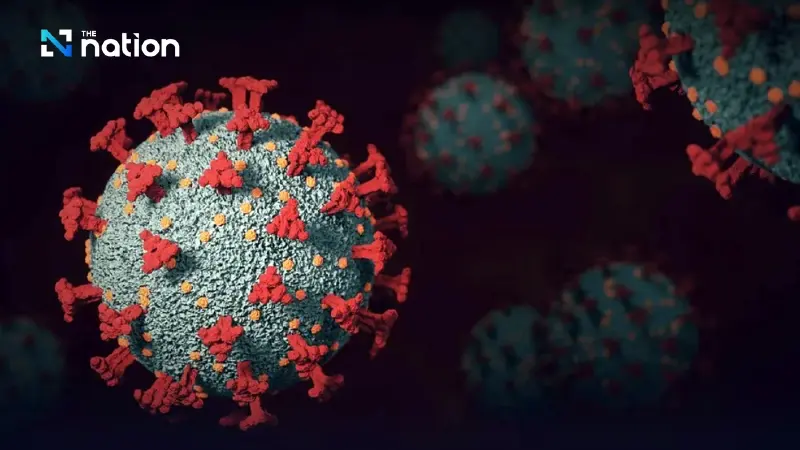


Thailand’s Department of Disease Control says the NB.1.8.1 Covid-19 variant now accounts for 50.95% of detected samples in the country, while officials monitor a sharp rise in cases in Singapore.
Thailand has found that the NB.1.8.1 Covid-19 variant has become the country’s dominant strain, accounting for 50.95% of detected SARS-CoV-2 samples, the Department of Disease Control said.
DDC director-general Dr Montien Kanasawat said data from the Department of Medical Sciences’ Public Health Research Institute, covering January 1, 2025 to April 23, 2026, showed NB.1.8.1 was the main variant circulating in Thailand. It was followed by JN.1 at 24.97% and XEC at 9.14%.
Thailand cases rise but remain below five-year median
Thailand has recorded 3,642 cumulative Covid-19 cases and one death so far this year, according to disease surveillance data as of May 23.
Most patients were aged 30-35, followed by those aged 60 and above, and those aged 20-29.
The DDC said reported cases had increased over the past month but remained below the five-year median, suggesting that the situation is still within a seasonal pattern rather than a severe nationwide surge.
Variant spreads more easily, but no sign of greater severity
Dr Montien said NB.1.8.1 is a descendant of the JN.1 variant and has several additional mutations on the spike protein.
These mutations may make the virus easier to transmit and better able to evade immunity. However, he stressed that there is still no evidence that NB.1.8.1 causes more severe illness.

The DDC noted that Thailand saw higher Covid-19 case numbers and cluster outbreaks during April-June 2025, with NB.1.8.1 also identified as the main variant during that period.
Singapore surge raises regional alert
Thai health officials are also monitoring the situation in Singapore, where Covid-19 cases rose sharply in the week of May 10-16.
Singapore’s Communicable Diseases Agency said estimated cases increased to 12,700 from 8,000 the previous week. Average daily hospitalisations rose from 56 to 73, while ICU cases averaged one per day.
Singapore also reported NB.1.8.1 as the main circulating variant, accounting for more than half of locally sequenced cases. The agency said there was no indication that locally circulating variants were more transmissible or caused more severe disease than previous variants.
DDC urges basic precautions, especially for high-risk groups
DDC deputy director-general Dr Direk Khampaen said Covid-19 in Thailand is now regarded as an endemic or seasonal communicable disease.
Although disease severity and transmission trends have declined, he said the public should continue basic prevention measures, especially to protect vulnerable groups.
People are advised to wash their hands frequently with soap and water or alcohol gel, cover their mouth and nose when coughing or sneezing, and avoid crowded areas where possible. Those who cannot avoid crowded places should wear a face mask.
The DDC also urged people to avoid close contact with anyone showing respiratory symptoms, especially around the “608” high-risk group, which includes elderly people and those with underlying diseases.
Anyone with fever, cough or a runny nose should take an ATK test and avoid close contact with others, particularly young children, elderly people and people with chronic illnesses. Those who test positive should seek medical advice promptly.
