
Fahid Island project to put wellness at centre of everyday life
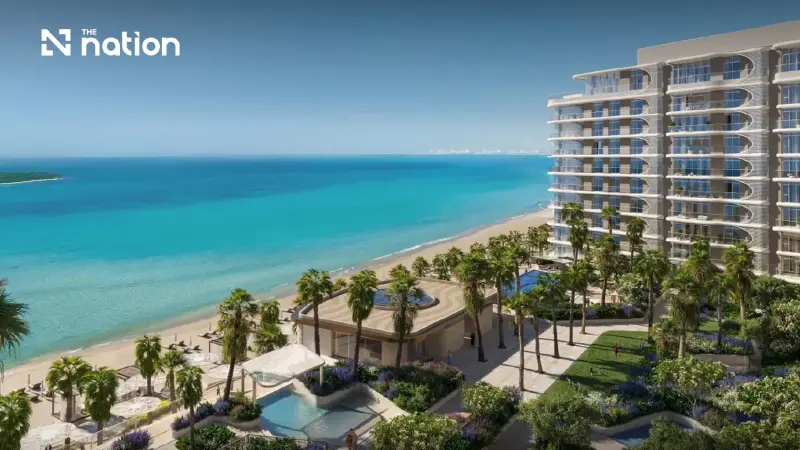


An AED40 billion Abu Dhabi project will create more than 6,000 coastal homes with infrastructure designed from scratch to support physical and mental wellbeing.
- Fahid Island is a new US$11 billion residential project in Abu Dhabi designed to integrate wellness into the everyday lives of its residents.
- The development is centered around "wellness architecture," featuring a 10-kilometre central park with exercise tracks and an extensive network of shaded, walkable paths.
- It is the first island in the world to receive the highest 3-Star Fitwel rating, a global certification for health-focused community design.
- The project's infrastructure, including over 6,000 homes, a school, and amenities, is being built from scratch with the primary goal of optimizing residents' physical and mental health.
As people pay increasing attention to their health and wellbeing, it is no surprise that the wellness tourism industry is growing too.
More striking, however, is the latest project on a small island in the Persian Gulf, which is turning self-care from a “temporary break” into a sustainable “everyday way of life”.
The project, called Fahid Island, is in Abu Dhabi, United Arab Emirates, and is scheduled to launch in full in 2029.
Its main feature is the development of more than 6,000 residential units in a coastal community, with the developer designing entirely new infrastructure from scratch to optimise residents’ physical and mental health.
The AED40 billion project, about US$11 billion, is being driven by Aldar Development, an Abu Dhabi government-owned property developer.
The company says all infrastructure, services and amenities are aimed at creating a genuine “sanctuary” for health-conscious people.
Emma McCreery Breen, senior vice-president at Aldar Development, said the team approached every decision, whether related to design or commercial considerations, primarily through a wellbeing lens.
Fahid Island occupies a prime location between Yas Island, an entertainment hub, and Saadiyat Island, a cultural centre.
At the heart of the project is “wellness architecture”, or the design of spaces to promote physical, emotional and cognitive wellbeing.
Numerous studies have reached the same conclusion that the surrounding environment has a major effect on health.
A recent study from MIT in the United States, released earlier this month, similarly found that living in a walkable neighbourhood with leafy green spaces can markedly improve physical and mental health.
It cited good urban planning as requiring well-connected routes, comprehensive amenities and enough public parks to meet residents’ needs.
Fahid Island’s developers are putting the idea into practice by planning Berm Park, a 10-kilometre park running through the centre of the development.
It is intended as a “green corridor for health and exercise”, complete with running tracks and three cycle routes.
The park will also provide visual screening for greater privacy and absorb noise for the beach and mangrove areas on either side.
Along 11 kilometres of coastline, the project will create three residential clusters across 2.7 million square metres, ranging from condominiums to ultra-luxury villas.
Apartment prices on Aldar’s website start at AED1.9 million, about THB18 million, and rise to AED7.6 million, about THB72 million, for premium homes.
Residents will have access to a full range of amenities, from a shopping district and beach club to a watersports centre, all connected by a 15-kilometre looped pedestrian route.
The Aldar Development senior vice-president added that more than 70% of the walkways would be shaded, supporting the developer’s goal of enabling people to walk around the entire island.
“Many people still misunderstand wellness. They think that simply doing yoga means they are looking after their health, but in reality that may not always be what people need to feel good every day,” said Emma McCreery Breen, senior vice-president at Aldar Development.
The walkable design will allow pupils at the new King’s College School Wimbledon campus, which is due to open on the island in September 2028, to walk to school safely.
Breen said the school would be the first educational institution in the world to secure Fitwel certification, a global health-focused building assessment system jointly developed by the US Centres for Disease Control and Prevention (CDC) and the US General Services Administration (GSA).
The standard scores new buildings according to their direct impact on users’ health.
Fahid Island has also made history as the world’s first island to receive a Fitwel 3-Star rating, the highest level.
The assessment considers factors ranging from encouraging physical activity and offering healthy food options to supporting mental health and wellbeing, and reducing illness and absenteeism.
“Fahid Island is proving to the world that health can be built into community development plans from the very first step, creating places that are not only beautiful but also help people enjoy a good quality of life and thrive from generation to generation.”
For Breen, the achievement confirms that the project is not an exercise in “wellness washing”, riding the health trend to create a marketing image without delivering tangible benefits.
“Many people think that simply adding a gym or spa to a building makes it ‘wellness’. It really does not. The key is to design an environment that makes it easier for people to make healthy choices in daily life... It is about allowing everyone to be the best version of themselves, whatever that may mean for each person.”
