
Tests confirm liver fluke infection in four Maha Sarakham students
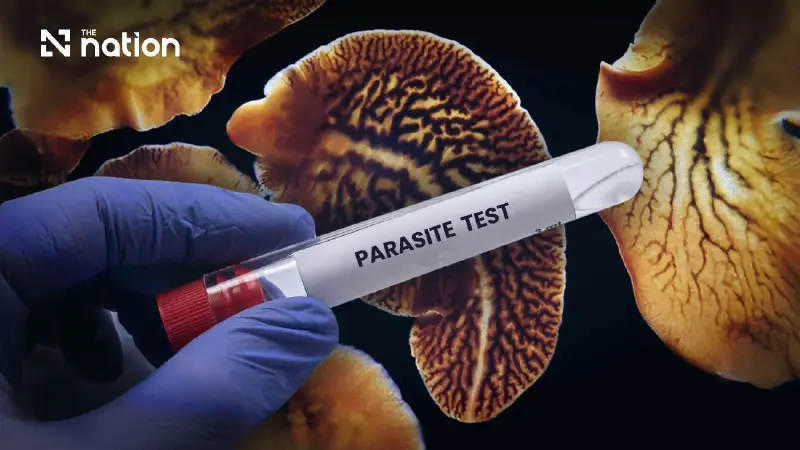


Laboratory testing has confirmed liver fluke infections in four students at Rajabhat Maha Sarakham University, despite preliminary urine screening producing 451 positive results
Thailand’s Department of Disease Control worked with local health agencies to conduct active case-finding after urine tests suggested that a large number of students in Maha Sarakham province might have contracted the parasite.
Stool samples were subsequently sent for confirmation using recognised laboratory methods.
Four infections confirmed after 451 urine results
Dr Wichan Boonkitikorn, director of the Division of Epidemiology, reported the findings on Wednesday (July 15).

A total of 2,200 students underwent preliminary screening with OV-ATK urine-test kits, producing 451 positive results.
The Division of Epidemiology then worked with the Division of General Communicable Diseases and the Office of Disease Prevention and Control Region 7 in Khon Kaen to collect stool samples for laboratory confirmation.
Samples were obtained from 309 students. Testing using the modified Kato-Katz technique and the formalin-ethyl acetate concentration technique, or FECT, confirmed four liver fluke infections.
The tests also detected other parasites among the students: four cases of minute intestinal flukes, five tapeworm infections, two threadworm infections and one whipworm infection.
Treatment requires a positive stool test
The Disease Control Department has established procedures and standards for prescribing deworming medication.
Under its guidelines, patients will receive treatment only when stool testing confirms an infection.
The department will also work with the Department of Medical Sciences to review the technical guidance governing the use of urine-test kits, with the aim of improving the effectiveness of disease surveillance.
Infection rates decline but risk areas remain
Thailand’s overall liver fluke situation has continued to improve.
Among people aged 15 and older in high-risk areas, the infection rate found through stool testing declined from 16.27% in 2016 to 2.53% in 2025.
However, 20 northeastern provinces and parts of the upper North remain important surveillance areas.
In 2025, the department expanded active screening in high-risk communities and tested 240,220 people — 160.14% of its original target of 150,000.
A total of 6,074 people whose infections were confirmed were subsequently brought into treatment.
Liver fluke described as a ‘silent threat’
Dr Yongjua Loasirithaworn, director of the Division of General Communicable Diseases, described liver fluke infection as a “silent threat” because the parasite can remain inside the body for 20 to 30 years without causing symptoms in its early stages.

The larvae can be found in the flesh, beneath the scales and around the fins of certain freshwater fish.
When raw or undercooked infected fish is eaten, the larvae can develop into adult parasites and live in the bile ducts, causing chronic inflammation.
Infected people face a risk of developing bile-duct cancer that is estimated to be 5.5 to 6.4 times higher than among those without the infection.
Department urges people to eat cooked fish
The department advised people to eat thoroughly cooked food, particularly freshwater fish, and to avoid raw or partially cooked fish dishes.
Fermented fish should come from recognised production processes and should also be cooked before consumption.
People who regularly eat raw fish or live in high-risk areas should undergo screening as advised by medical personnel. Those with confirmed infections should complete treatment, attend follow-up appointments and avoid returning to risky eating habits.
The department also warned that lime juice, chilli, fermentation and alcoholic drinks cannot kill liver fluke larvae.
Cooking food thoroughly with heat is the only safe and effective method cited. Cutting boards and knives used for raw food should also be kept separate from those used for cooked food, while proper toilet use can help prevent parasite eggs from entering natural waterways.
