
CMU marks Thailand first with robotic living-donor liver surgery
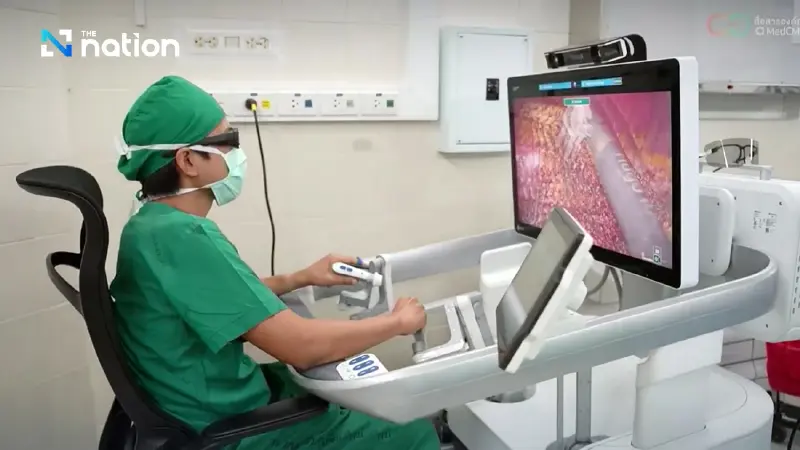


Chiang Mai University doctors perform Thailand’s first robotic-assisted living-donor liver transplant surgery using the Hugo™ system.
The Faculty of Medicine at Chiang Mai University has reported a major medical breakthrough after successfully using the Hugo™ robotic-assisted surgery system to remove the left lobe of the liver from two living donors for transplantation.
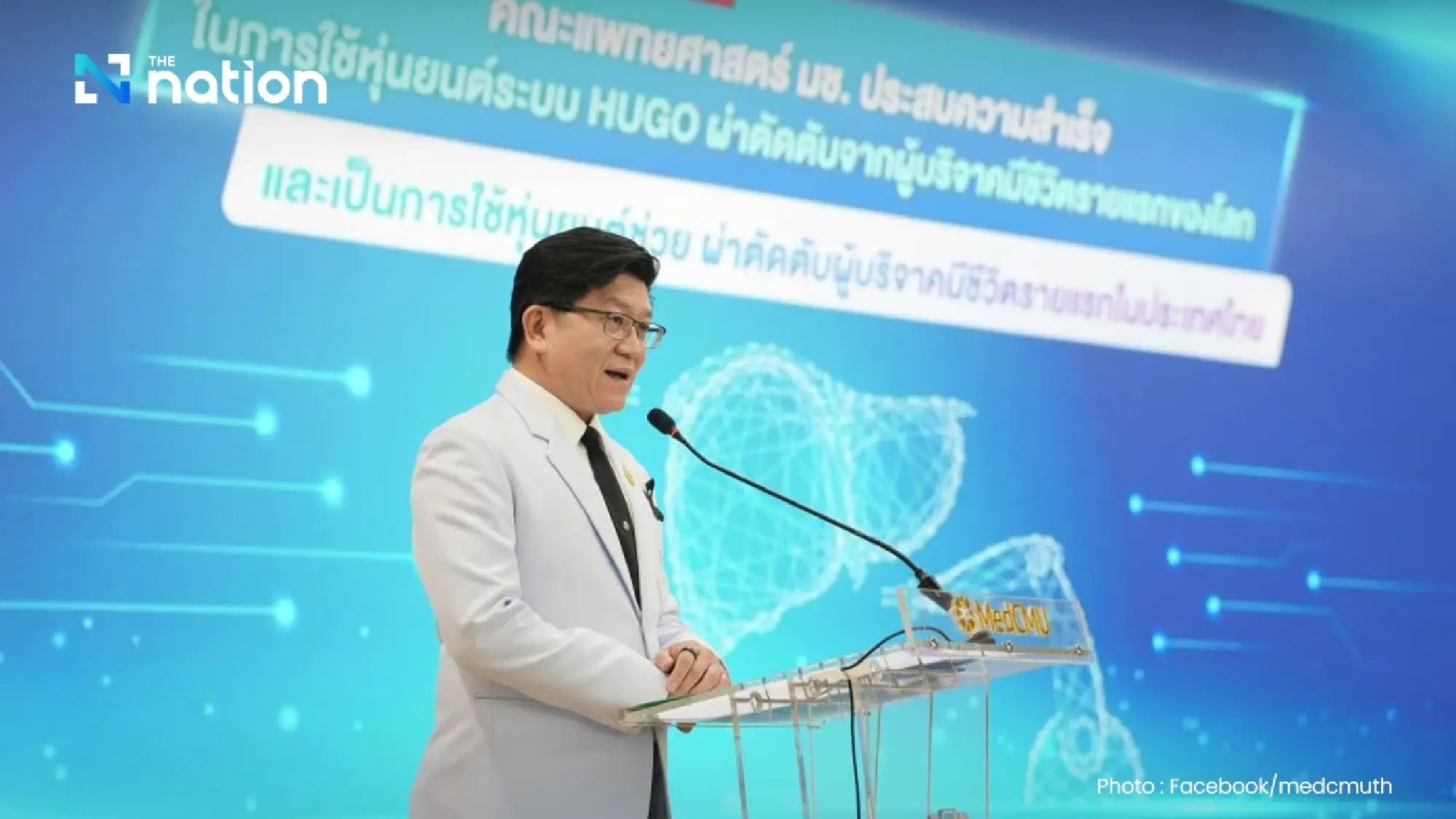
The procedures were performed on two donor-recipient pairs, making them the first successful cases of their kind in Thailand. The university also said the operations marked the world’s first use of the Hugo™ robotic system for liver surgery involving living donors.
Two successful donor cases
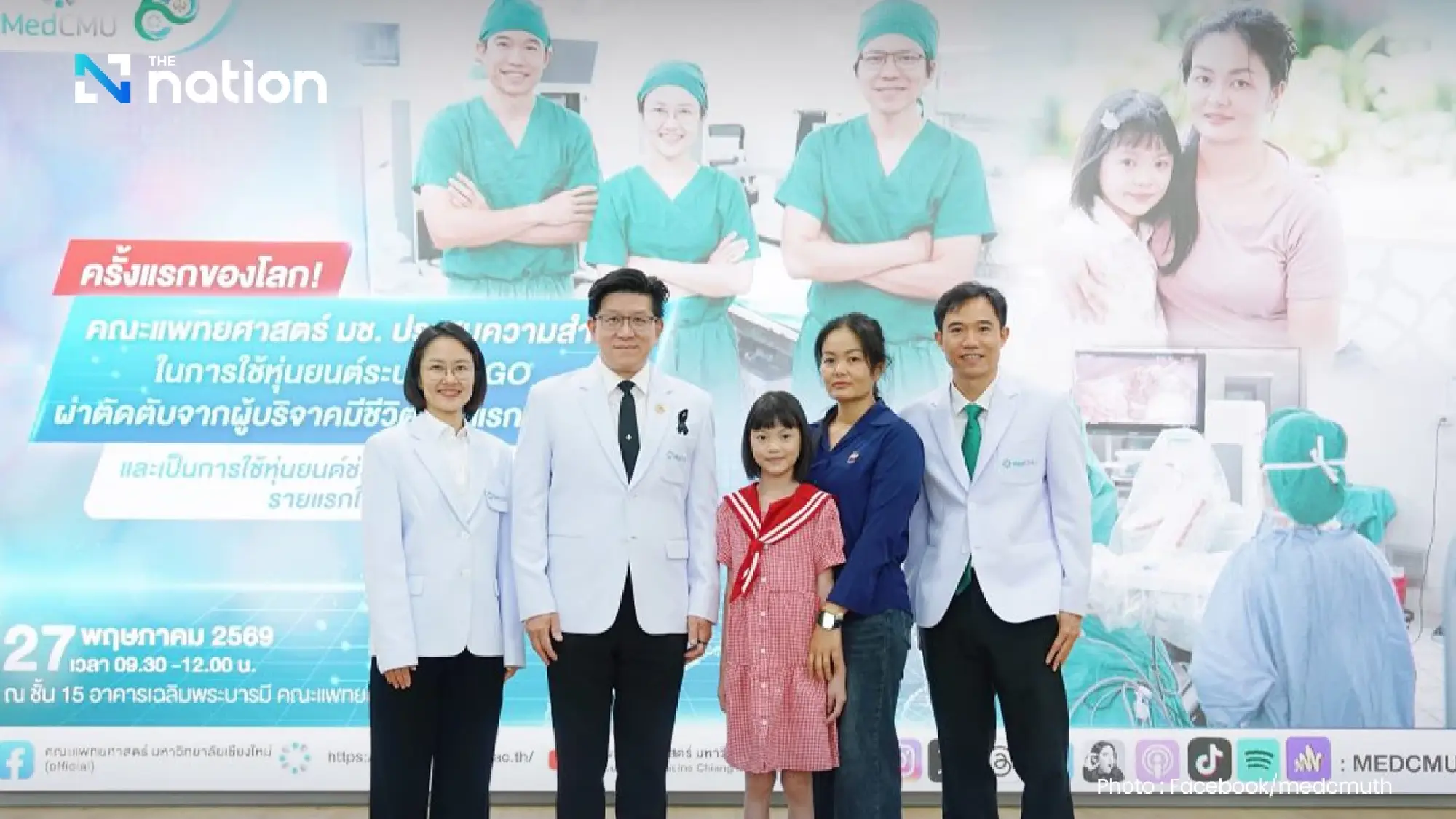
The surgical team carried out the procedures for two families.
In the first case, a 40-year-old mother donated part of her liver to her nine-year-old daughter, who had congenital biliary atresia.
In the second case, a 27-year-old daughter donated part of her liver to her 61-year-old father, who had cirrhosis and liver cancer.
Both operations were completed successfully, with the two donors reported to be safe and recovering well.
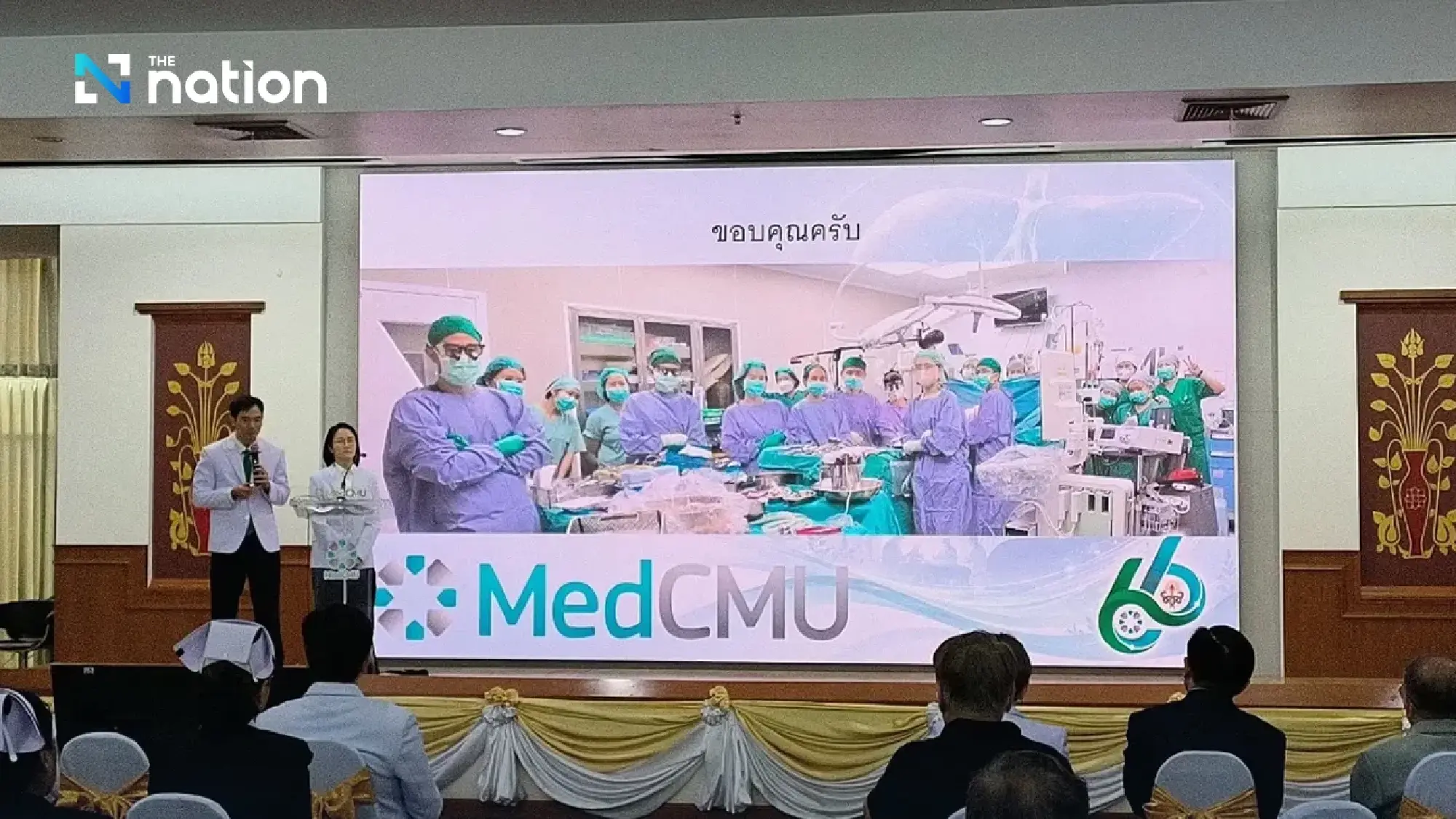

Robotic system improves precision
The Hugo™ robotic-assisted surgery system allows surgeons to see small structures around the liver hilum clearly through three-dimensional imaging.
Its robotic arms can rotate in all directions, similar to the movement of a human wrist, enabling surgeons to separate tissue and small blood vessels in confined areas with greater precision and control.
The technology also helps reduce surgical tremor, supporting safer procedures for living donors.

Left-lobe approach reduces impact on donors
The operations used the left lobe of the liver instead of the right lobe, which is more commonly used in living-donor liver transplantation because of its larger size.
Doctors said the left-lobe approach can help reduce the impact on donors, as it involves removing a smaller volume of liver tissue.
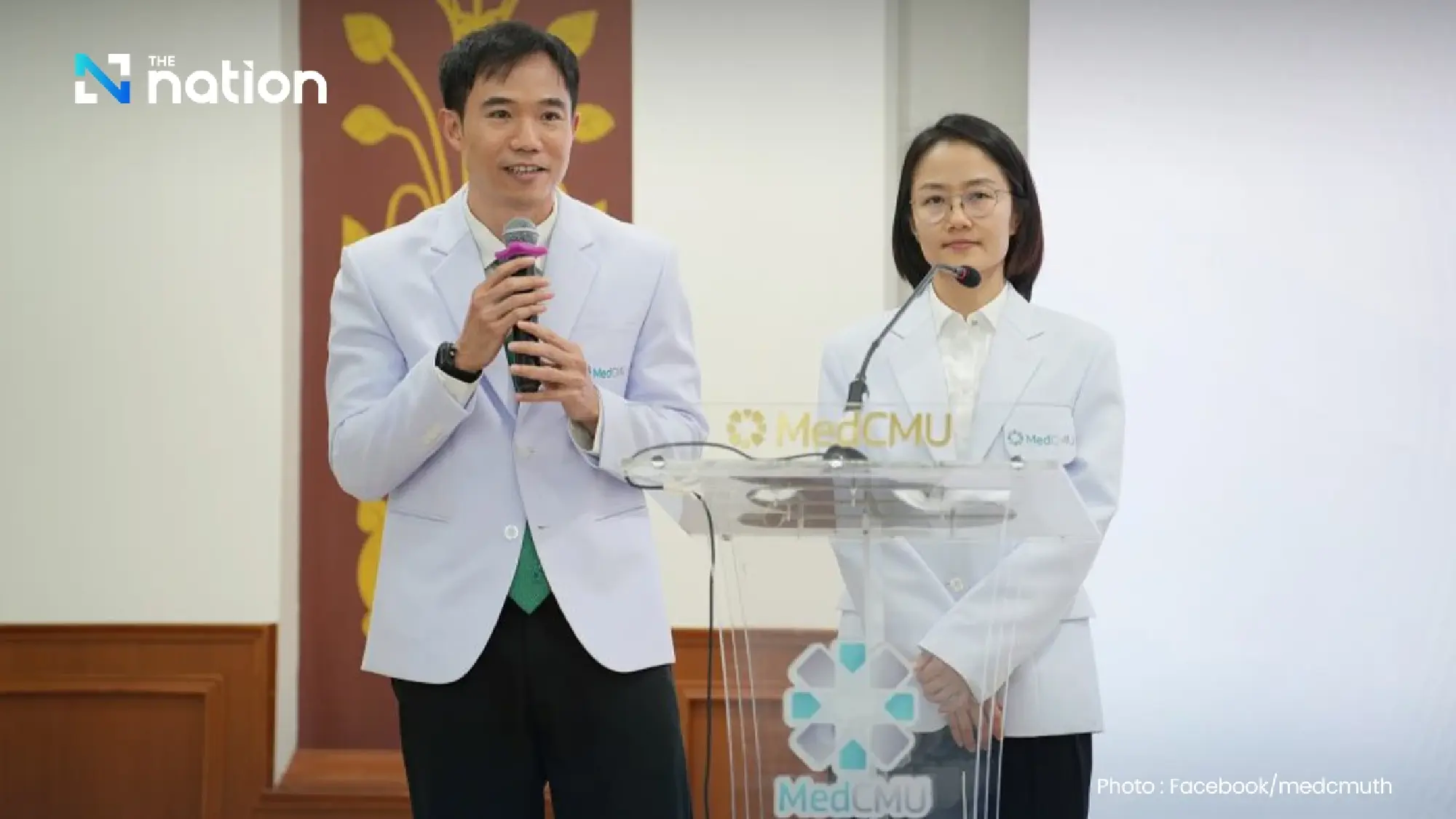
Assoc Prof Dr Worakitti Lapisatepun, deputy director of the Medical Excellence Centre and lecturer in the Hepato-Pancreato-Biliary Surgery Unit at the Faculty of Medicine, Chiang Mai University, said the approach can be safely used in donors who have undergone proper assessment.
He explained that preserving the right lobe while removing the left lobe helps reduce tissue loss and lessens the effect of reduced liver volume after surgery.

CMU highlights transplant expertise
Worakitti said Maharaj Nakorn Chiang Mai Hospital, under the Faculty of Medicine at Chiang Mai University, is the only medical institution in Thailand with the capability and continuous experience to perform adult living-donor liver transplantation.
He said the latest success was significant not only as Thailand’s first robotic-assisted living-donor liver transplant surgery, but also as the world’s first liver surgery using the Hugo™ robotic system in this context.

Robotic surgery reaches 100 cases
The Faculty of Medicine at Chiang Mai University has now completed 100 robotic-assisted surgeries across several specialties.
The largest share has been in urological surgery, accounting for 53.5% of cases, followed by hepato-pancreato-biliary surgery at 28.3% and colorectal surgery at 12.1%.
The system has also been used in paediatric surgery and gastrointestinal surgery.
The university said the achievement reflects a major step forward for liver-transplant surgery in Thailand and demonstrates the country’s growing medical capability on the international stage.
