Thailand moves to register locally developed gene and stem-cell therapies as ATMP drugs, with two Quick Win products targeted by 2027
Thailand is accelerating efforts to register locally developed cell therapies as drugs, with two "Quick Win" products, including one for cancer, targeted for approval by 2027.
A key focus is on CD19 CAR-T cell therapy, a treatment for lymphoma, which is being prioritized for registration and integration into the healthcare system.
The government has established a national committee and a three-phase roadmap (2026-2037) to build a complete ecosystem for the research, production, and use of these advanced therapies.
To speed up development, the Thai Food and Drug Administration (FDA) has created a "Fast Track" channel to streamline the approval process for these new medical products.
Thailand is accelerating efforts to bring locally developed gene and stem-cell therapies into the formal healthcare system, with two advanced therapy products being positioned as early “Quick Wins” for registration as drugs by 2027.
The move forms part of Thailand’s drive to develop Advanced Therapy Medicinal Products, or ATMPs, a new generation of medical products that includes gene therapy, cell therapy and tissue engineering.
The Ministry of Public Health sees ATMPs as a key mechanism under its MOPH Plus+ policy, which aims to modernise the Thai health system through medical innovation and advanced technology while supporting the country’s health economy.
The policy is designed to help people access treatment that is effective, safe and in line with international standards.
National ATMPs board meets for first time
Public Health Minister Pattana Promphat chaired the first meeting of the National Policy Committee on Advanced Therapy Medicinal Products, or the national ATMPs board.
After the meeting, Pattana said ATMPs represented future medical technology with the potential to treat complex diseases and conditions for which current treatment options remain limited.
He said the ministry was giving priority to building a complete medical innovation ecosystem through cooperation between state agencies, universities, research bodies and industry.
The aim is to support research, development, production and the practical use of Thai medical innovations within the country.
At its first meeting, the board reviewed Thailand’s current situation and progress in ATMP research and development.
It also agreed to lay the groundwork for national ATMPs development and approved the appointment of specialist subcommittees to drive policy, academic work and related infrastructure.
Dr Somruek Chungsaman, permanent secretary for public health, said the ministry would act as the regulator through several agencies.
Their responsibilities include:
Department of Medical Sciences — laboratory standards
Department of Health Service Support — healthcare facility standards
Department of Medical Services — research studies and service provision
Office of the Permanent Secretary for Public Health — delivery of services to patients treated at hospitals under the ministry
Food and Drug Administration — approval, licensing and support for research studies
Dr Somruek said the ministry was focusing on creating an ecosystem capable of turning phase 1 and phase 2 human-trial research into real healthcare services.
He added that the ministry had also coordinated with the Medical Council of Thailand to define the scope of services, with public safety as the top priority.
The goal, he said, was to ensure the policy could be driven forward in a concrete and practical way.
FDA sets up One Stop Service and fast track
Supattra Boonserm, secretary-general of the Food and Drug Administration, said the FDA was ready to support national ATMPs development through a regulatory framework that encourages innovation.
The FDA has established an ATMPs One Stop Service and a Fast Track channel for ATMP products to help speed up development and approval processes.
She said the process would still be carried out under international standards for safety and effectiveness.
The FDA is also pushing for a prototype standard production facility to support research units and technology developers.
The plan is aimed at shortening development time, reducing the cost of setting up production plants and helping research work move towards real-world use.
Supattra said Thailand had strong readiness in several areas, including capable medical personnel and researchers, specialist medical institutions and a patient base that could support clinical research effectively.
One commercial ATMP product expected by late 2027
Supattra said that once an ATMP product is registered with the FDA, it will be classified as a drug and can be used to treat patients.
If such products are later included as benefits under state health insurance funds, patients will be able to access them more easily because their treatment costs would be reduced.
Private hospitals would also be able to use registered products to treat patients, especially foreign patients seeking care in Thailand.
This could help support future medical services and strengthen the health economy through more international patients coming to Thailand for advanced treatment.
She said products used for patients in research settings were expected to receive approval and become more publicly available towards the end of 2026.
For full commercial development into finished drug products, she said Thailand could have around one product ready by late 2027.
Supattra added that ATMPs would not only expand public access to advanced and high-quality treatment, but also help develop the modern medical industry.
The sector could attract investment, clinical research and high-value production in line with Thailand’s health economy policy and its goal of becoming a regional medical innovation hub.
Chulalongkorn studies ATMPs innovation models
Assoc Prof Jiruth Sriratanaban, dean of the Faculty of Medicine at Chulalongkorn University and director of King Chulalongkorn Memorial Hospital under the Thai Red Cross Society, said Chulalongkorn had been studying several ATMPs innovation models.
These include:
Cell therapy
CAR-T cell therapy
Stem-cell development
Tissue engineering
Gene therapy
He said these technologies could in the future be developed into public healthcare services or expanded into production for domestic use and export.
One product has already drawn wide attention because the research has reached the stage of an innovation that is close to becoming a registered drug.
That product is CAR-T cell therapy, which has already been used in human research involving Thai patients.
CAR-T cell therapy has several types, but its main purpose is to support immunotherapy for cancer patients whose disease has not responded to surgery, radiotherapy or chemotherapy.
Several academic institutions are now conducting human research in this field, and CAR-T cell therapy is expected to become a product submitted for FDA registration in the near future.
Access for Thai patients and lower national costs
Assoc Prof Jiruth said these innovations could help reduce healthcare costs by replacing imported drugs and strengthening Thailand’s competitiveness in advanced medical treatment.
He said the development of ATMPs would also raise the capability of personnel involved in using advanced medical technologies.
Importantly, he said, the approach would help Thai people gain access to these treatments through hospital treatment and referral systems.
The ATMPs board is also working to connect the process from research to cost calculation, so that budget planning can be prepared for future inclusion in the health security system.
Two Thai-made products move towards drug registration
At the ATMPs board meeting, the FDA presented Thailand’s current ATMPs situation and progress.
For production facilities:
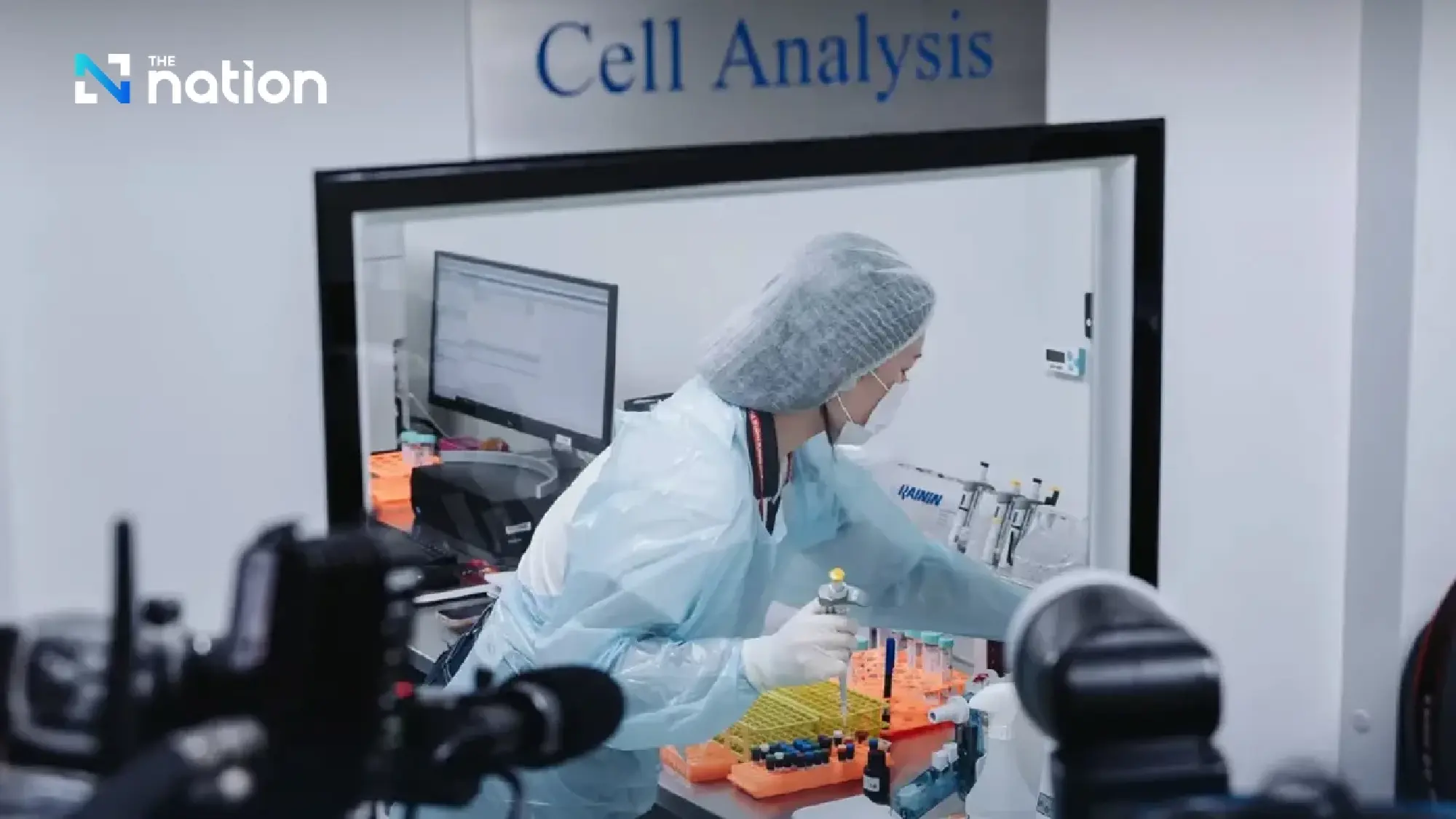
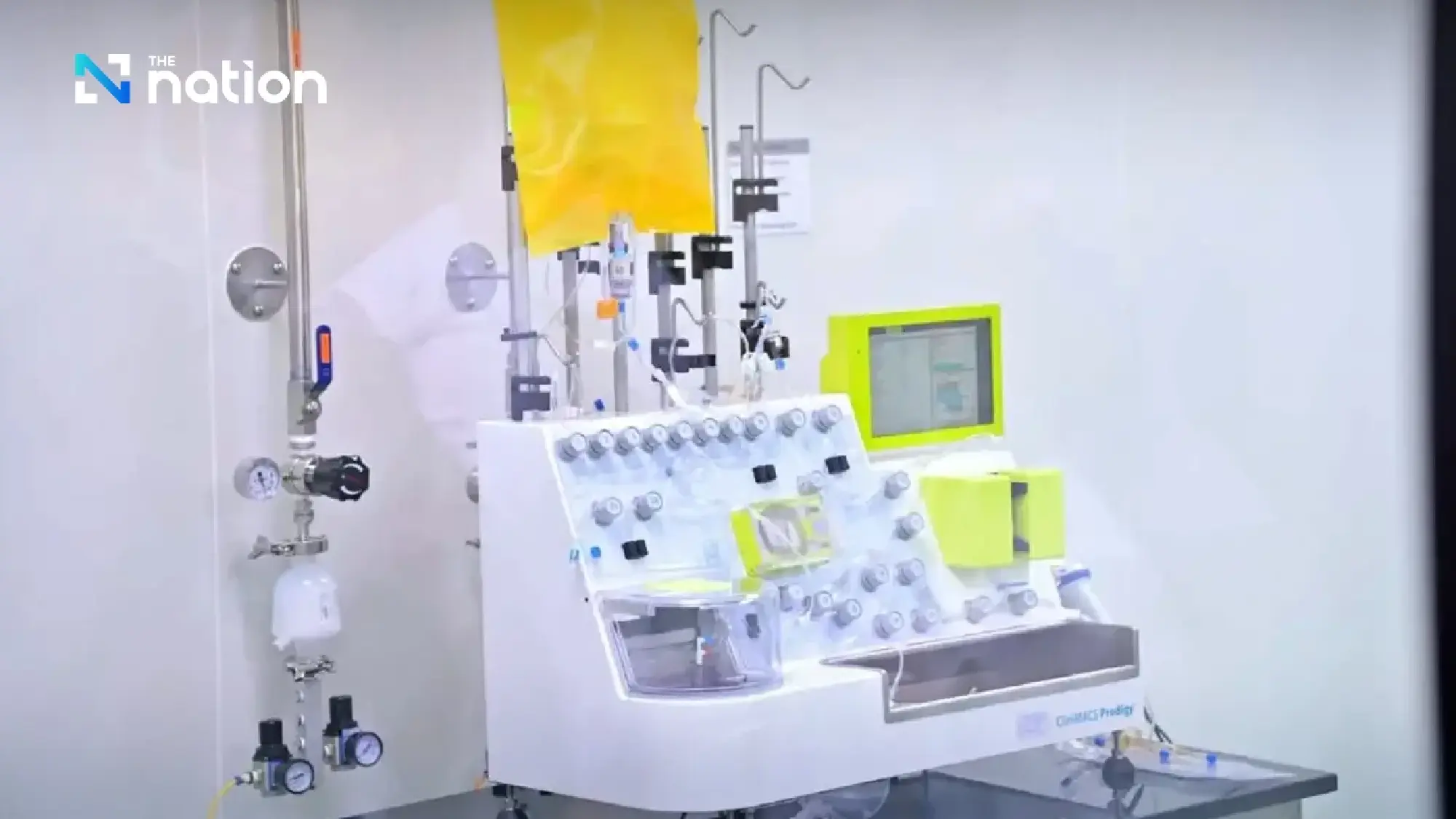
12 sites have received licences to manufacture modern medicines.
15 sites are undergoing consultation on production-facility blueprints.
For clinical-trial studies by product type:
6 projects involve gene therapy.
2 projects involve cell therapy.
1 project involves tissue engineering.
Of these projects:
6 have already been approved for research.
3 are under consideration.
5 involve domestic production.
4 involve imported products.
For patient access, Thailand currently has one registered ATMP product.
It is an imported gene therapy used to treat spinal muscular atrophy, or SMA, in children.
However, the treatment costs more than 20 million baht, meaning access remains limited.
The next major Quick Win projects for Thailand by 2027 are two products expected to help bring ATMPs into real healthcare services:
CD19 CAR-T Cells: This product is used to treat lymphoma and is being developed through cooperation between Mahidol University and Genepetick Bio Co Ltd.
MSC Therapy: This refers to mesenchymal stem-cell therapy, used to treat dry mouth after radiotherapy.
It is being developed through cooperation between the Ministry of Public Health and Chulalongkorn University.
Thailand’s three-phase ATMPs roadmap
The meeting also presented Thailand’s national ATMPs roadmap, divided into three phases.
Phase 1: Short term, 2026-2028
This phase focuses on laying the foundation for a connected ATMPs system.
Key work includes:
Establishing the national ATMPs policy committee
Creating a full end-to-end pathway
Building local raw-material capability
Developing personnel
Launching a reimbursement pilot project
Creating a real-world evidence platform
Expected outcomes include the approval of Quick Win products and an increase in GMP PIC/S-standard factories.
Phase 2: Medium term, 2028-2030
This phase aims to move from prototypes to real operational systems.
The focus will be on:
Strengthening domestic raw materials and supply chains
Preparing full GMP-ready infrastructure
Expanding clinical networks
Expected results include wider patient access and measurable economic outcomes.
Phase 3: Long term, 2031-2037
The final phase aims to turn ATMPs into a sustainable ecosystem and connect Thailand to the region as a medical innovation hub.
The focus will include:
Deepening manufacturing capability
Developing Thailand as a clinical-trial hub
Increasing self-reliance
Reducing dependence on imports
Positioning Thailand as an ASEAN production base for ATMPs