
Nan’s 700-year herb texts signal Thailand’s high-value health future
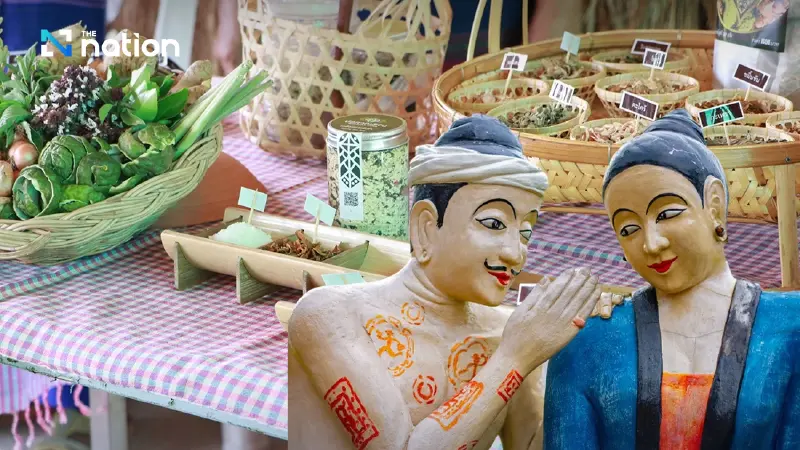


Ancient Nan manuscripts cast local ‘medicinal grasses’ as a bridge between traditional healing, modern research and higher-value products.
- Ancient 700-year-old medical manuscripts from Thailand's Nan province, known as "pab sa," have been found to contain a vast repository of knowledge on medicinal plants and their therapeutic uses.
- This traditional wisdom is being combined with modern scientific research to develop local herbs, such as Turmeric and Andrographis, into certified health products, supplements, and cosmetics.
- The initiative aims to transform this heritage into a high-value economic model, creating jobs, boosting local incomes, and positioning Thailand as a future exporter of natural health products.

When people speak of “Nan province”, many picture a small town in a mountain valley, surrounded by nature and a slow way of living.
Behind that calm, however, Nan also hides a precious treasury of knowledge, especially traditional medical knowledge passed down from ancestors from one generation to the next.
At its root are medicinal plants with outstanding therapeutic properties, known locally as “medicinal grasses”, which were compiled in ancient medical pab sa manuscripts more than 700 years old.
Decoding ‘medicinal grasses’: a new view from ancient pab sa manuscripts
The term “medicinal grasses” is a definition and coinage used by the people of ancient Nan to describe a wide range of plant species and herbaceous plants with properties for treating disease.
The key evidence confirming the expertise of the Nan people in traditional medicine is the “700-year-old ancient medical text”, written in the Dhamma Lanna script on khoi-paper books, known in the North as “pab sa”.
Within the pages of the ancient pab sa manuscripts, plant names were recorded in detail, along with harvesting methods for each season, medicine-preparation processes and herbal formulas for treating various illnesses.
These records clearly indicate that, since the ancestors’ time, the Nan people’s way of life included mechanisms for observing, analysing, testing in practice and passing down knowledge proven over several centuries.

A roll call of local herbs: from folk wisdom to modern research
Although the 700-year-old text gathered too many medicinal plants to list in full, several herbs now stand out and are being developed further into notable health products, including:
Turmeric is a Thai kitchen herb with medicinal properties beyond its everyday image.
Its key compounds are noted for strong antioxidant and anti-inflammatory effects, so it is widely used to ease digestive symptoms such as bloating and flatulence, and also to help relieve pain from arthritis.
Andrographis, a sharply bitter herb, has become something of a modern-day hero.
It is known for supporting the respiratory system, easing cold symptoms and sore throats, and reducing coughs, as extracts in the herb have effects that inhibit the growth of pathogens.
Bacopa monnieri is a small plant with considerable power in supporting the brain and memory, a form of wisdom passed down over many years.
Modern scientific research has also confirmed that prommi extract helps improve nervous-system function, strengthen concentration and help the body relax from stress.

Lup-lip may not be a familiar name among urban readers, but it is an important medicinal plant in Nan’s folk remedies.
It is often used to relieve respiratory symptoms such as asthma and coughs.
It also has properties used for treating some skin diseases, leading researchers to develop it as an ingredient in modern skincare products.
Greater plantain, or ya en yuet, is a herb whose Thai name directly points to its properties.
Ancient people used it for “stretching muscles and tendons”, easing muscle and tendon aches.
It was also used as a remedy for internal bruising, to promote urination and to help wounds heal faster.
Derris scandens, or thao wan priang, is another medicinal plant famous for treating body aches, especially by reducing inflammation in muscles and joints.
It therefore naturally meets the needs of patients suffering pain from knee osteoarthritis.
A city of wisdom reviving ancient texts as a high-value economic model
The discovery and decoding of the secrets of “medicinal grasses” from Nan’s 700-year-old pab sa manuscripts shows that this small province has more to offer than high mountains and temples.
It is also a repository of traditional medical wisdom and an important national resource.
This heritage has not been frozen in time, but is now connecting stories from the past with the present world in a fitting way.
At present, the development of medicinal grasses no longer stops at boiling medicine to treat illness within communities.
It is expanding into processing as dietary supplements, modern medicines certified to international standards and leading cosmetics containing pure natural extracts.
Raising the value of medicinal grasses through contemporary science and innovation in this way will not only help protect ancestral heritage from disappearing.
It is also an important tool for creating jobs, building livelihoods and distributing income sustainably back to local farmers, while holding the potential to become high-value export goods for Thailand in the future.
If relevant agencies work together to push ahead and continuously integrate medical science with traditional wisdom, “Nan” will, in the near future, be more than just a destination where people come to relax.
It could elevate itself into an international “centre of learning and development for health products from natural plants”, bringing genuine economic prosperity alongside health security for people.

