
Thai FDA assures medicines, supplies adequate, fast-tracks imports
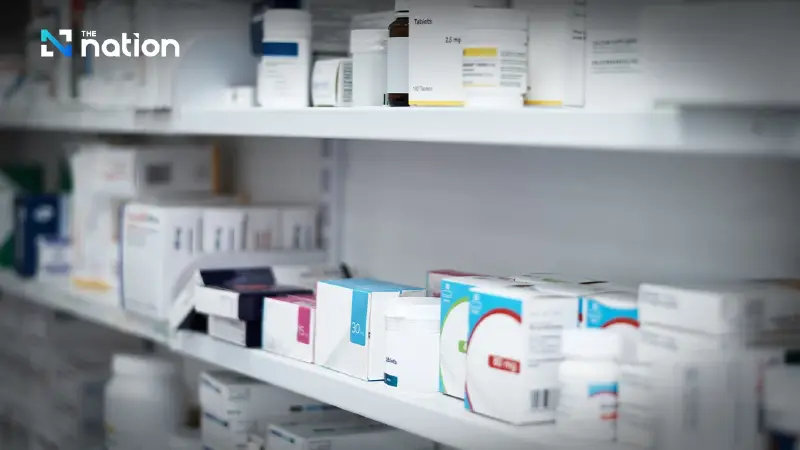


Officials are monitoring 84 critical items, while producers and importers have filed more than 6,000 fast-track requests to ease supply risks.
- Thailand's Food and Drug Administration (FDA) has assured the public that there are no current shortages of medicines or medical supplies, with stock levels remaining above warning thresholds.
- To prevent future shortages and ease supply chain impacts from the Middle East war, the FDA has implemented a "Fast Track" channel to expedite the import and clearance of essential health products.
- An Emergency Operations Centre is actively monitoring a watch list of 84 essential items to manage the national inventory and prevent hoarding.
- Despite current supply adequacy, officials acknowledge that rising costs for transport and raw materials may lead to future price adjustments for some medical products.
The Ministry of Public Health (MOPH) has set up an Emergency Operations Centre (EOC) working group to prepare for the impact of the Middle East war on medicines and medical supplies.
The Food and Drug Administration (FDA) is overseeing reserve groups for medicines and medical supplies, and monitoring and watching the national inventory situation through a watch list covering 84 items, including life-saving medicines, high-volume medicines and other essential medicines, among both manufacturers, importers and users, including public hospitals under all authorities and private hospitals.
More than 6,000 fast-track requests filed
The FDA has issued measures to facilitate operators and ease the impact on access to essential health products by opening an expedited, or Fast Track, channel.
The channel reduces documentation and processing time for operators of health products, medicines, food, narcotic substances, herbal products, medical devices, cosmetics and hazardous substances seeking to change raw-material and packaging sources, and facilitates clearance of imported goods on the watch list.

From April to May 2026, operators submitted 6,600 applications for clearance of imported goods on the watch list at food and drug checkpoints, and about 85 applications for amendments and changes, comprising:
- Medicines: 10 applications, including requests for leniency to use existing labels on boxes containing blister packs, and to add storage locations for dialysis solution.
- Medical devices: 45 applications, such as requests to add raw-material sources for syringe production and needle production, and to change gallon container sizes for dialysis solution.
- Food: 10 applications, covering containers and labelling, because of a shortage of solvent.
- Narcotic substances: 20 applications, involving changes to raw-material production sites and changes to packaging.
No shortage of medicines and supplies, FDA says
“The situation in Thailand regarding raw materials, packaging, and finished products for medicines, medical supplies and health products is not yet a cause for concern, and there are no shortages, because the fighting has begun to ease and has not widened. Operators have also started to adjust and find new raw material sources. Although higher costs remain a problem, there will certainly be no shortages of goods,” Pharmacist Supattra Boonserm, secretary-general of the FDA, said.

The FDA has monitoring systems for both operators and users, covering stock levels and measures to prevent hoarding.
Medicines are divided by risk level, and overall medicine levels are currently still above the yellow warning line.
Some hospitals have dispensed smaller quantities of medicines to patients or required more frequent repeat dispensing, but this is a risk-prevention measure by individual healthcare facilities and is not in any way a sign of a medicine shortage.
Price rises may be sought in future
As for medicine price adjustments, Supattra said associations of medicine manufacturers and importers were compiling real cost data, including direct costs from raw materials and indirect costs from transport.
The FDA, as secretary to the committee that sets median medicine prices, will submit the information to the committee for consideration.
The committee meets every month and already adjusts prices item by item to reflect actual costs.
During the war period so far, some prices have already been adjusted for necessary medicines where there were reasonable grounds.
Associations related to medicine, medical supplies and medical devices businesses are now discussing cases in which they may need to request price increases in future.
Instructions have also been issued to food and drug checkpoints to facilitate faster inspection and release of goods so that medical supplies can enter the system quickly for the benefit of the public, under proper safety and effectiveness standards.
In addition, a notification is being prepared to reduce application costs in some health product categories that carry high fees and are necessary, such as modern medicines, to reduce the impact on domestic producers, after this had previously been done for herbal medicines.
Concern over polyolefin feedstocks this July
Jarudech Kunadilok, executive director of M.E. Meditek Co., Ltd., and chief adviser and committee member of the Medical Device Manufacturers Industry Club at the Federation of Thai Industries, said medical device manufacturers and operators were currently coping with a crisis in transport and upstream raw-material costs.
Thailand exports medical devices but still has a very high proportion of imports.
Sea freight and transport costs have now risen immediately by 40%, and in some cases, where delivery must be expedited, costs have jumped to three times normal levels.
“What is worrying now is polyolefin feedstock used to produce plastic pellets and various polymers for almost every kind of medical device industry, from syringes to intravenous lines. Plastic pellet prices have already risen by 50%, and as the oil war shows no sign of stopping, prices are expected to keep rising. Most recently, a policy by a key trading partner, such as China, to limit exports of chemical feedstocks to only 20–30% of normal order volumes will inevitably affect production costs. I therefore confirm that this July will certainly become more critical,” Jarudech said.
Calls to accelerate the medical device industry development plan
Jarudech added that the government must step in to support the domestic medical device industry concretely by expediting consideration of the action plan for medical device industry development, first to promote the use of Thai-made medical devices.
Importantly, the state must shift its role to that of a supporter.
It should also improve government procurement regulations and support tax measures for private healthcare facilities to encourage the use of domestically produced medical devices.
The Ministry of Public Health, in particular, must urgently prepare a roadmap and feedback channels to listen to problems over product shortages at the operational level, and make the FDA certification or registration process faster.
Report stock shortages immediately
For the medical service sector, which is mainly the user side for medicines and medical supplies, Dr Somruek Chungsaman, permanent secretary for public health, has most recently issued instructions on the management of medicines, medical supplies and medical materials.
Although the situation can currently be managed and no shortage problem has been found, future trends are expected to show price increases as a result of the Middle East war and transport costs rising by about 10–15%.
Inventories must therefore be reported every three weeks, and health regions must check transport and oversee reporting so that it continues.
If shortages are found, whether in or outside the watch list, they must be reported immediately without waiting for the next reporting round.
