
Social media likened to cigarettes as countries move to restrict children’s access
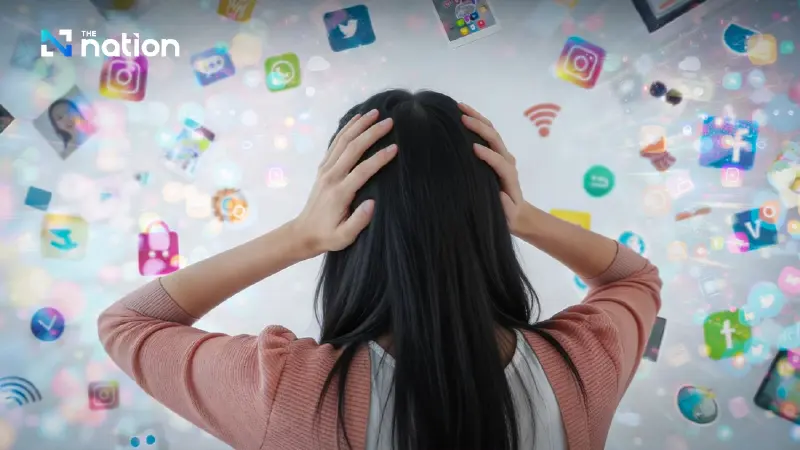


Health experts warn social media may harm children’s mental health, sleep and behaviour, as countries tighten controls on screen use.
As smartphones become almost an extension of the human body, one question is being raised increasingly in global health circles: is social media becoming a new kind of health threat?
Senior doctors and health experts in the United Kingdom have recently compared social media to “the new tobacco”. Not because it damages the lungs like smoking, but because it is rapidly affecting mental health, behaviour, sleep and the development of children and teenagers in ways society should not overlook.
Why are many health experts beginning to view screens as a public-health issue as serious as cigarettes once were? And how is the world trying to respond to these impacts?

When scrolling is compared with smoking
The statement came from the Academy of Medical Royal Colleges, an organisation representing 23 medical royal colleges and faculties in the United Kingdom and Ireland.
The academy said there were “few issues” in recent years on which medical professionals had agreed so strongly as the impact of technology and digital devices on the health of children and adolescents.
A survey of 132 doctors found that more than half saw children or teenagers who may have been affected by screen and digital-device use at least once a week, while more than one-third saw such cases several times a week.
The effects ranged from physical injuries to mental-health problems, including anxiety, depression, online bullying and psychological distress from exposure to violent content on the internet.

Cigarettes harm the body, while social media may harm mental health
Experts explain that cigarettes and social media cause harm in different ways. Cigarettes gradually damage physical health over the long term, including the heart, blood vessels and lungs. Social media, by contrast, can affect mental health almost immediately.
A child or teenager may need only a few seconds to see violent clips, experience cyberbullying, or face social pressure online. These experiences can affect mental health, confidence and self-worth.
Several studies have begun to find links between excessive social media use and anxiety, stress and lower quality of life, although scientists have not yet been able to conclude clearly that social media is the direct cause of all these problems.
However, studies published in JAMA Pediatrics and The Lancet Child & Adolescent Health have reported that teenagers who spend long periods on social media are more likely to face mental-health and sleep problems than those who use it less, particularly when they use it at night.

Why social media is hard to quit
One reason experts compare social media to cigarettes is its addictive mechanism.
Both cigarettes and social media platforms stimulate the brain’s reward system through dopamine, making users want to return again and again.
Notifications, endless scrolling feeds and algorithms designed to keep users on platforms for as long as possible have all been criticised as “addictive design”, or design deliberately intended to create addictive behaviour.
Some research has also found that heavy social media use may be linked to other risky behaviours.
One study found that teenagers who used social media for more than seven hours a day were around five times more likely to use cigarettes or e-cigarettes than those who used it less, although social and environmental factors also play a role.
Less sleep: an impact many are already facing
Another issue worrying experts is sleep quality among children and teenagers.
Scrolling on a phone before bed has become normal behaviour for many people. But blue light from screens, along with emotional stimulation from online content, can disrupt the body’s natural sleep cycle.
Sleep experts say many teenagers are losing total sleep time equivalent to one full night of sleep per week because of late-night phone use.
When sleep decreases, the effects often spread to concentration, learning, mood, memory and long-term mental health.
Many countries begin serious controls
These concerns have prompted several countries to introduce measures controlling children’s access to social media.
Australia has become the first country to announce a social media ban for children under 16, while several European countries are considering similar measures.
The United Kingdom is discussing additional steps, such as limiting usage time, setting night-time curfews for app use, and regulating features seen as designed to keep children continuously engaged.
Many schools have also begun adopting “phone-free school” policies to reduce distractions and improve concentration in the classroom.
The problem may not be “use”, but “how it is used”
Although social media is facing growing questions over its health impacts, some experts believe it would be too simplistic to treat the online world as entirely harmful.
For many teenagers, social media can be a space where they meet people who understand them, learn new things, find inspiration, or even feel less lonely in real life.
Many researchers therefore argue that the key question may not be whether people should or should not use social media, but how they use it.
In a world where technology has already become part of everyday life, the challenge may not be to cut people off from screens altogether. Instead, it may be to create a better balance between the online world, mental health, sleep and real life beyond the screen.
