
Global Front Against Social Media Hazards as Nations Move to Bar Children
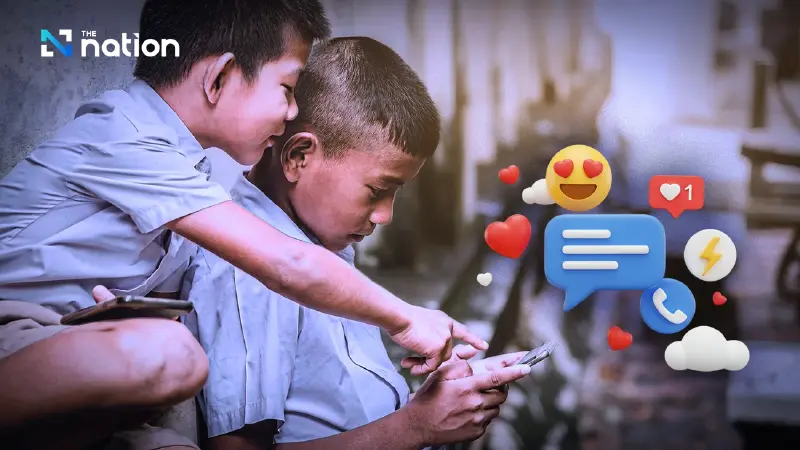


Governments worldwide fast-track landmark legislation to curb social media access for minors, citing a "global public health crisis" of digital addiction
- Governments worldwide are enacting legislation to restrict social media for minors, citing a "global public health crisis" linked to mental health and digital addiction.
- Australia has set a precedent by passing the first national ban on social media for children under 16, which will be enforced from December 2025 with significant fines for non-compliance.
- In Europe, nations like France, Spain, and Denmark are implementing similar age-based bans, while the EU is developing a Digital Fairness Act to combat "addictive by design" algorithms.
- The trend extends to Asia, with Malaysia planning a ban for under-16s, and the United States, where the Kids Online Safety Act (KOSA) is being debated.
Governments worldwide fast-track landmark legislation to curb social media access for minors, citing a "global public health crisis" of digital addiction.
Governments across the globe are accelerating a legislative crackdown on social media access for children and adolescents, aiming to safeguard mental health and curb the "predatory" influence of digital giants.
Australia has set a global precedent by becoming the first nation to pass a total social media ban for children under the age of 16. Scheduled to come into force on 10 December 2025, the legislation targets major platforms including TikTok, Meta (Facebook and Instagram), and Alphabet’s YouTube.
In one of the most aggressive moves against Big Tech to date, the law carries a maximum penalty of 49.5 million Australian dollars (£25.5 million) for non-compliant firms.
The tightening of regulations follows mounting alarm over the impact of digital platforms on the wellbeing of the young. Experts and policymakers increasingly view social media addiction and its associated safety risks as a burgeoning global public health crisis.
The European Response
The United Kingdom is currently exploring a similar path to Australia, considering age-gating measures and enhanced safety protocols for AI chatbots accessed by those under 16.
Across the Channel, the European Union is preparing a Digital Fairness Act to tackle "addictive by design" algorithms. The European Parliament has suggested a uniform age limit of 16 for social platforms and 13 for video-sharing and AI companion services.
Individual European nations are already taking unilateral action:
France and Denmark: Both are moving to ban children under 15 from online platforms, citing cyberbullying concerns.
Spain: Planning a ban for those under 16, backed by mandatory age-verification technology.
Norway and Italy: Norway intends to raise its age of consent from 13 to 15, while Italy now requires parental authorisation for anyone under 14 to create an account.

Asian and American Restrictions
In Asia, Malaysia is set to implement a ban for under-16s by 2026. Meanwhile, in India, government advisors have branded social media platforms as "predatory," prompting a push for stricter age controls.
In the United States, the Senate is championing the Kids Online Safety Act (KOSA). However, unlike the unified approach seen in Oceania, American efforts remain embroiled in a complex debate over constitutional free speech rights.
The Enforcement Challenge
Despite these sweeping legislative efforts, child protection advocates remain sceptical. While most platforms officially require users to be at least 13, data suggests these limits are easily bypassed.
Campaigners argue that until robust, independent age-verification becomes the industry standard, millions of underage children will continue to slip through the digital net.
