
Thailand considers broader alcohol dispenser restrictions
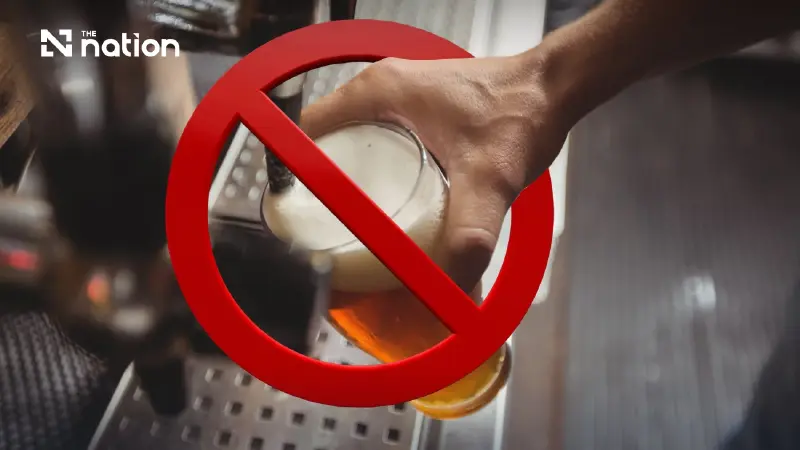


Public Health Minister Pattana Promphat says officials will refine a draft ban on self-service alcohol dispensers to cover more shop formats.
- Thailand's Alcoholic Beverage Control Committee is reviewing a proposal to expand restrictions on self-serve alcohol dispensers.
- The proposed changes aim to broaden the existing 2018 ban, which currently only applies to convenience stores, to cover more types of shops due to changing retail models.
- The review is driven by concerns that dispensers make alcohol too easily accessible and make it difficult to control consumption quantities, particularly near schools and communities.
- New criteria being considered for the expanded restrictions include store size and proximity to educational institutions.
Public Health Minister Pattana Promphat said Thailand’s Alcoholic Beverage Control Committee had ordered further study of a draft Prime Minister’s Office announcement after a meeting at the Public Health Ministry on June 29, 2026.
Pattana, who chairs the committee, said the draft concerns the methods or forms of alcohol sales using dispensing machines in convenience stores or nearby areas.
The existing rule has been in force since 2018, after some shops began offering dispensing equipment that allowed customers to serve themselves, raising concerns that alcohol could become too easily accessible, particularly near educational institutions or communities.
The committee discussed widening the definitions and categories of shops covered by the measure, as trading models have changed significantly since 2018.
Officials were assigned to review the legal wording and increasingly complex sales processes before bringing the matter back to the next meeting, while keeping the focus on controlling sales through alcohol dispensers.
“The review of alcohol dispenser sales will lead to a continued ban, but enforcement must be broadened to cover more types of shops, while still using convenience stores or other easy-access outlets as the main framework,” Pattana said.
The review will also cover store size, distance from educational institutions and the control of alcohol quantities.
Pattana said purchases in bottles or cans make the amount clear, while allowing buyers to dispense drinks themselves could make consumption control more difficult and more complicated.
The secretariat was instructed to work through the details and return the issue to the committee at its next meeting.
A separate announcement on alcohol advertising was not tabled at this meeting.
Pattana said the matter was large and highly sensitive, meaning the secretariat needed more time to consider it carefully.
Addressing claims that alcohol sales-hour restrictions had been quietly eased, Dr Montien Kanasawat, Director-General of the Department of Disease Control, said every step had followed the law.
He said an earlier Cabinet resolution had assigned the Alcoholic Beverage Control Committee, the Public Health Ministry, the Tourism and Sports Ministry and other relevant agencies to consider the impacts of easing measures seen as obstacles to tourism.
The Tourism and Sports Ministry later submitted the proposal to the meeting, and an announcement had been issued in early December allowing sales during previously prohibited periods for up to six months.
“Both positive and negative impacts were considered at the previous committee meeting. The Tourism and Sports Ministry presented the positive impact on tourism, while the Public Health Ministry reported that, from the same period between December 2024 and March 2025 and between December 2025 and March 2026, surveillance from 2pm to 8pm showed that the number of accidents had not increased. The announcement also went through a public consultation process, where more than 80 per cent agreed with the measure,” Montien said.
Under the existing Prime Minister’s Office announcement issued in 2018, convenience stores are prohibited from installing taps or alcohol dispensing equipment for customers to serve themselves.
Other shops and establishments that are not convenience stores can still use alcohol dispensers, including restaurants and dining establishments serving draught beer from craft beer taps or ordinary dispensers, licensed service and entertainment venues such as pubs, bars, clubs and cafés, and hotels covered by exemptions allowing them to serve alcohol through permitted facilities.
