
HPV Silent Threat: Experts Warn All Genders Facing Cancer Risk
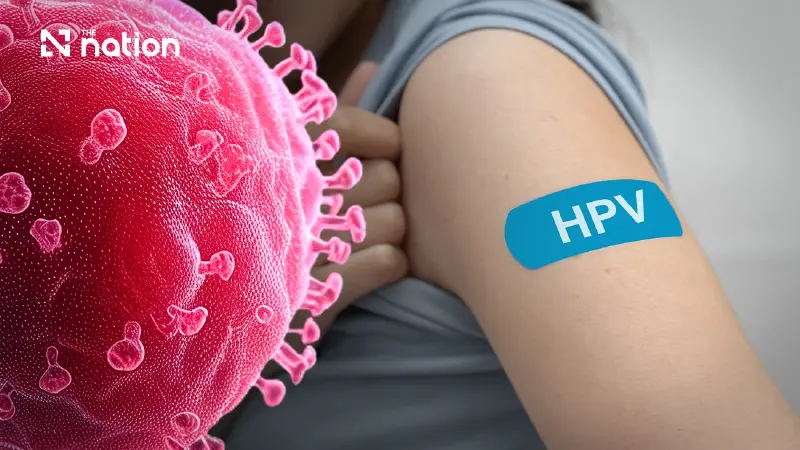


Thai Red Cross urges public awareness and regular screening as human papillomavirus claims over 4,500 female lives annually in Thailand
- Health officials warn that HPV poses a significant cancer risk to all genders, causing not only cervical cancer but also head and neck, anal, vaginal, and vulvar cancers.
- The virus is considered a "silent threat" because it can be contracted by both men and women and may lie dormant for decades without showing any symptoms.
- As there is no direct cure for an active infection, experts stress the importance of prevention, including the HPV vaccine which is approved and recommended for both males and females from age nine.
The Thai Red Cross urges public awareness and regular screening as human papillomavirus claims over 4,500 female lives annually in Thailand.
The Queen Saovabha Memorial Institute under the Thai Red Cross Society has launched a major public health campaign to raise awareness about human papillomavirus (HPV), warning that widespread misconceptions and social stigma are hindering life-saving prevention across Thailand.
The initiative comes as global health statistics highlight the severe toll of the virus. According to GLOBOCAN data, cervical cancer—primarily caused by HPV—remains the second most common cancer among Thai women, registering 8,662 new cases and 4,576 deaths annually.
Health officials emphasised that the threat extends beyond cervical cancer. HPV is a primary driver of several other malignancies affecting both men and women, including head and neck, anal, vaginal, and vulvar cancers, as well as genital warts.
Speaking at the launch, Prof. Dr Suttipong Wacharasindhu, director of the Queen Saovabha Memorial Institute, highlighted a critical gap between public awareness and actual understanding.
"Today, we must acknowledge that a majority of Thai society remains in a state of being 'familiar with, but not truly understanding' HPV," Prof. Dr Suttipong said. "Many view this issue as distant. In reality, someone somewhere in the world tests positive for HPV every minute. Both men and women have a chance of contracting HPV at some point during their lives, and the virus can lie dormant for decades without showing symptoms."

Cultural barriers continue to complicate public health efforts. Institute officials noted that embarrassment surrounding discussions of sexual health, fear of social judgement, and reluctance to undergo medical examinations frequently lead to delayed diagnoses when treatment options are less effective.
Dr Suda Punrin, head of Clinical Services and Research at the institute, dispelled common myths regarding transmission.
She clarified that HPV spreads through direct skin-to-skin contact during sexual activity—including oral sex—and can occur after a single encounter.
She dismissed persistent rumours regarding transmission from public restrooms as lacking medical evidence.
"There is currently no direct antiviral medication to eliminate an active HPV infection, making proactive prevention essential," Dr Suda explained.

Health authorities recommend a three-pronged approach to prevention:
Lifestyle Modifications: Practising safe sex and reducing exposure risks.
Vaccination: Administering the HPV vaccine, which is approved for both males and females from age nine upwards. Longitudinal studies spanning 20 years confirm that completing the recommended vaccine course provides robust, long-term immunity against five HPV-related cancers and genital warts.
Regular Screening: Utilising diagnostic tools to identify precancerous changes early.
To improve accessibility, Thai women aged 30 to 59—along with high-risk individuals aged 15 to 29—can access free cervical cancer screening via the HPV DNA Test once every five years under the National Health Security Office’s Universal Health Coverage scheme.
