
Sanofi set to make dengue vaccine


Play
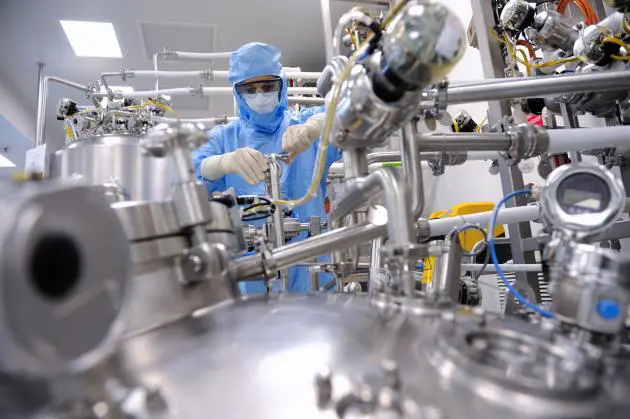
NOBODY KNOWS for sure whether the trials of a vaccine for dengue fever will bear fruit, or provide new hope to countries plagued by the virus. However, a factory is now ready to start producing the world's first such vaccine, with capacity to make more t
Sanofi Pasteur, the company that has developed the vaccine, is still waiting for the final results of Phase 3 clinical trials, which are being carried out in 10 countries – including Thailand. However, the world’s largest vaccine maker began preparations to start-up dengue-vaccine production well in advance with a 300-million euro (Bt12.2 billion) investment in 2009 to build the plant.
“If we hadn’t planned ahead, we might have had to wait another five to six years after conclusion of the clinical trials before we could complete the facility and the plant to produce the vaccine,” Guillaume Leroy, who leads Sanofi Pasteur’s dengue-vaccine team, said.
Located in Neuville-sur-Saone, France’s leading region for biotechnology, Sanofi Pasteur’s complex has a variety of buildings dealing with active ingredients, production and quality control. The plant is expected to produce more than 100 million commercial doses of dengue live-attenuated vaccine a year.
“We have not been thinking about a price for the vaccine yet as we are still waiting for a conclusion of the clinical trials,” said Leroy, adding that production of the vaccine would take two years, with the first dose expected to be launched by the end of 2015.
The dengue vaccine is now being studied in the last of the clinical trials. More than 40,000 personnel are involved in the trials, with the results of the study expected by the middle of next year.
The vaccine is combined with four different serotypes of the dengue virus. People living in countries where dengue fever is prevalent will receive the four-in-one vaccine with three injections. After the first dose is administered, the second dose is given six months later, followed by the final dose in another six months. Those considered most in need of the vaccination are two-year-old children, because of their vulnerability to the virus.
Dengue fever has been prevalent in the Southeast Asian region since World War II, according to Professor Duane Gubler of Duke-NUS Graduate Medical School Singapore, who heads the school’s programme on emerging infectious diseases. The Japanese occupation forces, he said, were responsible for deliberately spreading the disease throughout the region.
The first recognised pandemic of dengue fever occurred in the Philippines from 1953-1954, followed by a Thailand pandemic in 1956.
Because of the rapid growth of populations and the expansion of urban areas, the World Health Organisation estimates that the number of cases has increased drastically since 1970.
“At the beginning of the ’70s, travel by air was becoming more popular, and this is how the virus spread around the world,” said Gubler, adding that a lot of people holiday in tropical countries where dengue is active.
Citing a recent study, Gubler estimates that about 3.6 billion people around the world are at risk of contracting dengue fever. Of this number, the virus infects about 400 million people a year, and another 100 million develop dengue haemorrhagic symptoms after contracting the virus.
In Thailand, the Public Health Ministry estimates that more than 100,000 people are infected with dengue fever each year. As of last month, about 59,000 people had contracted the dengue virus and 68 had died. Last year there were 45,000-50,000 cases of Thais contracting the virus.
In an attempt to deal with Thailand’s dengue-fever problem, a team of researchers at Mahidol University led by Dr Sutee Yoksarn also developed a vaccine. However, because of a lack of funds or government support to build a plant, their ambitions to produce Thailand’s first dengue vaccine have not been met.
