
New focus on languages in regional student exchange programmes


Play
Cooperation among colleges is boosting career opportunities
The new focus on different languages, especially English and those of Asean countries, via cooperation between universities in the region has boosted the career potential and language skills of both students and teachers.
Vietnamese student Aun Ngok, who is studying computer business at Kumphawapi Industrial and Community Education College (KWICEC) in Udon Thani, said the facilities and infrastructure at the college were better than what is offered in Vietnam. She said she also studied some Thai and was now able to communicate with her Thai and Lao compatriots.
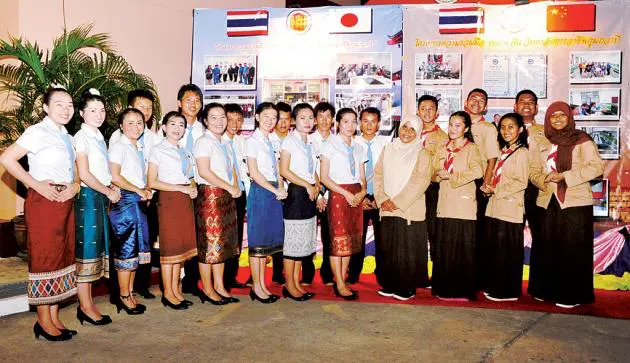
Aun Ngok is part of a new programme in which colleges from three countries have linked up. Under the programme, 10 students each from KWICEC, the Vientiane-Hanoi Vocational school in Laos and Vietnam’s Vinh University will be part of a 2-year information and communication technology study scheme.
All 30 students will spend their first semester in Thailand, second in Laos and the last semester in Vietnam before doing internships with industrial companies in Thailand. This group will also have to study the basics of all three languages. Colleges will cover tuition fees and housing.
Another four vocational colleges in the Northeast, such as Sakon Nakhon Technical College and Ubon Ratchathani Vocational College, have also started a similar programme.
Nattapol Phoonprasit, a director at KWICEC, said implementing student-exchange programmes with Asean countries and offering scholarships had raised confidence among youngsters and parents in relation to vocational education.
He said many secondary school graduates have chosen to study in vocational colleges, because they can earn some cash while studying. Many students have also been given the opportunity to work as interns in Japan and earn money to help their family back home.
The college also offers Japanese and Chinese language classes to help boost students’ potential in the job market.
Danu Winardi, an Indonesian teacher on computer-engineering and networking, has been exchanging teaching techniques with Thai counterparts in a month-long Thai-Indonesian exchange programme for teachers and students. This programme is supported by the Southeast Asian Ministers of Education Organisation.
Winardi said this has given him valuable experience on teaching techniques and Thai culture. He explained that having to teach subjects in English as part of the exchange programme also helped boost the language skills of both teachers and students.
Pandu Puzky Puttra Prurama, an Indonesian exchange student, said his Thai counterparts were very friendly.
“Even though they don’t understand what I say, they keep smiling and trying to communicate,” he said, adding that Thai schools required a lot more discipline and the environment was better than in Indonesia.
Students from Laotian colleges such as Vientiane Province Technical College are also part of the exchange programme, which is also supported by Thailand International Cooperation Development Agency. Their participation should help create future leaders in Laos and provide workers in fields facing shortages such as mechanical, electrical and information technology fields in neighbouring countries.
At present there are some 50 Laotian students in 13 vocational colleges studying under this exchange programme.
Meanwhile, the Office of the Vocational Education Commission (Ovec) is also making plans to help improve English-language skills of teachers and students.
“Thai students are good workers, but they still lack language abilities, which will limit their career opportunities in the future,” Ovec secretary-general Chaiyaphruek Serirak said.
The commission will upgrade the Mini English Programme offered in 141 vocational schools to English Programme, which will help boost students’ English-language skills as they will be studying all technical subjects in English.
Tuition fees will not be increased.
