
WWF launches Thai campaign to save elephants
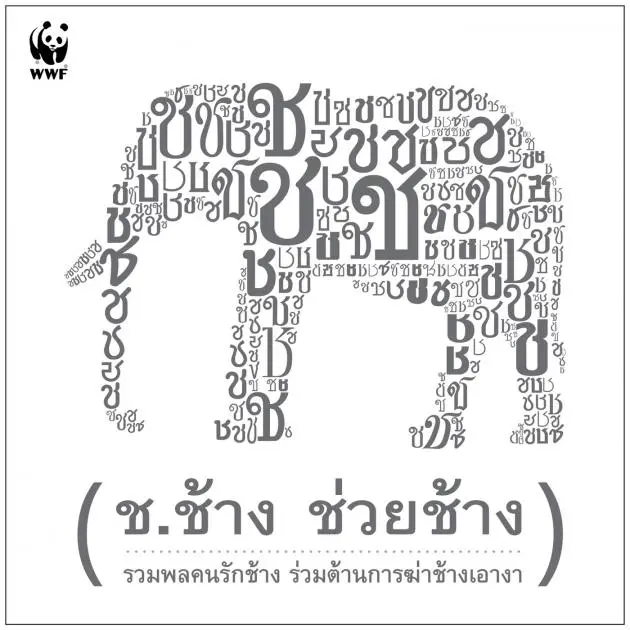


Several entertainment and media celebrities have joined the World Wide Fund for Nature (WWF)'s "Chor Chaang Saving Elephants" campaign against the trade in ivory by removing the Thai letter "chor chaang" from their names.
“Chaang” stands for elephant in Thai, and “chor chaang” is a common letter in the Thai alphabet.
While Thailand has an ancient affinity with elephants, it is also the world’s second-largest unregulated ivory market – after China. WWF estimates that more than 20,000 African elephants are slain every year for ivory and that Thailand is the end destination for much of this ivory.
“As long as there is demand for ivory, all elephants are at risk,” said Janpai Ongsiriwittaya, Wildlife Trade Campaign Manager for WWF-Thailand.
WWF is inviting all Thais to join the campaign by removing or hiding the “chor chaang” letter from their names, places, signboards, etc, then posting a photo of it on Facebook, Instagram and/or Twitter accounts with #ChorChaang #wwfthailand to show their support.
Nation TV, ThaiRath TV and their reporters have joined the campaign by removing the “chor chaang” letter from the names of their news anchors, TV show titles and on social media.
Celebrities such as Thapanee Eadsrichai, Noppatjak Attanon, Suthichai Yoon, Thepchai Yong; Abhisit Vejjajiva; Chalit Nakpawan; Kalamare Patcharasri, Manoch Puttal, Jiranan Pitpreecha, Chalermchatri Yukol and Messi J Chanathip have all joined the effort.
“Every thought and every effort matters when it comes to putting an end to this illicit trade. I encourage people to join this campaign and speak out against killing elephants, pledge to never buy, sell or use products made from ivory,” Janpai Ongsiriwittaya said.
Thailand has until Thursday to submit a progress report under the National Ivory Action Plan, which was submitted to CITES (the Convention on International Trade in Endangered Species of Wild Fauna and Flora) on September 30, 2014. It then has until March 31 to implement the action plan to reduce or eliminate ivory trade or risk sanctions that would hit trade in products from other CITES-listed species, such as orchids and crocodile skin, costing Thai industries over $297 million (Bt9.77 billion) in lost revenue annually, WWF said.
