
Small Karen community in Lamphun shuns trappings


Play
DESPITE demands for electricity and a 'developed' lifestyle by people around the world, a small 54-household community of Karen Pakarkeryor tribal people in Lamphun say they would opt for a simple and self-sufficient lifestyle anytime. The villagers in
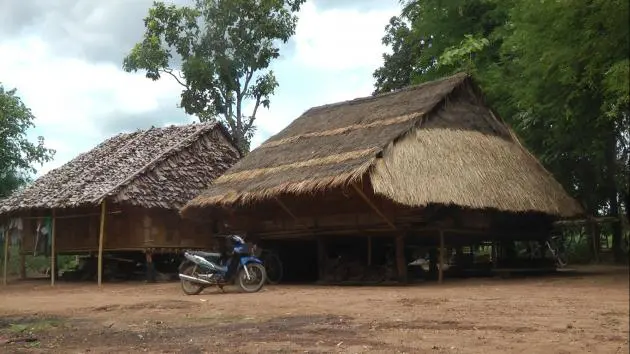
To preserve their traditional Karen lifestyle, the villagers make their own clothes, live in bamboo huts with grass-thatched roofs, get water from underground wells and have vegetarian meals. All residents adhere to a code of conduct, and can be exiled from the village if they violate the code.
The Nation recently visited the three-rai Ban Nam Bo Noi, located in Ban Sri Wiang Chai’s Huai Tom community in Tambon Na Sai.
The villagers make a living by growing corn or rice, weave traditional textiles or make baskets. Most grow corn for an animal feed company that collects produce once a year – when a family will earn Bt50,000 to Bt70,000 from selling corn. Income from weaving textiles or baskets yields Bt4,000-5,000 a month for these families.
Wimol Sukdaeng, president of the Huai Tom Community Tourism Group, said the villagers’ traditional lifestyle is based on their Buddhist faith, so they also refrain from eating meat but eat vegetables and fruit instead.
“Many times, state agencies have tried to talk to them about changing their lifestyle by introducing a power transformer installation but they have turned such offers down,” he said.
The Huai Tom community also set rules for orderly co-existence among community members, Wimol said. These include a ban on raising, killing or selling animals; a ban on alcoholic drinks being sold or distributed; a ban on holding parties or festivals with alcoholic drinks; a requirement for residents to remain peaceful and to refrain from disturbing neighbours; a requirement of love and fidelity in families; and the requirement that residents attend temple activities, practise Dharma and are not hostile toward the Buddhism faith.
Those who violated these rules will receive a warning from the village headman. After three “strikes”, if a person breaks these rules for a fourth time, he or she will be told to leave the community. The person’s home will also be dismantled so that the parts can be sold to fund the person’s new life in the outside world.
Huai Tom Community and this group established Ban Nam Bo Noi as a Karen cultural attraction to earn the villagers extra income from selling souvenirs such as baskets and traditional textiles to tourists, Wimol said. The group plans to set up a souvenir centre in the middle of the community so residents can bring products to sell to visitors, he said.
Karen villager Roupor Tharasuk, 76, said life there was good, with enough to eat and live moderately, so there was no struggle. “The upside of having no electricity is that we don’t have to pay for it. Here, we have everything we need – food, drinking water, clothes and shelter,” he said adding that they turned down the power grid because they wanted to maintain their ancestors’ way of life and traditions.
