
Surprise last chance for the critically endangered bird in Thailand


Play
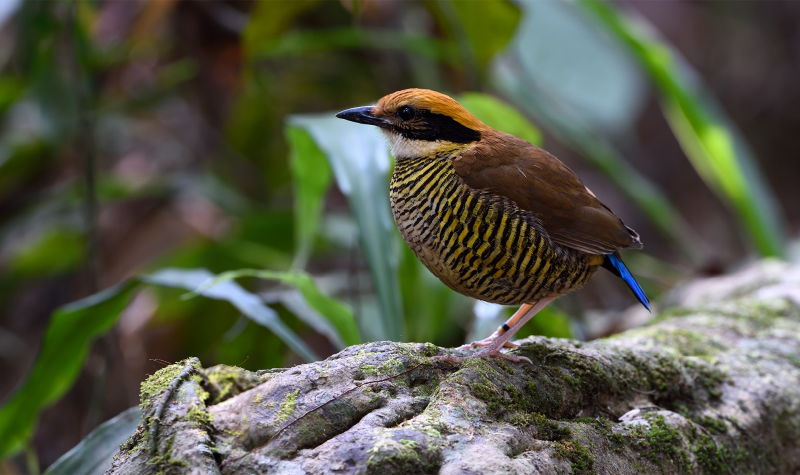
ONE LAST chance has unexpectedly emerged to rescue the critically endangered Gurney’s Pitta from extinction in Thailand, with the bird lovers’ community urging all stakeholders to come up with a solution for mating the final remaining couple in the Kingdo
A female bird has been found in Krabi for the first time since 2012, after the species was suspected of having gone extinct in Thailand.
Meanwhile, it was also revealed that three male birds have been raised in captivity at Klong Saeng Wildlife Research Centre in Surat Thani – news that sparked new hope of saving the population of a nearly extinct species.
Last Thursday, the Bird Conservation Society of Thailand (BCST) released a statement after first spotting the female Gurney’s Pitta in Krabi, demanding that the National Parks, Wildlife and Plant Conservation Department (DNP), academics and experts discuss an acceptable plan for all parties to preserve the species in Thailand.
Dr Boripat Siriaroonrat, president of the BCST, said the focus should be on finding the best solution to reproduce the Gurney’s Pitta population by utilising the ideas and specialities of all stakeholders – not just the DNP.
“We have had problems in preserving the Gurney’s Pitta population in the wild, as since 1986 there have been around 100 birds at Khaophra Bangkram Wildlife Sanctuary in Krabi, but in 2012 only one female bird had been found in the area,” Boripat said.
“We already have Gurney’s Pitta conservation plans, but we need to discuss them to reach a consensus, so we can really implement them,” he added.
Critically endangered in Thailand and listed as endangered in the IUCN (International Union for Conservation of Nature) Red List of Threatened Species, the Gurney’s Pitta is only found in Thailand in the lowland rainforest of Krabi.
The bird’s population has been in gradual decline over the past decades due to their natural habitat suffering serious encroachment and conversion into palm-oil and rubber plantations.
Kriangsak Sribuarod, head of Klong Saeng Wildlife Research Centre, who also studied the Gurney’s Pitta population-recovery plan, said he had raised three male birds at the research centre as part of the trial to breed the bird in captivity.
“We rescued three Gurney’s Pitta chicks from the wild several years ago with the intention of raising them and breeding them in a safe captive environment, but sadly all three of them were male,” he said.
“Finding a female Gurney’s Pitta again in Krabi is very good news for me, as it can be another chance for a couple to copulate to ensure the species’ survival [in Thailand],” he added.
However, Kriangsak declined to specify the DNP’s plan to recover the Gurney’s Pitta population, only stating that the department would hold a meeting to discuss the issue.
Kanit Khanikul, an independent bird watcher who found the female Gurney’s Pitta, said the bird was healthy and ready to mate.
“This bird is the same one that we found in 2012, when it courted with a Malayan banded pitta. There were no other male Gurney’s Pittas nearby at the time, so it had to mate with another species,” he said.
“Given the news that Klong Saeng Wildlife Research Centre has a male Gurney’s Pitta, this could be the final chance to bring the last couple together for breeding, because the female bird that I found was around eight years old and the male birds around seven years old, so their fertility is soon going to pass,” he explained.
“If we don’t act quickly, we may not have another opportunity, because the bird only mates in the breeding season. If we fail to do so, we’d have to wait until next year, but one or both of the birds could die before the next breeding season,” he warned.
