
Family, friends vow to retain the spirit of Banharn and his party: Nikorn


Play
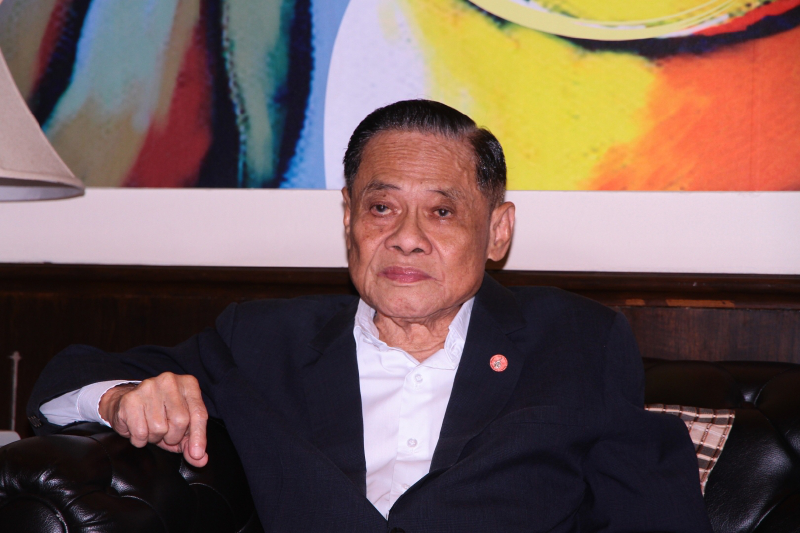
CHART THAI Pattana’s long-standing member Nikorn Chamnong gave a strong signal that the party would continue to exist, despite the loss of its patriarch Banharn Silpa-archa.
“If there is no more [Chart Thai Pattana], then it’s better that we just quit [politics],” Nikorn said on Tuesday.
He was delivering a public talk on “Thailand in the Post-Banharn Era: Politics, economy, clientelism in Suphan Buri and the future of the medium sized party”.
The late veteran politician’s children and followers, who had served the party since the Chart Thai era, vowed to continue to keep up the spirit of the party that Banharn had been shaping almost all his political life.
Since his demise last month, concerns have been looming that the party might go down with its patriarch because its foundation had been profoundly laid by the charisma of Banharn.
Nikorn emphasised the party had a stable foundation since the founding of the Chart Thai Party in the 1970s. It had its own soul and it would be carried on, he said.
“Chart Thai was dissolved in 2008 and its successor Chart Thai Pattana was founded to take its place. But the spirit remains the same,” he said. “Even the present name plate is placed above the old one. Chart Thai is the foundation, spiritually and literally.”
Tuesday’s public talk was hosted by the Political Science Faculty of Chulalongkorn University to commemorate the politician who passed away last month from an acute asthma attack.
Another speaker, Yoshinori Nishizaki, a political scientist who has spent a number of years studying the influence of Banharn and his contribution to his home province Suphan Buri, said it was unlikely Banharn’s children would abandon the party and join one of the two big parties – Democrat or Pheu Thai.
“Because then they would have to start again from scratch,” the scholar said.
As a result, the next election in Suphan Buri would be intense, too. There were more players fielded in the constituency, including the Pheu Thai Party, which has become very popular and successful, as it did in 2008, Nishizaki said.
The speakers also discussed Banharn’s path towards and during his political life.
Nishizaki highlighted that Banharn was a man of paradox. He was disliked by sophisticated Bangkokians, but very much adored by the local Supan Buri people.
He was born into a well-to-do Chinese descendant merchant family. But Banharn was also a self-made millionaire, earning a fortune from successful trade and construction.
His political career started off partly because he regularly made large donations to build hospitals and schools in his hometown. In the process, he got himself into the political elite network and subsequently entered politics through the Chart Thai Party.
As a successful politician, he allocated a lot of state budget to his hometown, making him popular among local voters but at the same time was despised by people from other provinces.
Bangkokians were not very impressed either because Banharn was seen as lacking in sophistication. He was known as a prime minister who lacked appropriate manners and was notorious for involvement in corruption allegations, Nishizaki said.
He also explained that it was not only development he brought to Suphan Buri but also the self-confidence he gave to the people that explained his popularity in the province.
“Before Banharn, the local people had low self esteem because Suphan Buri was one of the most rural areas in the country,” he said. “But after all the development, the local people became very proud of their city, especially when compared to the neighbouring provinces.”
Nikorn confirmed Nishizaki’s study but added some personal elements to it. He said when Banharn left his home at 17, he made a promise to the holy figure at the city’s pillar shrine that he would give back to the province once he became rich.
The politician pointed out that Banharn was a strong man. He kept his promises and he was honest to those he respected.
He said Chart Thai Pattana’s members had learned a lot from their patriarch and looked up to him dearly.
Though Banharn has passed away, his children and aides would try to carry on the spirit of the party he had shaped by Banharn, Nikorn said.
