
Going to the heart of art in the age of amateur critics


“Disappointing. Boring. And the jokes totally fall flat. The charm of Mr Bean is all gone,” movie reviewer Uay Sai Tak Hak Sai Sheek posted on its page on Facebook.
“The only funny part in the film is when Johnny danced non-stop under the influence of a medicine. Other parts are just meh,” it wrote.
The post, which was commenting on an action comedy starring Mr Bean, “Johnny English Strikes Again”, got more than 2,000 reactions on Facebook.
That surprised movie-goers who are familiar with professional critics in entertainment columns in mainstream media outlets. “I wonder why people are following pages like this.
They simply ‘tell’ the story; they don’t critique the movie,” said legendary Thai film director Pen-ek Ratanaruang.
After the Internet boom and the increasing popularity of social media like Facebook, Pen-ek said things have changed dramatically. No one listens to professional film critics anymore; it’s the admin of a Facebook movie page they turn to and that influences the public, he said.
Pen-ek pointed to one of Thailand’s most influential movie pages, Uay Sai Tak Hak Sai Sheek, which has a million followers. Each post on the page gets an average 2,000 reactions.
But the award-winning director and screenwriter is disenchanted by the low-quality content of these amateur movie critics.
“Sometimes I wonder if this is all the people want from a movie critic,” he said.
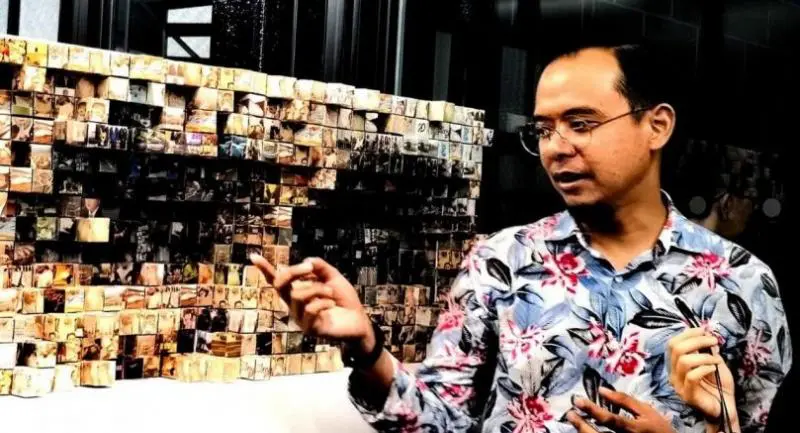
Pen-ek was speaking at a panel on Internet universality and artistic freedom late last month. The panel was part of the art exhibition “Internet Universality Beyond Words” organised by Unesco and its partner.
The exhibition is open to the public until October 14.
Thailand is among the world’s top social media users. Facebook is at the top with more than 51 million active accounts, and ranks 8th in the world. Social media these days influence public opinion in many aspects. Anucha Boonyawatana, a famous independent film director, said Internet offers a space for indie movie lovers and film directors. Many of her films, including “The Blue Hour” and “Malila: the Farewell Flower”, have won many international awards for their depiction of LGBT romance.
“Yet they aren’t mainstream movies or high grossing ones,” she said. As a result, the theatre often gives limited show time. “Some of my movies have only a few thousand viewers in a theatre,” she said.
But the Internet also can be a powerful tool for artists to inspire change, said Wee Virapon, owner of a design studio, Conscious, and a senior adviser to the Thai Graphic Designers Association (ThaiGa).
Wee, as well as other senior members of ThaiGa, have been working with Mayday, a group of young designers, to redesign bus signs in Bangkok.
Mayday had designed a bus sign and posted it online.
The beautiful design was in stark contrast to the current bus signs, a blank whiteboard used for advertisement. Soon it went viral on social media and real change is taking place.
According to Wee, Mayday is now working with ThaiGa, Conscious, BMA, and the transport authority to modernise the signs.
And soon the brand-new signs will be put up in the bus stops in Rattanakosin Island, the historic part of Bangkok close to Khaosan Road and the Grand Palace. Trashy art? Maybe not.
“Without Internet and social media, it would have been impossible to hear so many opinions from the public and to get so many people involved in the project,” Wee said.
In the past, art remained largely in the hands of experts or professional critics who had a newspaper column. Space in a gallery is so limited that it could showcase only about 10 exhibitions a year at best, he said. “Now anyone can talk about art. Artists don’t have to queue up for years to hang their work in a gallery. The comments and the works can have instant visibility just on the tips of your fingers. Once the work is published [online], it may eventually get picked up by curators,” Kamol said.
Internet has brought art to the people, who choose what to “like” or “share” and who to listen to. And artists, or movie critics, need “engaging and up-to-date, not boring”, content, said Chulalongkorn University’s Fine and Applied Art Faculty member Kamol Phaosavasdi. He believes Internet has “democratised” art, offering opportunity and visibility to anyone and everyone and it’s the people who “vote” for what they like.
