
Teach 'shared history' to end disputes: Surin


Play
The key to solving ongoing disputes over territory in the South China Sea and a temple on the Thailand-Cambodia border is educating the region's citizens about their shared history, says former Asean secretary-general Dr Surin Pitsuwan.
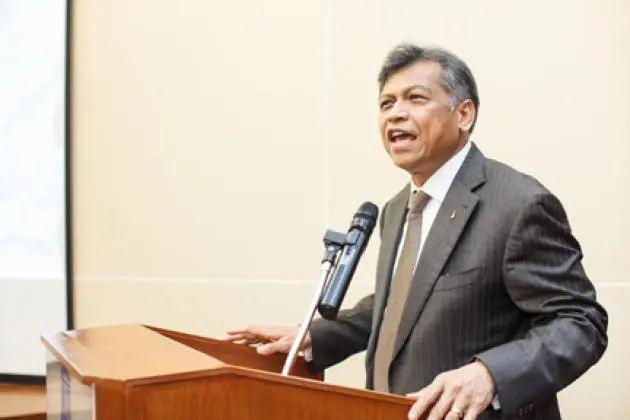
“If we strive towards a truly shared sense of Southeast Asian history, this should mean ‘shared’ in all senses – not just with respect to crossing political boundaries as they exist at the national level,” he said yesterday, speaking at a forum on “Promoting Intercultural Dialogue and a Cultural of Peace in Southeast Asia through Histories”, held at Unesco’s Bangkok headquarters.
“Shared histories should not only cover those of ruling regimes or selective nationalist heroes; they should also include the unsung stories of our migrant workers, our internally displaced populations, our ethnic minorities, our stateless peoples, our border communities – all those who are still consigned to the fringes of history as popularly understood,” said Surin.
Dozens of educators, history scholars and anthropologists from across Southeast Asia have gathered for the two-day forum to discuss how the notion of shared histories can correct traditional, nationalistic teaching that has led to “culture wars”.
Unesco Bangkok is hosting the forum with the Asia-Pacific Centre of Education for International Understanding under the auspices of Unesco and funded with the help of the National Research Foundation of Korea.
Many panellists agreed that it is mostly mainstream histories that are taught in the region’s schools and universities, while minority culture and histories tend to be ignored.
Prof Filomeno Aguilar of Ateneo de Manila University said that “the usual coverage of Southeast Asia history is based on ancient kingdoms, colonialism and nationalism, and excludes minority cultures.”
Surin added that, in the past we had mainly learnt our Southeast Asian history via the work of foreign scholars, mostly Westerners, such as Georges Coedes, Harry Benda, DGE Hall and David Wyatt.
“In response, we have begun to put a premium on writing history ‘from within’,” said Surin.
“Taking up the task of writing history, at the very least, contributes to an internal process of Southeast Asians making sense of ourselves, and this exercise in self-introspection is in itself a worthy and necessary one.
“It is encouraging, in this regard, that we are seeing more and more new works of history being produced in Southeast Asia, by Southeast Asians. Through the shared understanding arising from these shared histories, I am hopeful that our children and their children will be able to build stronger bridges and a truly lasting culture of peace in Southeast Asia, our common home,” Surin concluded.
