
Govt told to assure policy transparency


Play
"Sustainable peace cannot be achieved without truth, transparency, accountability, social justice and trust" is the message that Asean civic society sent to Myanmar.
"Given the remaining climate of distrust and fear, the government must take significant care to implement all upcoming projects, such as the census-taking process, within an atmosphere of transparency and responsiveness to the peoples’ concerns. For peace-building efforts, all peoples must be included in the process, including women. Even with the reform process, women still face the risk of sexual violence, especially in areas affected by conflict," concluded Asean People's Forum.
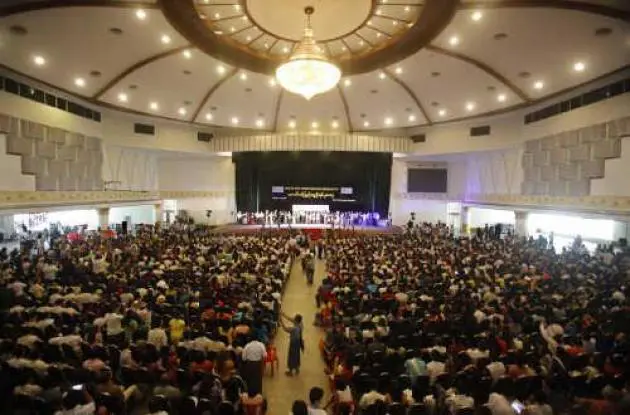
Over 3,000 delegates from civil society, peoples’ and grassroots organisations and individuals in Myanmar, the Asean region and beyond, convened in Yangon last weekend to discuss a wide range of thematic and systematic issues currently confronting people in the region.
The forum’s them was “Advancing Asean People’s Solidarity towards Sustainable Peace, Development, Justice and Democratisation”.
In the statement released on March 24, the forum took this opportunity to discussed problems that Myanmar people are facing, like the land grabbing by private and military actors. It also noted that the government's policy on special economic zone is oriented towards profits not the well-being of people. The forum called for education reforms and economic policies that uphold the principle of ‘do no harm,’ and which protect the rights and dignity of the affected people.
“The furthering of democratisation in Myanmar will require full, transparent, and participatory reform to reinstate all fundamental rights and freedoms. We call for the repeal or amendment of all laws that do not confirm with international human rights standards and legal principles, including the reform of the 2008 Constitution, the building of a genuine federal state and the decentralisation of power.”
Several local residents took this opportunity to express their grievances.
To Win Aung from the Shwe natural gas activists group, the forum is a powerful public setting through which to reclaim the full rights of locals who have suffered from the project. At a session on challenges surrounding the impact of investment on ordinary people’s sense of peace and autonomy, he said “The locals’ grievances and loss of livelihoods have been ignored. The inability to defend them against these offences will be submitted, together with the collection of experiences occurring in each country, through the Asean People’s Forum. These will be submitted to Asean leaders in order to get some good results for suffering locals.”
He added that the activist group will continue working to promote accountability by those responsible for the project; transparency about the amount of natural gas used in the project and facts about the use of income from the project; and justice in solving the human rights violations, land confiscation, lack of consultation with the locals, and disregard for the locals’ complaints. These are the main problems that have accumulated in the course of executing the project, he said.
The transport of natural gas from the project to China started last July, at the initial volume of 5.2 billion cubic metres per year. The volume is later expected to rise to 12 billion cubic metres per year, according to the China National Petroleum Corporation (CNPC).
Representatives for civilian groups attending the forum from Cambodia and Thailand also shared similar difficulties caused by such projects in their respective countries. Much of the grievances was directed to China.
Premrudee Daoroung, vice chairperson of the Asean People’s Forum, said at a press conference on Monday that Chinese investment is a challenge not only for Myanmar but also for the entire Asean region. She noted that China’s investment standards are lower than international norms.
“Civil organisations from all Asean countries need to ask the Chinese government to set ethical standards. Most of the standards are below international standards. If they are doing it their own way, the agreements between respective governments and the Chinese will not be within the international standards.”
On Sunday, several protests were organised against major Chinese investments such as the Myitsone, Thanlwin and Letpadaungtaung projects, which involved land grabbing.
Premrudee was concerned that as China is committed to make more large investments in other Asean countries as well, land grabbing cases are likely to happen in those countries.
“Many land plots will be needed for the mega-projects. The risks to the environment will be huge,” she said.
