
New players emerge in oil and gas exploration


Play
1 each from Norway, Japan, Italy and rest are from India, other parts of Europe, Australia and US
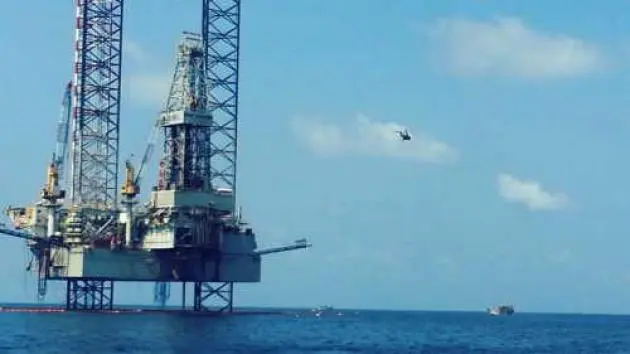
Several companies from different parts of the world, mainly India and Europe, emerge following the Ministry of Energy’s awarding of 20 offshore oil and gas blocks on Wednesday.
The lifting of sanctions by western countries against Myanmar has opened the door wider for foreign participation in the exploration and production and stirred the biggest-ever interest by foreign companies. The oil and gas industry has so far attracted the biggest amount of foreign investment. As of December, Myanmar had attracted $44.2 billion in total foreign investment, 42.5 per cent in the energy sector.
Among the winners, Chevron and Total are two major Western companies which established their interests in the country during the sanction period. In the latest auction, Royal Dutch Shell and BG Group won the most awards. Other big names include Norway’s Statoil.
Newcomer BG Group expects to begin the exploration in 2014/15. "This award is in line with BG Group's strategy to focus on securing prospective frontier acreage and enter, on average, one new basin each year."
Myanmar’s energy ministry said a total of 68 companies from across the world originally expressed interest in the auction, which was launched in April 2013, with 30 firms eventually submitting proposals. Those missing out are not revealed. Notably, among the winners are no company from China and Thailand, which have built up big stakes in the country in the past years.
The landmark auction of offshore oil and gas exploration rights is expected to drive economic growth with its natural resources. Myanmar is now sitting on some 7.8 trillion cubic feet of proven natural gas reserves. The Ministry of Energy also revealed that the probable and possible reserves could reach 0.42 trillion cubic feet onshore and 10.24 trillion cubic feet offshore.
The country, left impoverished by nearly five decades of isolation under military rule, has been the subject of feverish interest by energy firms eager to get a share of its untapped energy potential since the removal of most international sanctions in 2012.
A total of 30 offshore blocks were originally up for auction and it is unclear when the remaining 10 sites will be awarded. “The tender for 30 oil and gas blocks and 19 deepwater and 11 shallow water exploration blocks is aimed at enabling local companies to get the investment opportunities via a joint venture system,” said Pe Zin Tun, director-general of the Ministry of Energy.
The ministry said it would receive US$226.1 million as a “signature bonus” from the firms once exploration begins on the 10 shallow water and 10 deep water blocks. Of total, $91 million will come from shallow water exploration blocks and US$ 135 million from deep water exploration blocks.
“This amount is the largest we have received in history” the ministry said in a statement.
Despite the excitement over Myanmar’s oil and gas potential, there is little data on the extent of the country’s reserves.
International bidders on the shallow water blocks are required to partner with the local companies, but those taking on the deep water areas are permitted to have full exploration rights due to the high cost and technical skills required.
The arrangement is a first in the sector, which was tightly controlled under an opaque and corrupt regime during junta rule.
Bidders will, however, be required to enter into a production sharing contract with the state-owned Myanma Oil and Gas Enterprise (MOGE).
MOGE has come under fire in the past from opposition leader Aung San Suu Kyi among others for lacking transparency, and the government has pledged openness in an effort to reassure investors over corruption concerns.
Several foreign companies have already partnered with local firms in existing offshore blocks, including Total and Chevron who entered before sanctions were imposed.
Contracts will be awarded to those companies only after a profit sharing contract between each company and the Ministry of Energy has been approved by the Union Attorney-General Office, the Auditor General’s Office, the Ministry of Finance, the Ministry of National Planning and Development and the Central Bank of Myanmar.
In the qualification process, 61 companies passed the requirements. These included 14 from Australia, seven from India, six from England and the USA, four from Singapore, three each from Canada and South Korea, two each from Japan, Malaysia and Thailand, one from Brunei, British Virgin Islands, China, France, Israel, Indonesia, Italy, Netherlands, Norway, Spain, UAE and Vietnam.
Winners by nation
India:
Reliance Industries
Mercator
Oilmax Energy
Norway: Statoil
Japan: Mitsui Oil Exploration (MOECO)
Italy: Eni
France: Total
US:
Chevron
ConocoPhillips
UK:
BG Group
Transcontinental Group
Ophir Energy
Shell
Australia:
Woodside Energy
ROC Oil
Tap Oil
Netherlands
Berlanga Holding
Source: Myanmar Eleven
