
Myanmar needs global support during critical phase: UN


Play
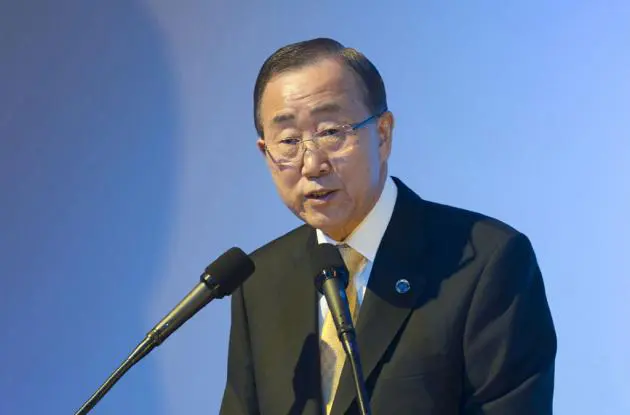
25500357 UN Secretary-General Ban Ki-moon addresses the Partnership Group on Myanmar./UN Continued international support for the efforts of the government of Myanmar in the areas of democratisation, socio-economic development and national r
“Myanmar is in the midst of a defining phase in its history,” Ban said at the first meeting of the Partnership Group on Myanmar, which he convened in New York on Friday.
The Partnership Group is a reconfiguration of the Group of Friends of Myanmar, which decided last September that it should take a different form to better reflect the positive developments on the ground and further broaden the scope of the partnerships between Myanmar and the United Nations.
“The country’s historic transformation is beginning to be expressed in numerous positive changes,” Ban said, noting, among others, the opening up of the economy to the outside world and measures for the release of political prisoners and greater civil society activity.
“These efforts have been welcomed widely within the country and beyond,” he added.
“However, Myanmar continues to face significant challenges, including those related to the first census operation in more than 30 years, preparations for elections in 2015, constitutional reform, negotiations towards a nationwide ceasefire and the start of a political dialogue as well as the serious inter-religious and communal tensions in Rakhine state and in other parts of the country.”
Participants at the first session of the Partnership Group on Myanmar voiced their continued support to the reform efforts, according to information provided by the Secretary-General’s spokesperson. Joining the meeting was Khin Yi, minister of Immigration and Population Affairs of Myanmar.
While welcoming the negotiations between the government and the armed ethnic groups, member states called for continued commitment and political will to be displayed on all sides to enable the signing of a nationwide ceasefire and commencement of a political dialogue.
Referring to recent developments in Rakhine, member states stressed the need for firm action by the government to curb any incitement to violence, including through hate speech. They underlined that overcoming communal tensions and addressing the underlying issues of citizenship were urgent priorities to ensure equity and inclusiveness in the reform process.
Among other issues, participants discussed the challenges and implications of the recent conduct of the population and household census across the country.
The member states also welcomed the decision of Ban to increase international presence in the Rakhine as well as other areas to address the critical humanitarian situation affecting vulnerable communities there. They expressed appreciation that the government of Myanmar was fully committed to providing all necessary support for such activity by the United Nations and the international community.
Member states also discussed the challenges and implications of the recent conduct of the population and household census across the country.
In his statement, Ban noted that progress on national reconciliation is at the heart of Myanmar’s inclusive national identity. The efforts by the government and armed ethnic groups to end their six-decade-long armed conflict are slowly bearing fruit.
“The recent violent skirmishes in Kachin between the Myanmar Army and the KIA [Kachin Independence Army] have ominous implications. My Special Adviser has been in touch with both sides. Unless they step back from the brink and stop tit-for-tat actions, the prospects of progress towards a comprehensive nationwide ceasefire and political dialogue could be seriously jeopardised.”
Believing there is good will from both sides, he urged all involved in the talks to take the necessary steps that will produce a final text ready for ratification.
He also warned that any impression that the authorities tolerate impunity in the human rights agenda could generate negative pressures within the international community and among different parts of Myanmar’s population.
On communal tensions between the Buddhists and Muslims, he said the UN stands ready to help the government address the issue by promoting an interfaith dialogue and supporting the implementation of the “Action Plan” that was set up in the wake of communal clashes in June 2012.
He also urged Myanmar to immediately resume the status verification to address the statelessness of the Rohingya population and begin the process of granting citizenship to those whose legal status in the country can be established. “More broadly, a unified nationwide appeal by Myanmar’s key leaders against incitement and hate literature and social media messages would help to heal the rift between the communities.”
