
Rohingya camp conditions appalling: UN official


Play
A senior UN aid official said on Tuesday she had witnessed a level of human suffering never seen before in camps for some 140,000 stateless Muslim Rohingya in Myanmar's Rakhine state, displaced by Buddhist-Muslim violence sparked in 2012.
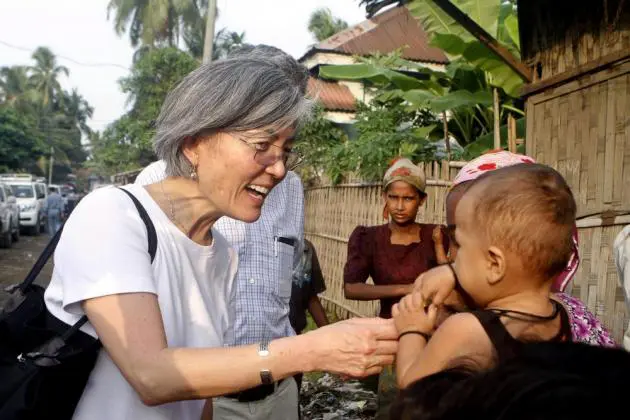
Deputy Emergency Relief Coordinator Kyung-Wha Kang visited Myanmar last week, traveling to western Rakhine State and northern Kachin state, where more than 100,000 people have been displaced since fighting between ethnic minority insurgents and the government erupted in June 2011, ending a 17-year cease-fire.
“In Rakhine, I witnessed a level of human suffering in IDP [internally displaced person] camps that I have personally never seen before, with men, women, and children living in appalling conditions with severe restrictions on their freedom of movement, both in camps and isolated villages,” Kang said.
“Many people have wholly inadequate access to basic services including health, education, water and sanitation,” she added.
Kang said that the safety and security of UN staff and other aid workers also remained at risk until the Myanmar authorities ensured the perpetrators of attacks against NGO and UN offices in March were brought to justice.
In February Myanmar authorities expelled Medecins Sans Frontieres – the main aid group in Rakhine – and then the March attacks led to the withdrawal of more aid groups, sparking a health crisis in the camps that the government has dismissed.
“Humanitarian workers in Rakhine are carrying out their work under extremely difficult circumstances and I was humbled by their commitment to stay and deliver,” Kang said.
Myanmar describes the Rohingya as Bengalis, a term that implies they are illegal immigrants from neighbouring Bangladesh. Many say they have lived in Rakhine for generations.
In Kachin State, Kang said she was only able to visit one camp in a government-controlled area, but also spoke with aid workers helping in areas held by the Kachin Independence Army rebels.
“Access by international humanitarian organisations is improving through cross-line missions but aid agencies need regular, predictable, and sustained access to all IDPs,” she said.
The United Nations has warned the violence in Rakhine State poses a serious threat to the country’s dramatic economic and political reforms as it emerges from half a century of military rule.
