
Power, water, agriculture among priority investment areas
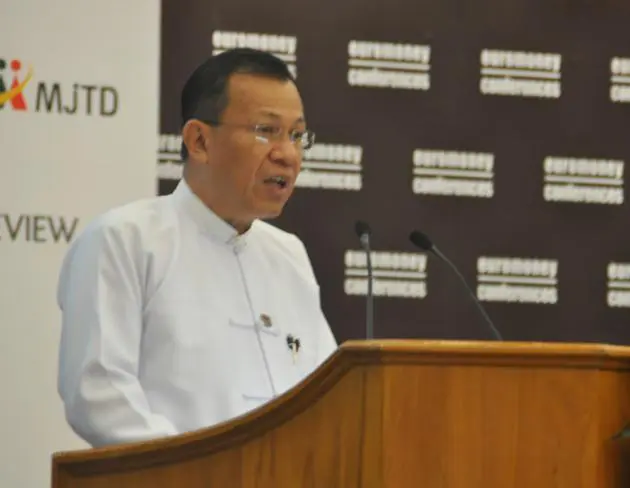


Nay Pyi Taw - National Panning and Economic Development Minister Kan Zaw is wooing more foreign investment into Myanmar, citing the country's need for massive investment to attain prosperity.
“The agriculture sector forms the backbone of the national economy as 70 per cent of the population reside and live in rural areas, engage in agriculture and animal husbandry activities. Since the role of agriculture in the national economy of Myanmar remains extensive, it has a direct bearing on other socio-economic aspects of the country,” he said.
Kan Zaw also added that the government also focuses on self-efficiency in national food requirement, adequate production of raw materials in local agro-based industry and the generation of the substantial trade surplus. He highlighted the electrification in rural areas and provision of clean water to rural people as “critical components of the rural development plan.”
To him, establishment of cooperation society for poverty reduction, creation of microfinance and necessary market, and ensuring to earn daily income are all realised for parallel development which supports social and economic development in rural areas.
Moreover, the minister said that the government is fulfilling the needs and seek investments in energy sector.
“As we are aware that socio-economic development of a country cannot achieve success as expected because of shortage of investment in power sector, new technologies for electricity and power generation facilities are required,” said Kan Zaw, adding that energy conservation measures and effective energy savings play a crucial role in the government’s policies.
“Since 2012, we have allowed private entrepreneurs to engage in power production as independent power producers (IPP). You can witness in Mon State at this moment,” he said.
In addition to rural development, the minister highlighted the importance of urbanization and shared what the government is doing for housing and transport.
To him, Myanmar also targets to provide adequate and affordable housings for all the citizens as a long-term goal for housing sector. To achieve these goals, development of national housing policy, strengthening and reforming the orgranisational set-up of the housing delivery institutions, development of adequate and affordable housings delivery system; and the establishment of housing financing mechanism that will support housing ownership; promotion of construction industry development; and implementation of proper housing delivery system in a transparent manner will be undertaken.
“Our basic consideration is to ensure that there is a diversity of housing which is comfortable for different income group segments. In this regard, Myanmar pays special attention to urbanisation and sustainable development of the cities. Special economic zones in systematic approach will also enhance our plan for urbanisation,” said Kan Zaw.
The minister added that the government has planned to promote the use of public transport.
“Rapid bus transport (RBT) will be implemented in Yangon soon, aiming to create new circular line in Yangon. Moreover, Myanmar has been creating a better rail transport system. Due to increasing investment projects and tourist arrival in our country, demand for air transport becomes the most popular transportation. Other related services such as restaurants, hotels, and traditional products industry are growing considerably,” he said.
He added that the government is supporting economic growth and job creation as well as providing a good quality living environment. And it is taking measures on prevention on the negative impacts of climate change including increasing vulnerability to natural disasters.
