
Wise leader or decadent despot?


Play
The great canal of Yangzhou overshadows the memory of a former ruler
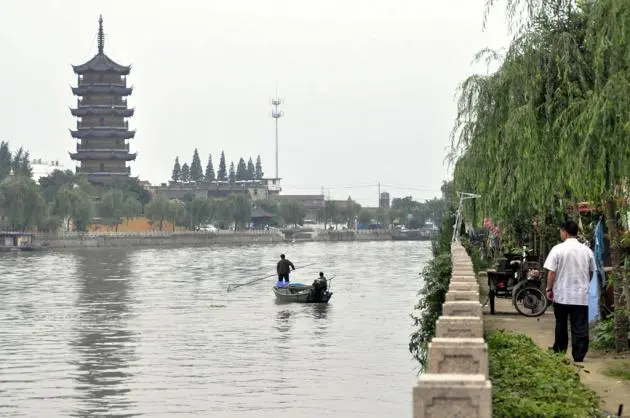
Located on the Yangtze River, the city of Yangzhou in Jiangsu Province has always relied heavily on water transportation for both people and goods. The canal that runs through the centre of the city is iconic. Originally built in the 5th century BC, it was expanded and developed into a grand canal by Yang Guang, the second emperor of the Sui dynasty (AD 518-619).
Lush willows grow along both sides of the canal and are known to local residents as “yangliu”. They were planted along the banks at the same time as the canal was dug. The Emperor’s plan was to connect the north and south of China, putting Yangzhou at the centre.
“Some believe the willows’ name of yangliu came from the emperor’s family name, Yang,” says Wang Qingxiang, 45, an official attached to Yangzhou’s Grand Canal Culture Exhibition Pavilion, which exhibits Yang Guang’s achievements.
Before becoming emperor in the capital Changan, Yang Guang spent 10 years in Yangzhou as provincial governor and loved the city for its scenic beauty.
When part of the construction of the Grand Canal between Changan and Yangtze was finished in 605, Yang Guang visited Yangzhou in a dragon boat, a vessel used for pleasure cruises. It is said that on the completion of the entire 2,700 kilometres, he travelled from Yangzhou to somewhere near the current Beijing area in a dragon boat.
Emperor Yang was at the height of his rule around this time but he wasn’t popular. Residents resented the ongoing large-scale, labour-intensive construction projects on which more than 2 million people were forced to work. Moreover, the three expeditions that he made to Koguryo left the empire bankrupt.
Because the “authoritative version” of history in China is always revised by the new dynasty, which then makes claims to its own legitimacy, the previous dynasty is inevitably demonised. One meaning of the character “Yang” in the name Yang Guang is “to arrogantly maintain distance from the common people”, and the Tang dynasty, which succeeded the Sui, used this character as the posthumous title.
“Many institutions of the Sui dynasty were continued in the Tang dynasty,” sys Professor Li Wencai of Yangzhou University. “Yang Guang was a great sovereign ruler of considerable achievement, and Tang desperately tried to stain his reputation.”
The construction of the Grand Canal was necessary to transport products from the developed lower reaches of the Yangtze River to the northern areas. Though there was criticism that the emperor planted willows on the banks just to suit his taste for austere elegance, it is believed that they were actually planted to reinforce the banks.
It is obvious that Yang Guang had immense foresight, since the Grand Canal proved invaluable even after the Sui dynasty fell. Though part of the canal is now disconnected, it is still in use after all these years as a route for transporting cargo. Since its registration as a Unesco World Heritage Site was announced in June this year, the canal is expected to also become a resource for tourism in the future.
In 616, when rebellions broke out all around China, Emperor Yang killed officials who advised him to return to Changan to deal with the issue and shifted his base to Yangzhou, which was a key location along the Grand Canal. However, he indulged heavily in drinking and dining, and was unable to regain his power. He was killed by a subject a year and a half later, which led to the fall of the Sui dynasty. The tomb of Emperor Yang was discovered in Yangzhou in March last year. But since the town already boasts a mausoleum, the discovery has created a controversy as to which tomb is the real one.
“I hope that one of the tombs is real because Emperor Yang is important to us,” comments a 58-year-old woman living near the mausoleum. Yang Guang, generally known as a tyrant elsewhere in China, is acclaimed as a wise ruler here in Yangzhou.
