
StanChart will expand 'when the time is right'


Surprise decision not to apply for licence to operate not based on a change of heart about the country's economic outlook, UK lender says
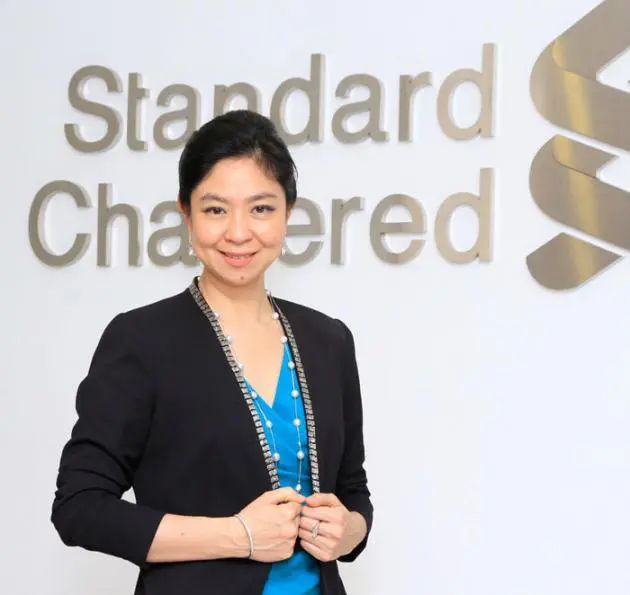
Although it was not among the foreign banks that applied for a licence to operate in Myanmar, United Kingdom-based Standard Chartered Bank intends to launch commercial operations in the country “when the time is right”, its chief representative for Myanmar Tina Singhasacha said.
“When the right time comes and opportunity arises, then we will be able to expand our presence beyond the [representative] office today,” she told Myanmar Eleven in an exclusive interview.
“We did not apply for the licence for commercial reasons,” Singhasacha said, repeating the bank’s previous explanation for why it did not apply for the licences, nine of which were granted to foreign lenders on October 1.
She stressed that the decision not to apply for licence was not based on a change of heart about the bank’s outlook for Myanmar, after opening a representative office in the country in January 2013. “We very much remain committed to Myanmar, to supporting the government and the central bank in capacity-building in the financial sector. We believe we still play an active part in helping the Myanmar government build a strong financial sector,” Singhasacha added.
The bank co-chairs a joint taskforce set up on July 16 last year to support the development of Myanmar’s financial services sector. The taskforce, announced during President Thein Sein’s visit to London that month, comprises officials from government ministries and agencies, and executives from financial and professional services firms in the United Kingdom.
Singhasacha said Standard Chartered was also working on governance issues. “One of the areas we are looking at is to introduce awareness of governance through workshops. We have also seen in many markets around Southeast Asia how the lack of governance could impact negatively to the economy in the long run. Our expertise and ability in looking at long-term understanding of the market can bring the best practices and what we think is important here in Myanmar,” she said.
She said it was very difficult for foreign companies to be successful in Myanmar unless they had in-depth knowledge of the market. “Even though foreigners come in, if they do not understand how to operate here, it is very hard to be successful. So, you [local business people] should have confidence in your knowledge of the market. No one knows Myanmar better than local people,” she explained.
“Whoever comes, they should have a deep understanding and be sincere about the market. No one should come here expecting quick profits,” she added.
She said the time was right for Western businesses, including British firms, to enter Myanmar, but stressed the importance of strong governance in running a business.
The UK bank’s country head also urged the government to proceed with its reforms and create a more competitive market for long-term growth. “Myanmar is going through a dramatic political reform. It has just started its economic reform. In many ways, it has actually done many right things such as liberalising the telecoms sector, making central bank independent, liberalising foreign banks and allowing them to enter,” she said, adding that foreign companies could bring in innovations, modern practices, and responsible business approaches.
Although Myanmar’s banking sector lags those of many of its neigbours she said the government had clearly identified upgrading the financial sector a priority. “It is clear that the government has made it a priority to improve the local financial services sector so that the country can draw level with other Southeast Asian economies. However, this will not happen overnight as they will need time to implement a range of reforms to help enhance the country’s financial infrastructure,” she explained.
She was upbeat on the outlook for Myanmar’s economy. “The tourism sector is emerging as a new pillar of growth, and ongoing FDI [foreign direct investment] is also providing support. Myanmar has continuously increased its foreign reserves, reflecting improved external balances. Energy-related sectors continue to receive the most foreign investment,” she said.
Singhasacha said the entry of foreign banks would help facilitate FDI as most of the banks were following their clients. She said one of the major complaints of foreign companies was “the ability to even simply transfer money to the country”.
She said StanChart welcomed the issuing of licences to nine foreign lenders, saying the FDI they would help facilitate would also spur the growth of small and medium-sized enterprises.
StanChart has a long history in Myanmar and was the first Western bank to reenter the country following the reforms implemented by President Thein Sein’s administration. Australia-based ANZ was one of the nine foreign lenders that received a limited licence to operate in Myanmar.
