
Chengdu, home to pandas and a modern metropolis


Play
Sichuan's capital not only takes pride in its endangered bears but also boasts top electronics and auto sectors
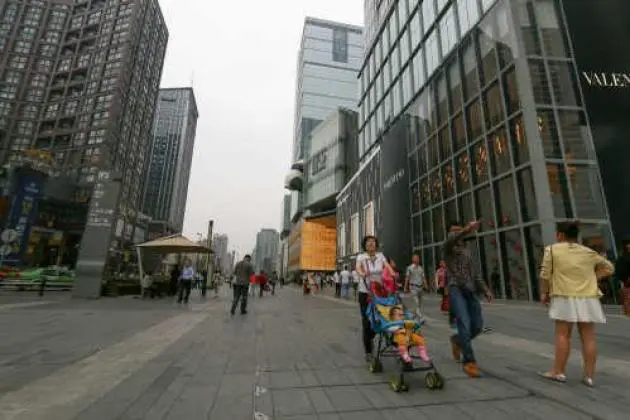
THE CAPITAL of China’s southwestern Sichuan province, Chengdu has become famous as a home for giant pandas, with a sizeable population of the endangered species in the wild as well as in captivity at a local breeding centre. The 2,300-year-old city also aspires to be known as a modern |international metropolis with robust economic growth.
Local business executives and senior officials talked proudly about Chengdu’s high standing among the top Chinese cities when they met a group of Asian journalists visiting Chengdu recently.
A great pride for them is that Chengdu is one of China’s largest producers of IT products. The city makes two-thirds of iPad tablet computers and half of Intel laptop chips in the global market, according to local officials.
“We are proud to make many industrial products that are sold all over the world,” said Bai Gang, director of Chengdu’s publicity department.
He told the visiting journalists that his city’s slogan is “Chengdu can do”. The journalist group was on the “Discovering Chengdu” tour, which was jointly organised by the China Daily and the Chengdu Information Office.
The city is also seeing a rapid growth in other high-tech industries, such as bio-pharmaceuticals, aerospace, renewable energy and new materials. A modern High-tech Innovation Park, with investment from a Singaporean company, is being constructed in a 10.3-square-kilometre area not far from the city centre for more manufacturing plants of those industries.
“The relocation of industrial infrastructure and redirection of investment to western regions has provided Chengdu with a historic opportunity to build itself into an international metropolis,” Huang Xinchu, the chief of Communist Party of China in Chengdu, was quoted as saying by the China Daily recently.
Chengdu’s High-Tech Industrial Development Zone houses a “software park” that is home to about 600 mobile-game developers and more than 100 software companies focusing on smartphones. Among them is Pinguo Technology, the developer of the popular smartphone photography app Camera360.
The company claims to have more than 300 million users of Camera360 worldwide. Thanks to the software park’s venture incubator programme, Pinguo -– which means “apple” in Mandarin – grew from a start-up |company four years ago to become a success story today.
In addition to start-ups, many well-known software and IT enterprises – both Chinese and foreign – also set up their production offices at the Tianfu Software Park, thanks to an abundance of young talent and generous benefits offered by the local government. Those enterprises include IBM, SAP, Siemens, Dell, Ericsson, NEC, EMC, Garmin, Huawei, Alibaba and Tencent.
Automobile manufacturing is also a big industry in Chengdu. Li Hua, deputy director of Chengdu Economic and Technological Development Zone, said the industry is an “important engine” in the city’s rapid economic growth over the past decade. He added that Chengdu grew from a city of agriculture about 20 years ago to become an industrial hub of western China today.
Last year, about 732,000 vehicles of Asian, American and European makes were manufactured in Chengdu, including Toyota, Volkswagen and Volvo.
“We are confident that we will produce as many as 1 million vehicles next year and aim to increase the output to 2 million in 2020,” Li said. He added that the main goal now is to transform Chengdu into an “international city of top-notch auto industry”.
Chengdu ranks third among China’s cities in terms of private car ownership, after Beijing and Shanghai. There are numerous luxury cars on the road and large car showrooms of many well-known Japanese, American and European brands line up a long section of the highway linking the airport to the city.
Last year, Chengdu became a sister city with Chiang Mai. And there are direct flights to Thai destinations such as Bangkok, Chiang Mai and Krabi.
Its Chengdu Shuangliu International Airport saw 34.6 million passengers last year, 2.3 million of them foreign visitors. It is China’s fourth busiest airport, after Beijing, Guangzhou and Shanghai. There are 157 domestic and 74 international routes connecting Chengdu with 108 domestic and 65 overseas destinations.
