
Wife to exhume body of killed journalist


Play
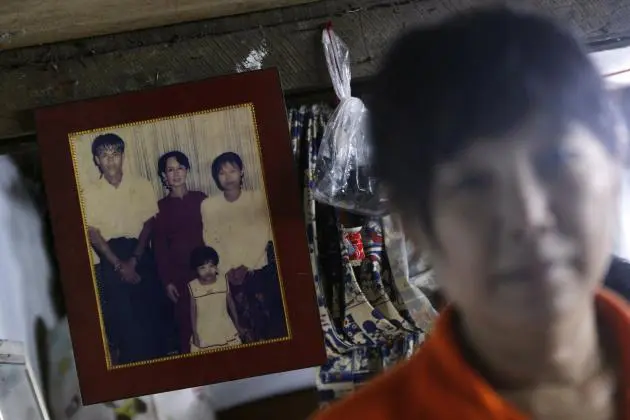
The wife of a journalist shot dead by Myanmar's army said yesterday she had been granted permission by police to exhume his body, after the government announced an inquiry into the killing in the face of international concern.
Freelance journalist and democracy activist Aung Kyaw Naing, or Par Gyi, was gunned down by soldiers while in military custody in the volatile eastern border region, where fighting between the army and rebels has flared in recent weeks.
The reporter’s wife, Thandar, was informed by the authorities from Kyaikmaraw Myoma Police Station in Mon State that they would exhume his body on Wednesday. Thandar is now in Yangon, joining public calls for investigation into his death.
According to the army’s report, Aung Naing was buried about 800 metres from the southern part of Shwewarchaung village.
“I will go to the place where Ko Par Gyi’s body was buried accompanied by lawyers, other witnesses and those who will help me,” said Thandar.
The United States last week called on Myanmar to conduct a "credible and transparent investigation" into the killing, as the fast-changing former pariah nation faces increased scrutiny ahead of a visit by US president Barack Obama and other world leaders for a regional summit in mid-November.
"I do not know what I am going to face," Thundar told AFP, adding that police had not given her further details of whether an autopsy, or the removal of the body to Yangon would be permitted.
But she said she was determined to discover what had happened to her husband.
"Everyone with family can understand my pain - truth is the only strength I have," she said.
In one of its few public statements since relinquishing outright power to a quasi-civilian government in 2011, the Myanmar military admitted to the October 4 shooting of Aung Naing.
But it accused him of being a member of an armed rebel group - a claim his wife denies.
President Thein Sein last week announced that the country's human rights commission would investigate the shooting, although there were few details about the scope of the probe in a country where the military was long accustomed to impunity.
Aung Naing was a former member of the democracy movement and acted as a security guard for opposition leader Aung San Suu Kyi during mass protests in 1988.
His wife said that she had received a message of support from Suu Kyi, who is now an MP, expressing hope that the "truth be revealed".
The police have said military representatives, the Myanmar National Human Rights Commission, and legal and medical personnel would witness the exhumation, along with police officials.
President Thein Sein last week ordered Myanmar's National Human Rights Commission to investigate the death, the government said in a statement published in state media.
The Myanmar-based Assistance Association for Political Prisoners (AAPP) has disputed a statement by the military that Par Gyi was shot when he tried to steal a gun from a soldier and escape after being detained because he was a member of an ethnic Karen rebel organisation.
Thandar, a prominent women's activist, denies her husband was a member of any military organisation. She says she suspects he died while being tortured, leading the military to bury his body in secret.
She urged the government to return the body to the family.
"I sent a request letter to bring my husband's body back to Yangon for a proper cremation," she said. "But I don't know yet when or if they'll allow me to do this,” she said yesterday.
Reporters were regularly detained under the former junta, which handed out long jail sentences to journalists while choking off information with some of the world's most draconian censorship rules.
Reforms implemented by the current regime, including lifting pre-publication press scrutiny, have been praised by the international community as the nation opens up.
However, the jailing of several journalists this year has raised fears that Myanmar could be backsliding on press freedom.
