
'Blacksliding' reforms


Play
Nay Pyi Taw - As the 25th Asean Summit ran for the second day, focus returned to Myanmar's affairs - mostly on rights violations.
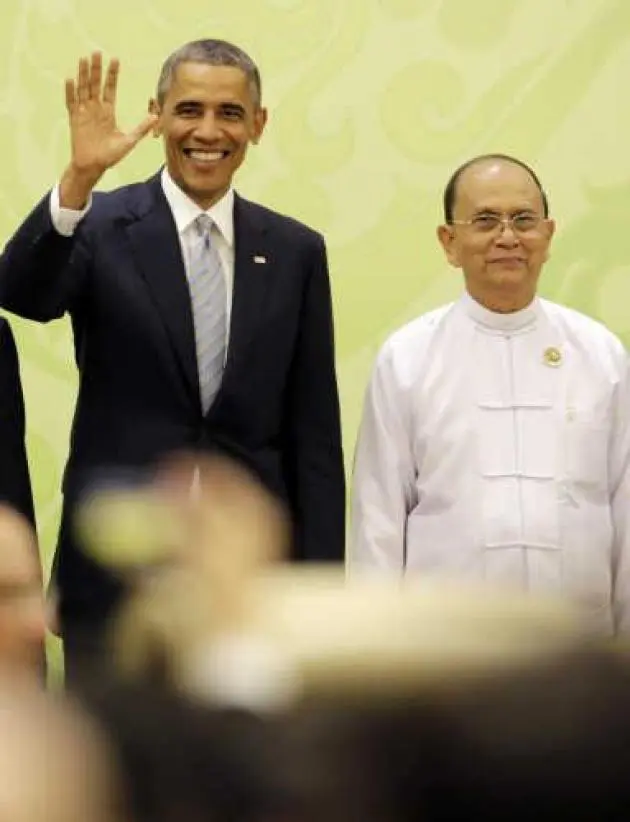
Prior to the meeting of US President Barack Obama with President Thein Sein late yesterday, the US voiced alarm over Myanmar's "backsliding" on democratic reforms.
Obama was set to raise powderkeg rights issues in a meeting with his Myanmar counterpart Thein Sein - a former general turned reformer - late Thursday on the sidelines of the East Asia Summit in Myanmar's capital, Naypyidaw.
Obama set the tone for his meeting with hard-hitting comments on the pace of reforms in an interview with Myanmar news website The Irrawaddy published just before he arrived on Wednesday night for a three-day trip.
"One of the main messages that I'll deliver on this visit is that the government of Myanmar has a responsibility to ensure the safety and well-being of all people in the country, and that the fundamental human rights and freedoms of all people should be respected," Obama said.
"Even as there has been some progress on the political and economic fronts, in other areas there has been a slowdown and backsliding in reforms.
"In addition to restrictions on freedom of the press, we continue to see violations of basic human rights and abuses in the country's ethnic areas, including reports of extra judicial killings, rape and forced labour."
Obama's administration has in recent years made a major foreign policy "pivot" towards Asia and - until now - Myanmar's baby-steps towards democracy have been trumpeted as a success for that strategy.
Myanmar saw the removal of most Western sanctions as it released the majority of political prisoners and loosened draconian press censorship, allowing a flurry of investor interest in the country seen as an exciting virgin market.
International concerns have overshadowed what Myanmar's government had hoped would be a celebration of the nation's democratic achievements at Nay Pyi Taw this week as it welcomed its biggest gathering of world leaders since the reforms began.
Obama planned to speak out on behalf of the nation's Muslim Rohingya minority in "all of his engagements" in Myanmar, his deputy national security adviser, Ben Rhodes, told reporters on Thursday.
Around 140,000 Rohingya languish in fetid displacement camps in western Rakhine State after religious violence flared two years ago, leaving scores of the minority dead and casting a dark cloud over the nation's pathway towards democracy.
United Nations Secretary-General Ban Ki-moon on Wednesday also raised the "serious humanitarian" condition of the Rohingya.
"I expressed my concern about the Rohingya population whoface discrimination and violence," Ban Ki-moon told reporters "I am urging that the human rights and humandignity of people in Rakhine State should be respected."
Myanmar's Deputy Foreign Minister U Thant Kyaw stepped out to defend the progress on political reforms and its treatment of minorities.
Many countries "support our reform process", he said.
"If reforms are slowing down, why would people come to attend our summit? To some groups our reforms are happening too fast," he said.
"We are aware of concerns over minority issues and we are investigating the situation," U Thant Kyaw told reporters.
