
Report urges end to civil war and political rivalries


Play
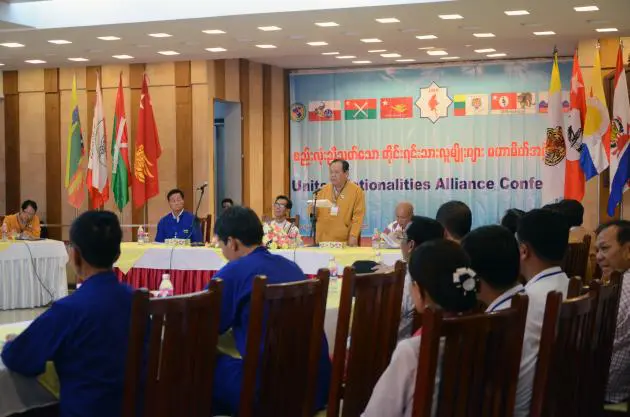
Myanmar needs to end prolonged civil war and political rivalries, which leave all sectors impoverished, said a political report submitted during a conference of United Nationalities Alliance.
The conference took place in Yangon on Monday where leaders of political parties who are also members of UNA held their discussions and gave reviews over the report.
The report highlights political change since UNA was formed 12 years ago, democracy cause and efforts for establishment of a federal union, election and parliamentary affairs, reviews over the ceasefire process, Union level political talks after nationwide ceasefire and current political situations.
It also reviews that the number of those craving for democracy decreases while the military-turned-civilian government and members of parliament gain weight (in politics). Moreover, the major difficulty facing the democratic forces is a lack of leadership, the report points out.
Another fact the report points out is the need to do research because those who showed strong disapproval of federal system has changed their minds and agreed to the adoption of the system.
According to the report, it is so interesting to see a rivalry between the government (the executive) and parliament (the legislative). Myanmar is also in a difficult political situation with confusing demands for four-, six-, or 14-party political talks for constitutional amendment.
In the area of national ceasefire efforts, the report stresses the need to build mutual trust between the government and ethnic armed groups as the successive governments used to break their promises. Moreover, internal peace and national reconciliation are the essential requirements in Myanmar’s political affairs and those issues cannot be addressed separately as they are closely intertwined.
At the conference, the political party leaders discussed ways to amend or redraft the current 2008 constitution and to adopt basic principles to hold a Union level conference and political talks ahead of that conference.
Ten members each of the eight political parties belonging to the UNA attended the conference and announced that another political report would be published soon.
