
High extremism threat for Myanmar


Play
When United Nations Special Rapporteur on Myanmar Yanghee Lee wrapped up her 10-day visit to the country on Friday, her facial expression could be anything but happy.
There is a long list of reasons why.
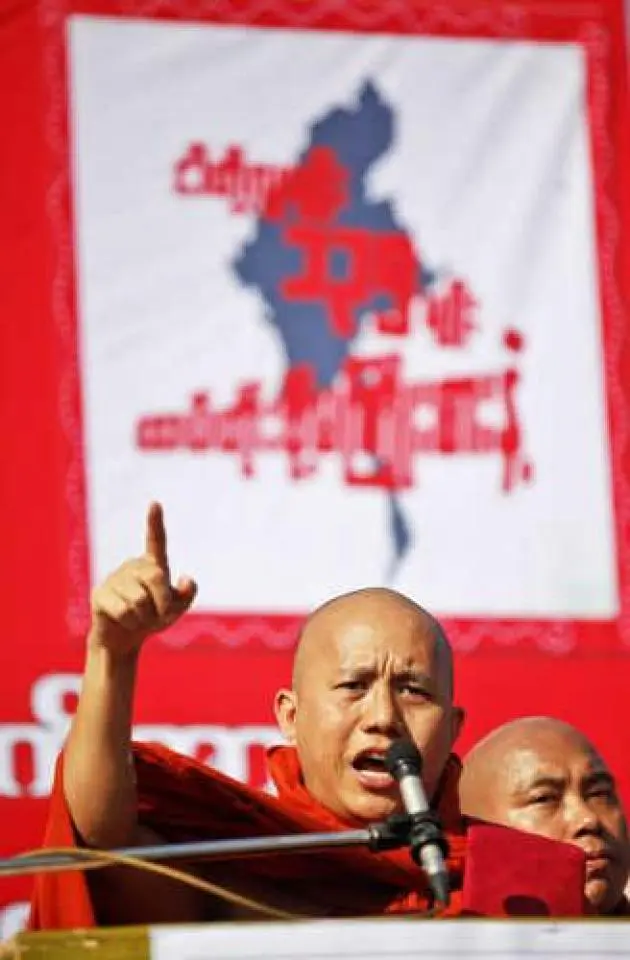
Arriving in Myanmar on January 6 to gather first-hand information on the current human rights situation in Rakhine as well as northern Shan state, she witnessed a protest in Sittwe in Rakhine. On her departure date, around 500 people and Buddhist monks, led by Wirathu, protested in Yangon against the UN General Assembly’s resolution urging Myanmar to grant citizenship and equal rights to Bengalis, internationally known as Rohingyas.
At a press conference, she called on the government to "urgently… protect the human rights and fundamental freedoms of all inhabitants of Rakhine state regardless of legal status, to allow full and immediate access for humanitarian agencies across the state and to allow the safe return of all IDPs (internally displaced persons) to their communities of origin, including to their land".
"The election is a very critical time in shaping the future of Myanmar and the situation in Rakhine is still in a state of crisis," she told reporters.
It is obvious that her second visit, following the first in July, aroused extremism amid the rise of the right-wing Buddhist nationalism.
After a six-day mission to the country, Tom Malinowski, a senior US State Department human rights envoy, also decried growing religious intolerance.
The delegation voiced fears "this really is playing with fire and exposing the country to dangers that it is not prepared to handle," he added.
At the monk protest in Yangon, hardline nationalist cleric Wirathu told AFP that monks had decided to protest against the UN "as they are trying to interfere in our country's internal affairs".
"These people are Bengalis not Rohingyas," Wirathu said, using a term seen as disparaging to the Rohingya, many of whom claim long ancestry in Myanmar.
"I don't accept them because they are dangerous to our country, not because I want them to suffer," he added.
In an exclusive interview to the Straits Times, President Thein Sein also warned against the dangers of extremism.
"Our people have shown great religious tolerance; we co-exist side by side. In Yangon, around the vicinity of Sule Pagoda, you can see churches, temples and mosques.
"But nowadays, we have seen some quarters domestically and internationally spreading extremism based on religion and ethnicity. They have used the media in spreading extremism. It is quite dangerous. We have established interfaith groups to spread the message of religious tolerance."
Inter-communal violence in 2012 drove over 100,000 minority Muslims from their homes in Rakhine. Many are still in camps, encouraging the UN to demand Myanmar issue citizenship to the people. These Muslims identify themselves as Rohingya but are widely seen as illegal "Bengali" immigrants by local Buddhist Rakhines and not officially recognised as citizens.
The President said it would take some time for the two communities to live side by side again. "We need to change the mindset of the two communities so it is in their best interest to live side by side and in harmony," he said.
"To prevent further communal violence, we have to beef up rule of law and security. Our government has done so, and because of this beefing up, we can say today we have been able to restore peace and stability in Rakhine state."
While outlining projects to improve socio-economic conditions in the state including the Kaladan Multimodal Transit Transport Project with India, and a Special Economic Zone in Kyaukpyu, he said permanent resettlements will be built for IDPs.
"We will work with the international community in constructing these permanent houses and we will then let the villagers choose of their own volition the places where they want to resettle," he said.
