
Pledge for peace signed amid heavy clashes in Shan State


Play
Clashes between the government troops and the combined forces of Myanmar National Democratic Alliance Army (MNDAA), Taung National Liberation Army (TNLA) and Arakan Army (AA) are still going on in Laukkai as the nation celebrated Union Day.
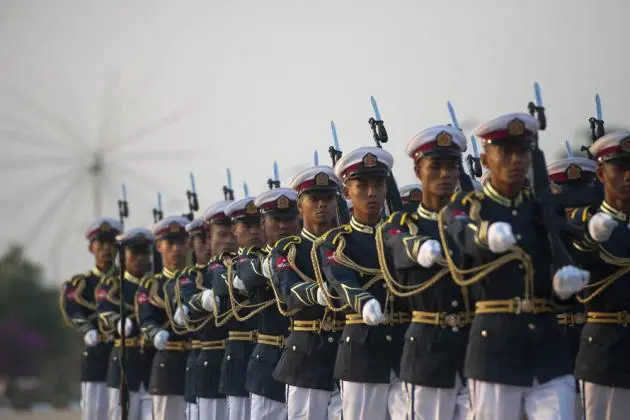
The government yesterday held a somber ceremony in Nay Pyi Taw marking the nation's symbolic unification after the colonial era. Some ethnic armed groups leaders were present, but a coveted ceasefire remained out of reach as conflict sweeps across northern borderlands.
President Thein Sein and some armed ethnic groups have issued a pledge to work towards a national ceasefire accord and subsequent political talks.
Federalism, which implies a high degree of autonomy for the ethnic groups, is one of the main demands of the 16 armed groups the government has been negotiating with. But only four of them - three Karen and one Shan - signed the document.
Significantly, it means the president "officially signed a document committing himself and his government to peace and federalism", a source familiar with the negotiations told The Straits Times.
It is a "very weak outcome" from a "pretty uninspiring text", a Myanmar-based analyst who asked not to be named told the daily. This raises the issue of whether the critical peace process, which has stumbled mostly on the issue of trust, can sustain any momentum in an election year loaded with the risk of turmoil.
The pledge was agreed just as the Union Army and a rebel group clashed on the evening of February 10. Clashes occurred in Kokant self-administrative area of Laukkai in northern Shan Sate and continued till the morning of February 11.
MNDAA armed forces initially started the firefight at the Laukkai department office causing many causalities.
“Last night, the MNDAA armed forces attacked the department office exchanging firefight with government troops guarding the department,” said an unnamed official from Laukkai, on February 11.
According to the military watchdogs in China-Myanmar border area, the government reinforced its troops from the No.33 battalion as heavy fighting continued.
But the spokesman of MNDAA Tun Myat Lin denied the news about heavy clashes.
“We heard that No.33 and No.77 battalions are being reinforced at the clash site,” said Tun Myat Lin.
The information officer in charge of TNLA, Tar Pan Hla, said that at least five clashes broke out in the area.
“Fighting between the government troops and the MNDAA will be more severe in days to come as the government is reinforcing its troops,” said Tar Pan Hla.
Clashes occurred on February 11 in four places including Tarshwehtan, and Shaung Hunchaing with both sides suffering heavy casualties, but there is no confirmation about the clashes at Laukkai.
According to MNDAA spokesman, five of their men and 70 from the government side were killed in the clashes.
Many local people and government officials have fled Laukkai as heavy clashes continued. Even the Chinese in Laukkia have fled to China, according to a Lashio local.
Because of the clashes, transportation fees have increased ten-fold from the normal fees.
The Kokant armed group led by Phone Kyar Shin signed a peace agreement with the government in 1989 and Laukkai was designated as the special area.
Fleeing the fighting, some locals had to cross border to China.
China has resettled the refugees who poured into the southwestern Yunnan province, China's Foreign Ministry Spokeswoman Hua Chunying was quoted as saying by Chinanews.com on Tuesday.
"Situation in Myanmar's northern region has a direct impact on the stability of China-Myanmar border. We hope that the Myanmar government and MNDAA could cease fire and solve the problem through peaceful talks," said Hua.
