
Signs of improvement in Sino-Myanmar relations
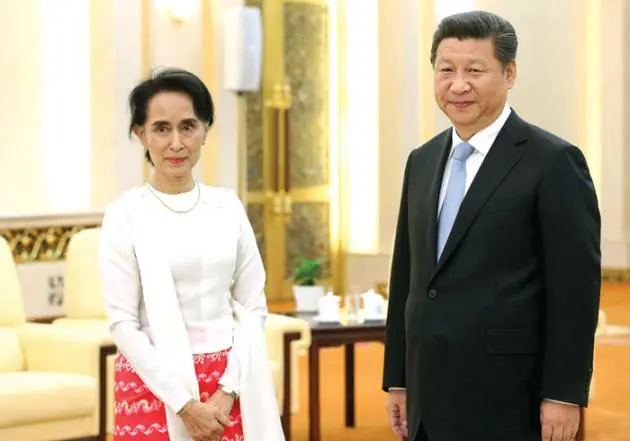


Three incidents happened on June 11, which indicated nothing but the improvement in the Sino-Myanmar relations.
It started with Myanmar opposition leader Aung San Suu Kyi’s first visit to China.
While it is rare for China’s President Xi Jinping to meet senior foreign opposition politicians, he welcomed Suu Kyi to the Great Hall of the People in Beijing.
Later on the day, the Myanmar National Democratic Alliance Army (MNDAA), which is led by ethnic Chinese commander Peng Jiasheng, issued a statement to announce a unilateral ceasefire which began on Wednesday. The ethnic Chinese rebel group that has been battling the Myanmar military on the border with China is apparently under pressure from Beijing to end four months of intense fighting.
"The Chinese government's strong calls for restoring peace in the China-Myanmar border region," was one of the reasons for the decision, the statement said. The group also said Myanmar's coming election, scheduled for November, and the country's democratisation process were reasons to try to bring an end to the fighting, but added that the group maintains its "right to protect ourselves".
Ye Htut, Minister of Information and spokesman for the president's office, said on Thursday that the government was aware of the announcement from the MNDAA but remained skeptical.
"We are monitoring their actual activity on the ground," he said.
The MNDAA struck a truce with the government which lasted until 2009, when government troops took over their region in a conflict that pushed tens of thousands of refugees into China's Yunnan province which lies next to Myanmar's Kokang region.
On the same day, Parliament was informed of the progress of the Letpaduangtuang copper mine project, one of Chinese investment projects which have recently suffered from protests.
Than Tun Aung, deputy mines minister, said 37 of 42 suggestions made in the investigative report into the project have been implemented. He also said that the contract with Myanmar Wanbao Mining Copper Co Ltd was modified, requiring the company to annually contribute US$11 million for regional development activities during the construction period. Meanwhile, 2 per cent of annual profits would be contributed for the activities during the operating period while $2 million is required to clear the land after the project ends.
Ties with China have been strained this year after stray army shells from fighting between the Myanmar government and ethnic Chinese rebels killed at least five people in China's southwestern Yunnan province in March. Aside from the copper mine, several hydropower projects to be invested by Chinese firms have also faced heavy criticisms.
During their meeting, Xi called for Suu Kyi and her party to play a constructive role in fostering a better understanding of China and to view cooperation in a fair and reasonable manner.
Describing the relationship as a community of common interest and destiny, Xi said China has always adhered to push forward the traditional bonds and pragmatic cooperation with Myanmar.
Xi also expressed hope that Suu Kyi’s first visit to China could help her better understand China and the Communist Party of China, which would strengthen trust between both sides.
He was quoted by Xinhua news agency as saying “I hope this visit will help deepen your understanding ofChina and the Communist Party, which will contribute to ourmutual understanding and trust, and lay a better foundation forthe party-to-party and state-to-state relationship."
Myanmar's government has sought to reduce its heavy dependence on China since taking office in 2011 and has suspended a multibillion-dollar Chinese-led dam project.
Economic ties have warmed recently, and both governments also signed more than a dozen cooperation deals in November. However, the relationship was strained in March when a bomb dropped by a Myanmar warplane killed four people in Yunnan province.
Since her release from house arrest in 2010, Suu Kyi has said that her country must maintain friendly relations with China, and has repeatedly expressed her wish to visit China.
