
MORE EFFORT NEEDED TO PREPARE SMES FOR AEC IMPACTS.


Play
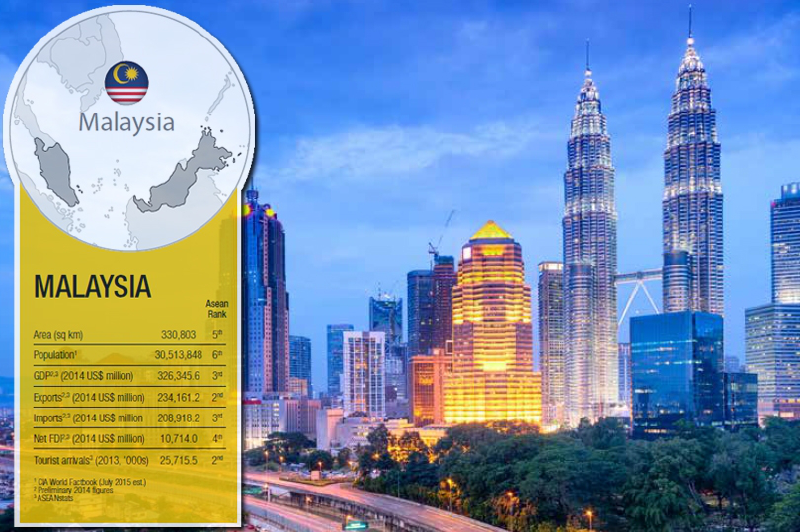
While Malaysia is better prepared for AEC integration than most of its neighbours, doubts remain as to the impacts on domestic SMEs.
As a single market, the Asean region is expected to become the world’s fourth largest economy by2050.Currently, it has a combined GDP of US$2.5 trillion (RM10 trillion) as the seventh largest economy, and is also home to a consumer market of over 600 million people.Foreign direct investment (FDI) in Asean has surpassed two of the world’s biggest economies –the United States and China – valued at US$136 billion last year.
Asean’s gross domestic product (GDP) is also expected to chart healthy growth of 5.6 percent annually from now till 2019, to be mainly driven by the formation of the Asean Economic Community(AEC) which will attract more FDI.But is Malaysia ready for the AEC? Even in August 2014, Malaysia was ahead of its neighbours in preparing for its implementation.Back then, it had completed 80 percent of the measures set out for the integration into the AEC
framework, ahead of the region’s average progress of 72.2 percent.And as of March 31, International Trade and
Industry Minister Datuk Seri Mustapa Mohamed said the average implementation rate was 90.5 percent.
Chairman of the European Union-Malaysia Chamber of Commerce and Industry Fermin Fautsch also said the outlook for Malaysia and Asean was positive, be it among the 10 members or the soon-to-be AEC with other
countries.Each of its members needs to strengthen intra-trade within the community before trading as a community with other trading blocs, in order to meet the expectations of Asean being the world’s sixth largest
economy by 2020.The infrastructure in Malaysia was very good compared with some of its members,but perhaps more investment was needed in some less populated areas, he added.Unfortunately, more than half of Malaysian
SMEs were unsure of the AEC’s impact on their business.In a survey published by the Associated Chinese Chamber of Commerce and Industry of Malaysia (ACCCIM) on March 30,2015, some 68 percent of respondents said they were not sure what preparations they ought to make.“The open Asean market provides an opportunity for Malaysian companies to tap into an expanded market, but on the other hand they can also expect a sudden influx of other players into our marketplace or industry, thus resulting in more intense competition,” said ACCCIM president Datuk Ter Leong Yap.The AEC seeks to create a single Asean market and production base in the region,
with free flow of goods, services,investments and capital, and skilled labour.And according to Bank Muamalat chairman Tan Sri Dr Munir Majid, Asean’s SMEs constitute 89-99 percent of enterprises,employing across the region between 52 percent and 97 percent of the working population.“While their output is only 23%-58% of Asean GDP, and just 10-30 percent of exports, those numbers reflect the low productivity of the SMEs – which, again,point to why their needs must be attended to if they are not to be swept aside by incoming competitors.“All this – numbers of people involved,overwhelming proportion of regional enterprises, their importance to Asean
socio-economic life – means concrete things must be done to ensure the Asean applecart is not overturned,” he added.It is imperative for SMEs and micro enterprises to not be left behind, as the people of the region are needed to make the AEC a true powerhouse.With that in mind, the Growth Accelerator Exchange (GAX) – a digital platform to cater to the financing needs of Asean SMEs –was launched to strengthen Asean small and medium-size enterprises in terms of their limited access to finance. GAX, which facilitates peer-to-peer financing and loan crowd funding, will be made available in Malaysia first, and subsequently to other Asean countries in 2016.
