
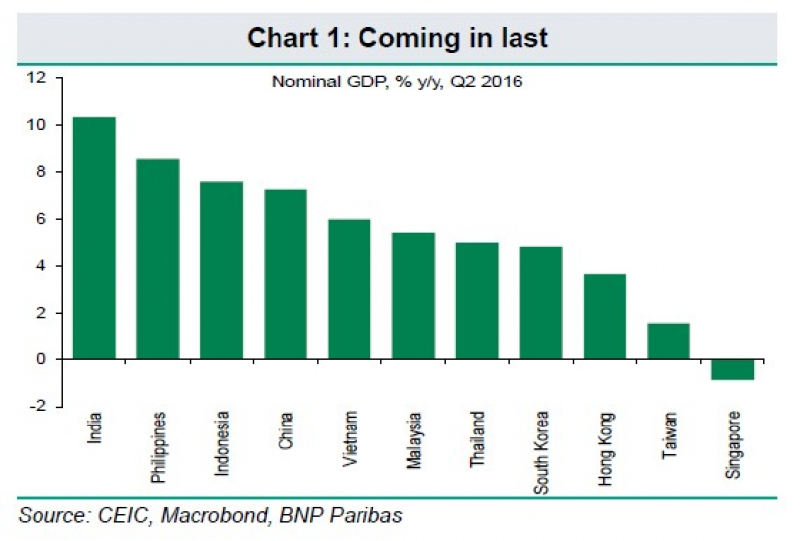
Singapore is only Asian economy to suffer contraction in nominal GDP in Q2: BNP Paribas


Play
Singapore's economy is the only one in Asia experiencing a contraction in nominal gross domestic product (GDP) in the second quarter of this year, French bank BNP Paribas noted in a report released today.
Unlike real GDP, nominal GDP is economic output at current prices without adjusting for inflation.
BNP Paribas said that although Singapore's real GDP growth of 2.2 per cent year on year was "respectable", nominal GDP growth was the worst in the region.
"Data suggests downward pressure on business profits are responsible, reflecting rising domestic labour costs and weak end-demand," said the bank. "Firms appear to be reaching their limits."
However, while Singapore's shrinking economy "superficially" supports the case for monetary policy easing, under the Monetary Authority of Singapore's (MAS) unique foreign exchange-based framework, this risks doing more harm to the real economy than good, said the bank.
"The 'conundrum' for the MAS is that easing policy via a re-centring of the SGD nominal effective exchange rate lower may boost export earnings but does little to address the underlying problem of weak final demand and is likely to cause domestic borrowing costs to rise as foreign investors seek hgher yields elsewhere.
"Standing pat in October looks the best course of action," said BNP Paribas, referring to MAS' next scheduled monetary policy review in the month ahead.
"It may not reverse the growth situation, but it should avert a deeper downturn," said the bank.
