
South China Sea coastguards crucial: academic
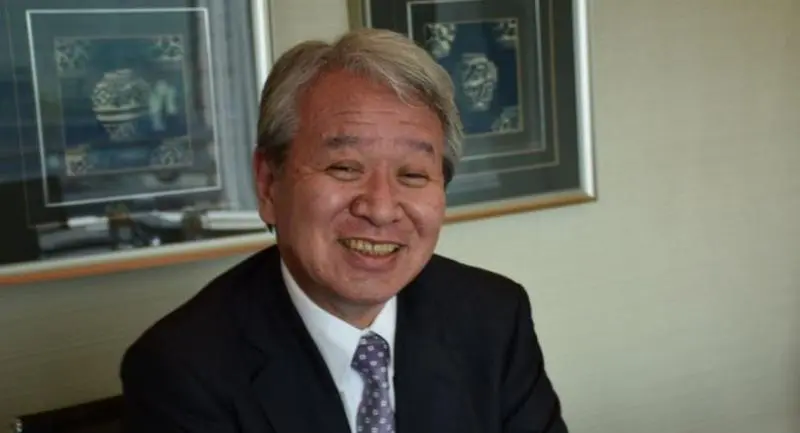


WHILE the 2002 Declaration on the Conduct of Parties in the South China Sea (DOC) has hardly been implemented and an Asean code of conduct has not been realised, countries in the contentious South China Sea should build up their coastguard capabilities, a Japanese expert said Monday.
It would be a mistake to use naval power to handle the disputed areas, as that could trigger misunderstanding and further conflict, Akihiko Tanaka, a professor of international politics with the Institute for Advanced Studies on Asia at the University of Tokyo, said.
“If the coastal countries have capable coastguards, they could manage the situation in a more civilised manner,” Tanaka said.
The professor gave the example of a mistake in 2012 when the Philippines, which does not have a coastguard, dispatched ships to confront the Chinese coastguard at Scarborough Shoal. The Filipino military presence ignited a tough reaction from China, he said.
Countries in Southeast Asia that are at odds with China over territorial disputes have less capable coastguards than the Chinese, Tanaka said.
However, Japan could offer both financial and technical assistance to countries in the region to build up their coastguard capabilities, he said.
Meanwhile, Japan and the larger international community hope to see affairs related to the South China Sea conducted in accordance with the rule of law. “Although the DOC is not a binding rule, the DOC states that the parties should refrain from changing the status quo in disputed areas,” he said.
The 10 Asean countries signed the DOC with China in the 2002. However, while the document makes clear that all parties should refrain from changing the status quo, claimants have engaged in activities such as building artificial islands and military facilities.
Asean is also negotiating a code of conduct to be used as a legal instrument to control the behaviour of countries regarding the contentious sea.
Tanaka praised China for entering negotiations on a code of conduct with Asean, but expressed doubt that the group could implement it. Beijing might not agree to clear terms on enforcement mechanisms, which would render the code of conduct a mere document of compromise, he said.
The United States could play a role in implementation of the code of conduct, when it comes into force in the future, he said.
“Although it would not be a signatory to the code of conduct, at least the US could monitor all activities and then the US could publicise all the cases of violations,” he said.
Under the new administration of President Donald Trump, the US would continue its role in the Asia Pacific, giving priority to allies such as Japan and those in Southeast Asia, he said.
The Trump administration might not be able to force China to reverse its goals in the contentious sea, but it could prevent Beijing from further activities to build artificial islands, notably in the area near Scarborough Shoal, he said.
The US under the Obama administration failed to deter China from expanding and building on islands and shoals in the South China Sea, only criticising China over the activities in 2014 after many installations were already in place.
