
Mystery of how Himalayas formed unlocked by new evidence from Myanmar
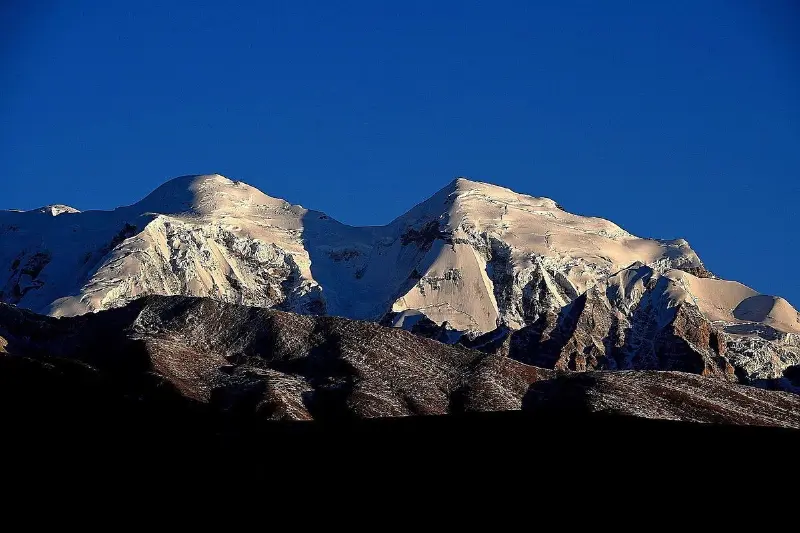


Geologists from China and Myanmar have found new seismic evidence to explain how the Indian subcontinent drifted northward anomalously fast and collided with Asia to form the Himalayas in ancient times.
The study, published on Saturday in the journal Science Advances, reveals that closure of the ancient Neo-Tethys Ocean in the Mesozoic Era and the subsequent formation of the Tibetan Plateau were likely caused by double subduction. Double subduction happens when not one, but two oceanic plates simultaneously subduct (force their way under) a third plate.
The new evidence comes from high-resolution investigation of the Earth’s upper mantle (crust) beneath Myanmar. The research was conducted by scientists from the Chinese Academy of Sciences, the Myanmar Geoscience Society, Yangon University and Dagon University.
The Myanmar region occupies the eastern end of the Indian-Asian collisional system. Due to lower impact from the continental collision, it is an ideal place to probe possible slab remnants of double subduction, according to the study.
The research reveals, for the first time, two subparallel subducted slabs preserved intact in the present upper mantle beneath the Neo-Tethyan tectonic regime, supporting the double subduction model of the Neo-Tethys Ocean.
China Daily
Asia News Network
Asia News Network: The Nation (Thailand), The Korea Herald, The Straits Times (Singapore), China Daily, The Jakarta Post, The Star and Sin Chew Daily (Malaysia), The Statesman (India), Philippine Daily Inquirer, Yomiuri Shimbun and The Japan News, Gogo Mongolia, Dawn (Pakistan), The Island (Sri Lanka), Kuensel (Bhutan), Kathmandu Post (Nepal), Daily Star (Bangladesh), Eleven Media (Myanmar), The Phnom Penh Post and Rasmei Kampuchea (Cambodia), The Borneo Bulletin (Brunei), Vietnam News, and Vientiane Times (Laos).

