
Jim Thompson still not found
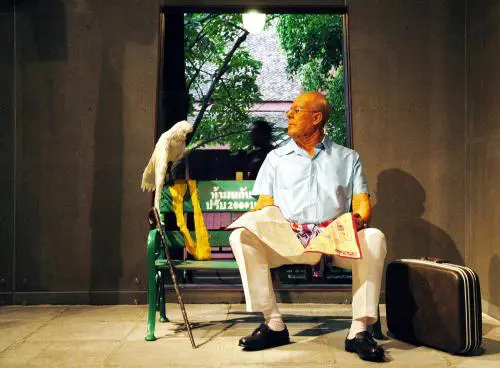


The Silk King's ghost is summoned once more to explain why the Vietnam War was a mistake
The Ideal Man: The Tragedy of Jim Thompson and the American Way of War
By Joshua Kurlantzick
Published by John Wiley & Sons, 2011
Available at Asia Books, Bt486
Drably written and coy about conclusions, “The Ideal Man” is a disappointing addition to the “what happened to Jim Thompson” library, but it does highlight a promising sidebar in the saga’s evolution. Well into the book, Joshua Kurlantzick introduces Willis Bird, whom we’ve met in previous accounts but never so vividly.
Like Thompson, “Bill” Bird was an old mainstay of the OSS who lingered on in Thailand after World War II and started a business of his own while keeping a finger in an intelligence pie getting hotter in the Cold War oven.
Unlike Thompson, Bird was happy to stand by the US government as it rode the Thai political teeter-totter through the coups of 1947, 1951 and 1957.
Washington didn’t care which strongman was on the high end as long as he was devoutly anti-communist, and if that meant abetting dictators, so be it. The Thai generals and Bird were happy to be anti-communist because that’s what the US paid for, with a bottomless bag of cash.
Too well connected and influential for the US Embassy’s liking, possibly a model for the fictional Ugly American, Bird is a fascinating character, and perhaps Kurlantzick at times wished he was writing a biography of Bird rather than Thompson. But the book’s real focus – America’s post-war shift into global imperialism – is broad enough for both spies.
Kurlantzick – associated with the US Council on Foreign Relations – writes at length about Washington’s escalating secret war in Indochina, often leaving Thompson far behind in the narrative. When he gets back to his titular subject, the reader is reminded again (and again) that Thompson wanted America to gently help the Southeast Asian nations foster peace and democracy, not arm their corrupt leaders to battle the perceived horrors of the red menace.
And thus Thompson was a man of ideals, as opposed to “the ideal man”, a confusing title that suggests he was somehow perfect, which he most certainly was not, as Kurlantzick acknowledges with seeming reluctance.
The author is to be commended for having done a lot of legwork. His interviews with former OSS and CIA employees feed his account of the political intrigue. There is, along the way, much discussion about Pridi Banomyong, Plaek Pibulsonggram and police chief Phao Sriyanond, comprising an interesting look at Thailand in tumultuous times, albeit with nothing new added.
Kurlantzick’s meetings with Thompson’s surviving relatives produce a few non-political surprises, such as his string of affairs with the wives of diplomats and fellow spooks.
There was an abiding liaison with Irena Yost, who was married to senior Bangkok diplomat Charles Yost (later ambassador to the UN) and decided to stay that way despite Thompson’s repeated pleas to marry him instead. His family’s disapproval of the affair helped sever the already tenuous ties he had to his homeland.
Cut off from home, spurned by the woman he loved and in trouble with a gamut of husbands – that would be three more symptoms in a prognosis for premature death.
Kurlantzick tosses the word “legend” around like a lot of people do these days, heedless of its heft. Ah, but this is Jim Thompson, in whom so many Western expatriates in Thailand imagine their reflection. They want to be more than strangers in a strange land, to prove their empathy and help the Kingdom preserve its integrity and charm.
And if, in the end, they vanish forever under exciting and mysterious circumstances, well, what a way to go!
Idealism again: You can almost feel Thompson getting worn down by the hopelessness of it, and that feeling is aided by Kurlantzick’s repetitive, tedious, mechanical writing, lumbered with stereotypes.
He’s been writing “The Ideal Man” since at least 2007, but it’s come out haphazard. In places it’s rushed, careless or meandering, before finding its way back to the legend that Thompson inevitably became thanks to a lack of rigid consensus about what motivated him.
The book ends in a rather insipid pool of nostalgia for the Thailand of old. Thaksin’s CEO greed and the cynical coup of 2006 have chased off the country’s idealism. Yet by this stage in the writing, Thompson has become a pathetic figure, not just out of step with his times but petulant about Thai business dealings, paranoid, pompous, narcissistic and given to bursts of rage.
He was lost, in most senses of the word, long before that Easter holiday in the Cameron Highlands.
