
The rocket man's ascent
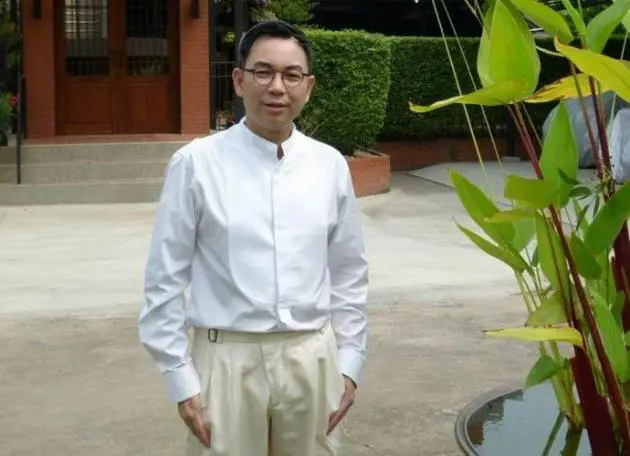


Financier Chirathep Senivongs Na Ayudhya shares his life story and his plans now that he's 45
Villa @ Wongwian Lek
By Chirathep Senivongs Na Ayudhya
Published by Paiboon Offset
Available at Nai In Books, Bt250
Reviewed by Achara Deboonme
Chirathep Senivongs Na Ayudhya is well known in financial circles as a high-flying official at the Bank of Thailand. He was a senior director in charge of corporate communications by age 44.
In his autobiography “Villa @ Wongwian Lek”, Chirathep doesn’t hide his pride at attaining such a height last year at such an early age. What really makes him – and the book – more interesting, though, is the details about his childhood and personal life, the fundamentals that shaped his character.
Chirathep is the only child of a noble family that maintained a peaceful residence at Bangkok’s Wongwian Lek intersection. The “villa” of the title was where he was groomed to be the man he is today.
His father was an experienced executive at Royal Dutch Shell who taught him about the consequences of one’s actions. His mother placed delicacy above all else. Between them, Chirathep learned to think matters through carefully before making a decision. The goal, he writes, was always perfection.
The family moved to London when he was 14, and when it was time to return to Bangkok, Chirathep decided to complete his university studies there. He enrolled at what is now called the London School of Economics and earned a degree thanks to excellence in mathematics and despite poor grades in science.
By 22 he had a master’s in economics from Oxford University. Unsurprisingly, he had no trouble landing top jobs, first with an overseas financial institution and then with the Bank of Thailand. Chirathep was briefly “loaned” to the International Monetary Fund, resulting in a handsome boost to his own fund and the imminent privilege of early retirement.
His career trajectory is impressive, but his philosophy is even more so. Chirathep compares his life to a set of balance sheets on which the price of each step must be concisely stated. Foolish behaviour is costly, for example, and to restore the balance you need extra reserves – energy to cope with the inevitable losses.
“In economic terms I live within my means,” he writes. “I have controlled the cost to some extent and I can somewhat predict what will happen in the future. I could lose my parents or some other loved one, and if I’m wise enough, I wouldn’t lose any money, regardless of the cause.”
Several “loved ones” have come and gone, fostering a philosophical outlook on romance as well. “Personally, I’m not a fan of love attached to problems or conditions, since my life is satisfactory. It’s useless to have someone in your life who brings along endless problems. That’s not love, but a problem.”
As a child Chirathep was forbidden from playing outside the villa compound. He invited friends in instead, only to find that some were less than friends. He’d have them kicked out if they did anything that might threaten his world. He was never afraid that he might end up alone.
Chirathep’s boldness to the point of being abrasive has been noted. Taught to listen to other people’s reasoning, he expects the same in return. He can’t understand why so many people shy away from defending their stance. Success, he says, derives from your inner qualities. You should be proud of who you are, especially if you’re not “typical” – society cherishes those who are different.
Having passed 40, he now most fears losing his carefully nurtured perspective. The time for self-discovery is over, and continued success now depends on having a public image that can be sustained. Preserving that image might mean sacrificing some aspects of his worldview.
He’s planning for a retirement that won’t be boring. Men are like rockets, he says, jettisoning spent fuel tanks one by one as they ascend. At 45 he believes he has one gas tank left – that personal energy again. Astronauts need a plan for getting back to Earth once all the fuel is gone. By writing this book, he’s sharing his tips on securing a bright future.
It should surprise no one that this “outside the box” thinker also calls himself a living work of fine art, delicately carved by his parents. Living a life that’s the envy of many, why should he hide his pride?
