
The wisdom of the dead


Play
Funerary booklets are valuable historical sources, as well as loving mementoes of the deceased.
The Thai tradition of distributing memorial booklets at funerals dates back to 1880, when King Rama V published a dharma prayer book for the cremation of Queen Sunandha Kumariratana. However, the cremation memorial books have never been the profitable business they are now.
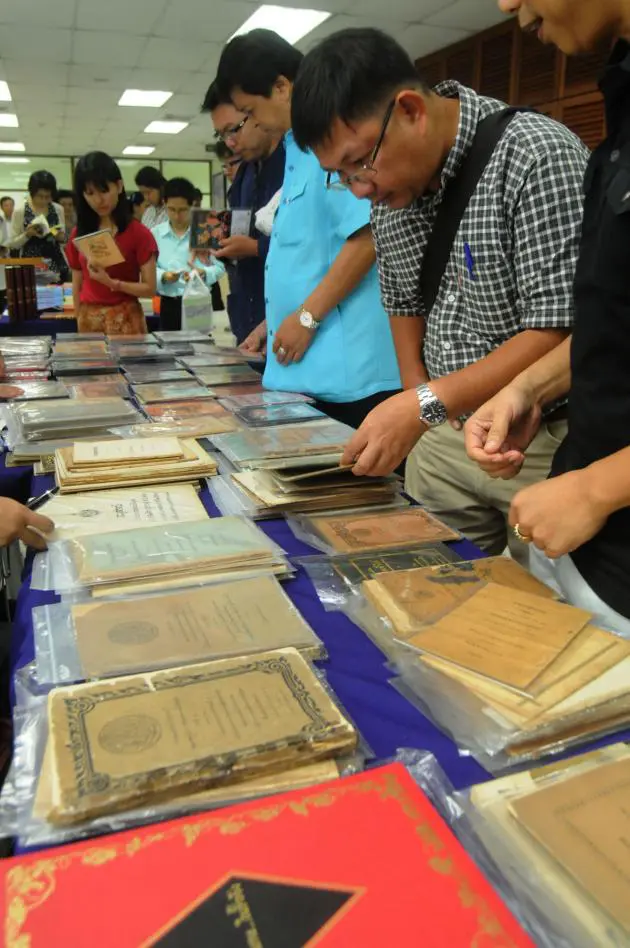
The books’ history was the subject of another engaging talk last week at the Princess Maha Chakri Sirindhorn Anthropology Centre, hosted in collaboration with National Library of Thailand.
Little known outside Thailand, cremation keepsake books collectively form a substantial history, covering not just the biography of the deceased – including many famous people – but also significant information about their times. Printed only for the friends and family attending the funeral, they are not available in public bookstores, and thus appeal to collectors for their academic value.
During the talk “The Charm of Cremation Memorial Book”, Professor Dr Attachak Sattayanurak of the Chiang Mai University History Department explained how the memorial books comprise an important facet to society’s collective memory.
“These books were introduced at a time when most Thais were poor and poorly educated,” he noted. “They’re given away freely as a way of making merit, but they also have practical value.
“They’re usually divided into two parts – the biography, which underlines the prestige of the deceased in the community, and general knowledge about the community and Buddhist teachings like the rules of karma. There are also usually prayers and often recipes for favourite dishes and information about the ailment from which the person died, along with advice on how to deal with it.”
Historians have delineated three periods, marked by differences in content. The first, from 1917 to 1947, saw most of the content devoted to the writings of King Rama V and Princes Damrong Rajanubhab, Narissara Nuvadtivongs and Wan Waithyakon, while books for commoners often contained stories written by the famed scholar Luang Wichitwathakan.
From 1947 to 1977, as the middle class expanded, funeral booklets tended to focus on the prestige of the deceased, including their royal decorations. A mourning message became popular, along with Buddhist teachings, such as the sermons of Buddhadasa, and essays about health concerns.
Since 1977, “how to” content – regarding health, cooking and the special interests of the deceased have been more common.
Rare-book collector Thongchai Likitpornsuwan is more interested in the biographical aspects of the books. “I find many of the books very impressive, especially in terms of history,” he said, citing an anecdote he discovered about a palace employee becoming angry with a prince and pushing all of his toys away from the boy. “Information like this you can’t find anywhere else. Information about “Phra Rachabithi 12 Duens”, written by King Rama V, is among the classical knowledge reprinted in the memorial books.”
Thongchai and other collectors looks for such treasures the stalls spe
cialising in antique books in the Tha Tian, Tha Chang, Worachak and Chatuchak markets, at book fairs and online. The price can be thousands of baht depending on the content, the book’s age, condition and craftsmanship, and the fame of the deceased. The keen interest in getting copies of the funeral book of General Khattiya Sawasdipol made headlines recently. Seh Daeng, as he was known, was the red-shirt leader assassinated in 2010.
Obviously there is money to be made from cremation books. Some people are paid specifically to attend funerals and get the books, and the printing shops dedicated to keepsake books are booming. They offer the next of kin a variety of templates to choose among, complete with blank pages for the personalised information about the deceased.
Associate Professor Srisak Wallipodom, an anthropologist, said he has learned a great deal from cremation books. “The tradition became widespread as a way of giving those in attendance a souvenir that celebrated the social status of the deceased,” he said. “In the past the content focused more on the history of the community, with travelogues, poems and the local traditions. Today that’s all changed.”
The change that Srisak doesn’t appreciate is having monetary value attached to the booklets, creating a business based on profits.
It’s been said that Buddhism appealed to so many people at the outset because it addresses death more frankly, and at length. The funeral books are not just a tribute to the dead and a means of making merit, but they have practical value as well – as a remarkable source of knowledge.
