
Hard times for the working man


Play
Like the citizens it champions, the chronically ignored Thai labour museum strggles to survive
The Thai Labour Museum has spent 20 years reminding visitors that the country would never have reached where it is today without the unending toil of ordinary citizens. The museum’s anniversary on October 17 is a poignant moment to pause and reflect on the past.
The museum in Makkasan district – in the one-storey former Railway Police facility that became Railway Labour Union Headquarters – has never been given adequate attention by the ministries of Labour and Education, says Associate Professor Lae Dilokvidhyarat. And it might not survive to continue telling the worker’s tale.
“Those who come here come specifically to do research,” says the Chulalongkorn University economist, a member of the museum board. “Not even workers come on their days off, though you can’t blame them – they’re too much a part of the economic mainstream, so they’re only interested in what the rest of society values.
“The average Thai simply isn’t interested in the story of the working class – except when they’re on strike.”
The museum was established with a grant from the Friedrich Eber Stiftung Foundation. Those behind it recognised that the history textbooks took for granted the day-to-day achievements of the common working man, focusing instead on upper-class innovators and entrepreneurs.
“The progression of economic development is seen through the value of commerce rather than the people behind the success,” Lae acknowledges. “The workers make up the majority, and yet capitalism regards them as simply ‘human resources’ and not key players in economic development.
“The museum aims to show the sweat of these people in helping to shape the nation. We serve as the information centre, giving people access to a comprehensive collection of documents and literature concerning the Thai labour movement.”
There are six rooms, divided between olden and modern times. At the outset the displays are predictably grim, illustrating the misery of daily life among the serfs and slaves who were the backbone of the old feudal system. That awful subsistence economy gradually yielded as Siam embraced a commercial economy and admitted to a paid labour force.
You can view a copy of the Bowring Treaty signed with Britain in 1855, which forced open Siam’s doors to foreign trade. Another exhibit looks at the Chinese “coolies” – migrants who did backbreaking work by day and forgot their aches with opium by night. An old photograph of a rickshaw dominates the main hall. Siamese whose income was marginally better rode in a “rot jek”, for the most part mindless of the wizened Chinese man towing them by dint of stretched and swollen and sinews.
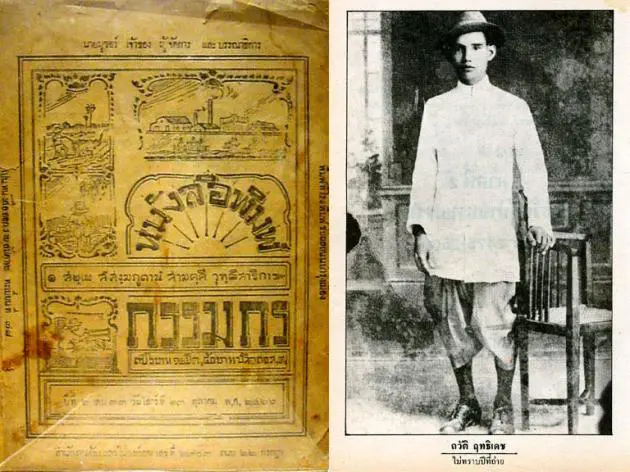
A venerable sugarcane mill and a timeworn rubber-rolling machine date from the reign of King Rama V. An entire scene is replicated showing men laying the railroad, at great and constant risk to life and limb.
A room bearing the sign “United We Stand” contains documents, both original and facsimile, chronicling the struggle to gain protection for these poor souls, even prior to the political revolution of 1932. The movement finally gains traction in the next room and makes great strides – witness the Bastion of Democracy Medal – until Field Marshal Sarit Thanarat’s coup, which knocked it back into an era of subservience.
Interestingly, the museum gives a nod to the unholy forced labour of World War II prisoners of the Japanese. A painting by a British POW depicts the construction of the “Death Railway” on the Myanmar border.
Next to it is a tiny slip of paper on which Field Marshal Pibul Songkhram issued a command in handwriting to ensure fairness for women workers. Such belated “kindness” vanishes among the displays that follow, from the 1970s, when the authorities denigrated the workers’ movement as a bar to foreign investment and a threat to prosperity. Labour leaders were imprisoned, some even executed. Meanwhile agriculture was crumbling under the forces of industrialisation and country kids were flowing into the factories.
For every setback, progress eventually answered. As students demanded social equity, workers gained in rights and benefits. Huge demonstrations took place and strikes earned headlines, such as those at Standard Garment and the Dusit Thani Hotel.
The women workers of Hara’s took over the fiscally troubled factory and sold shares so they could carry on making jeans. On display is a pair of denims with a hammer and sickle on the back pocket. Heroes arose, of whom there are photos, signed essays, song lyrics and other mementoes. Union leaders including Arom Pongpangan and Paisan Thawatchainan earn tributes.
Thanong Pho-arm, who stood up to the dictatorial National Peace Keeping Council that put Suchinda Kraprayoon in power in 1991, is among the voices noted in an accounting of labour’s involvement in the bloody battle to restore democracy. Thailand finally had a Social Security Act and, after a bitter showdown, 90-day maternity leaves.
It also had a gutted factory building owned by a firm called Kader – where hundreds of workers died in a fire.
Progress and setbacks – that’s the history of labour, anywhere in the world.
Thailand officially counts 14.1 million labourers. Unofficially, there are an estimated 24.3 million more. For the most part today, Lae says, “The employers learn to deal with workers so that they play by the rules and there are international laws of conduct that set some pattern influencing the standards of the workforce.
“While the situation of Thai workers today might be better than it was, and there has been a lot of progress, no one can tell if it has really reached its goals.”
The future of the museum is just as tenuous. Charging no admission fee and poorly funded by the government, it could soon disappear altogether. The State Railway’s ambitious Makkasan commercial complex, though currently facing stiffcitizen resistance, could swallow the site whole.
LABOUR PAINS
The Thai Labour Museum is on Nikom Makkasan Road near the Makkasan railway station.
It’s open Wednesday through Sunday from 10am to 5pm. Donations are welcome at the door.
