
Looking back, going forward


What was fashionable in 2013 and what's likely to make the cut in 2014
While we can't call 2013 a year so outstanding it will never be forgotten, there was certainly plenty of action between January to December and the list goes way beyond our Facebook timeline.
People watchers looked on as the “tea party movement” arrived in Bangkok and immediately become more of a fashion statement than a cosy moment. Shoppers enjoyed a lift with the opening of interactive stores and more malls peeping over the horizon while the still-young cycling put down deeper roots.
From dining to shopping, and entertainment to travel, we take a look Bangkok’s latest trends.
Dining
A couple of years ago, urban folk couldn’t take two paces without falling over a newly opened coffee shop. While java juice hasn’t fallen completely out of favour, 2013 has witnessed the arrival of a tea drinking culture with fancy new salons and tearooms setting up shop in the city’s trendiest areas. Here, patrons leisurely sip and slurp fine brews in a luxurious ambience while bandying around such terms as “first flush”, “second flush” and “single estate harvest” with studied nonchalance.
The first to arrive was Singaporean brand TWG Tea with its classy salons at the Emporium and Siam Paragon. English brand Twinings came next, launching a teashop and tearoom at CentralWorld and last month, it was the turn of Harrods Tearoom from London, which opened its first Bangkok outlet at Siam Paragon.
The hotels too have been quick to recognise the tea trend, offering a grand selection of afternoon tea sets complete with scones, finger sandwiches and cakes and, in some cases, a glass or two of bubbly. They’ve taken the brews up to the rooms too with selected fine blends standing proudly next to the fancy coffee machines.
“Tea is all about taking your time and as time is a luxury, tea has metamorphosed into a luxury of its own accord. Coffee will never be related to luxury, and this is the biggest difference between the two,” opines Italthai chief executive Yuthachai Charanachitta, the franchisee of TWG Tea in Thailand. During the first year, the brand served 150,000 cups and reportedly sold a ton of leaves.
“Thai consumers tend to follow European trends. They dress up more and prefer luxury items and tea is definitely more luxurious than coffee,” adds Boonchai Kongpakpaisarn, president and chief executive of LME who brought Harrods Tearoom to Thailand. “Food and beverages today are not about what you eat and drink. They’re a lifestyle statement, it’s how you present yourself.”
Perhaps that’s way we no longer see so many ladies waxing lyrical over double iced macchiato topped with cream. They’re now lingering in nice tea salons and posting the pictures on social media to prove it.
MANTA KLANGBOONKRONG
Fashion
“High street” became the latest catch phrase for the fashion world in 2013 with designers, fashionistas and trend-setters all celebrating the vibrant emergence of high street threads.
High-end fashion powerhouses like Channel, Christian Dior, Valentino and Burberry launched more “youthful” collections with funky flair and used younger presenters to appeal to younger audiences, while free-spirited designers upped their game and showcased quirky individual looks on the runway. With the narrowing gap between high-end and low-end, fashion moved away from the price tag and focused instead on mixing eclectic, different brands in a very personal style.
Bangkok has been quick to respond to the high-street trend. Multi-label designer stores in popular malls like The Emporium, Siam Paragon, CentralWorld and the soon-to-open Central Embassy have all snapped up a selection of gear from designers eager to test the market before investing big baht in a flagship store. House of Holland was so pleased with its retail experiment that it recently opened its first boutique at Siam Paragon.
“Generally our clothes tend to attract a younger audience, mid-20s to early 30s. Our prices are slightly lower and more achievable for that age group. We’re still a catwalk brand, but we’re creating something for younger girls, really,” says Henry Holland, the brand’s founder.
“It’s not so much about loyalty to one brand now. Younger people are much more savvy about fashion these days. They want something that’s unique, expressive and good quality that’s also affordable. They don’t want outfits that scream Channel or Dior. They’re after a personal statement.”
MANTA KLANGBOONKRONG
Shopping
With malls continuing to mushroom all over Bangkok, leading retail properties are working hard to offer something different. Among them is Siam Center, which spent Bt1.8 billion on a major renovation with an invigorating mix of technology, art, fashion and design that adopts an interactive approach between shoppers and retailers.
Taking its inspiration from New York’s Soho area, the mall reopened in January as an “ideaopolis”, and quickly becoming a hub of talent of both home-grown designers as well as leading overseas fashion houses.
Aiming to appeal to younger shoppers, owners Siam Piwat invested more than Bt70 million in interactive technology, equipping the ceilings, walls and even the bathrooms with LED screens.
The innovations include a “digital closet”, where visitors can have digital fittings for clothing from the mall’s boutiques and promptly upload them on Instagram and Facebook pages, as well as a series of pop-up shops offering food, drink and lifestyle items.
CentralWorld is also out to draw the young and trendy with its new Groove zone. Opened just last week, it’s being promoted as the next world-class hangout for the city’s new generation shoppers. More than Bt1 billion has been spent on the futuristic venue, which is home to 16 international restaurants and bakeries including Maxim’s Bistro, Fauchon and Harrods.
The upmarket Central Embassy centre is on schedule for its February opening and will host the boutiques of such big names as Chanel, Gucci, Prada, Ralph Lauren, Bottega Veneta, Saint Laurent, Mulberry, Balenciaga, Paul Smith, Patek Philippe, Hublot, John Varvatos and Roberto Cavalli. The 222-room luxury hotel that’s also part of the complex is to open in September.
The Mall Group has also expanded with the construction of new retail space The EmQuartier on the opposite side of Sukhumvit Road. Slated for completion at the end of next year, it’ll be the first shopping mall in Thailand to feature an automatic car-park system.
Coming up in 2016 is the EmSphere project, which will be close to Benjasiri Park and include a 1,000-plus-seat art and performance centre.
Meanwhile the trendy community malls continue to flourish, with the newest kids on the block including Mille Malle on Sukhumvit 20, Omni on Lat Phrao Road and The Scene and Tonsoong Avenue at Town in Town. Home to fashion boutiques, home decor shops, smallish supermarkets and a range of cafes and restaurants, they remain firm favourites with shoppers preferring to avoid the city centre.
The year has also seen a number of small retailers take the leap from online retailing to real time shops and their ranks are likely to swell in 2014. Among the most popular are Shoes Republic, which decided to keep its 50,000 Facebook followers happy by turning a small space on Sukhumvit Soi 20 into a showroom and Talent Thai Award winner Mink, which now offers sleek wooden furniture and decor items from its shop in Ekamai Mall.
PATTARAWADEE SAENGMANEE
Bicycling
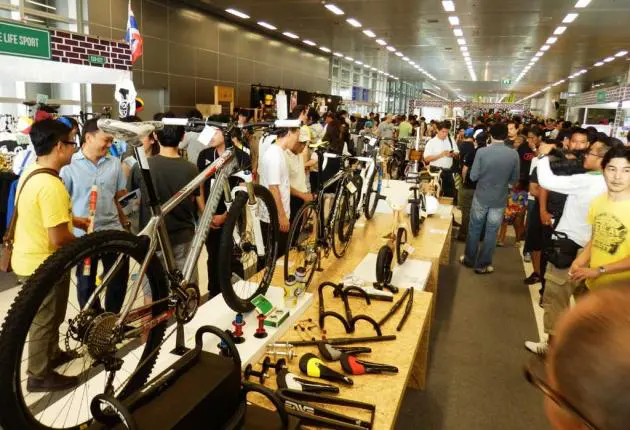
Pedal power in Thailand continued to grow in 2013 and is likely to grow even more in 2014 though sadly Bangkok remains a far cry from the bicycle-friendly capitals of Amsterdam, Copenhagen and Paris.
Increasingly popular with tree-huggers, fitness freaks and celebrities, cycling is also a great way to explore the city along its rivers, canals, temples and the narrow paths that lead to traditional communities, especially now that dedicated bicycle parking has sprung up at various locations.
Bicycles are also becoming part of the various events and activities organised by the public and private sector to promote environmental conservation, reduce pollution and save energy.
“Sales of bicycles in 2013 have shot up with most of the buyers in the middle and high-end segments. It’s a market with a high potential for growth. In 2014, I think we will see a focus on 650mm wheels as they making cycling easier and it’s a design more suited to the Asian physique,” says Surasith Tiyavacharapong, chief executive of LA Bicycle Thailand.
“Cyclists are definitely more conscious of the need to buy the right bike and accessories and I see that continuing into next year. They think of the cost as an investment,” adds Kris HM Gomeze, editor and publisher of Bicycles United.
“Three years ago, one could basically count the number of bicycle importers on two hands. Today, it’s a totally different story and we’re seeing not just an increasing number of importers but dealers and shops as well. Countless new brands are being spotted on the streets and this generating interest among the growing population of cyclists.
“While the mountain bikes and road bikes segment continues to grow, the trend is towards touring bikes, mini-velos, folding bikes and urban bikes. We will also see more single brand niche bike shops catering to the demands of both new and experienced riders,” she predicts.
KITCHANA LERSAKVANITCHAKUL
Smartphones prove vital to movie-goers and travellers
Movies
The long-awaited 3G technology finally arrived in Thailand this year, boosting the speed of smartphone connections and allowing everyone to watch their favourite TV series and movies on a 4-inch screen.
Filmmakers and programming executives took note of the trend and developed apps that allow audiences to buy and watch their products on the go. Now, having invested all that cash, they are keeping their fingers crossed that the smartphone will remain the preferred conduit in 2014.
Online watching hit the big time this year when the series “Hormones Wai Wawun” started airing on the GMM One cable channel. With the social networks buzzing, GMM Grammy decided to cash in on demand and make the show available through live streaming on YouTube and on their website. The series quickly set new “most viewed” records though the phenomenon didn’t last, fading into oblivion with the final episode of the series.
Not everyone is enamoured of smartphone screening. Some filmmakers and gadget gurus believe that entertainment on a tiny screen can’t replace the conventional format. They point out that watching a movie on smartphone or computer screen is detrimental to the magic, almost spiritual, film experience and urge movie fans to enjoy to instead sit in the dark cinema with a great sound system and travel to another world.
Yet they also acknowledge that when the conventional format is unable to respond to their needs, such as during the “Hormone” broadcasts, then switching to an alternative channel is the only option.
PARINYAPORN PAJEE
Travel
In 2013 many more independent Thai travellers, most of them aged between 18 and 40, hit the roads to experience life in a foreign country.
It’s a trend that will almost certainly continue and whether they choose to head to ancient Bagan in Myanmar, Borobudur in Indonesia or Mt Fuji in Japan, this “smartphone generation” is leaving home with different expectations.
Being always connected is a must, and the smartphone culture will set the way for how we will travel in 2014. Hotels providing free Wi-Fi will score higher than those who charge or bank on drawing guests with a free breakfast instead. Travellers will also tend to be more vocal and share their travel experience on social media and user-review sites. They will look for beds in small places with character and history and once they find them, will take photos and selfies to post on Facebook or Instagram along with their comments, turning themselves into advertising agencies for the places they stay.
Websites like TripAdviser will continue to play an important part in helping travellers decide when and where to go while airport formalities will be speeded up thanks to online check-in.
Some airlines are now introducing the self check-in kiosk, where passengers can print the boarding pass and luggage tags before dropping off their bags at a dedicated counter. Are they in fact making travellers work unpaid in jobs that have long been the responsibility of airline staff? Perhaps, but in a world where speed is off the essence, there are unlikely to be many complaints.
Hotels too are asking guests to be more independent, either by pulling back on expensive amenities such as room service or by adopting technologies (the Smartphone as keycard) that allow them to bypass the check-in desk. Some international chain hotels even have Smartphone apps that allow guests to handle check-in, chat directly with their butler and the hotel’s concierge staff in real time, check on babysitting services and kids’ activities and order gifts such as floral arrangements.
Don’t lose your Smartphone. Your world is in your hands.
PHOOWADON DUANGMEE
