
A land in need of a good book
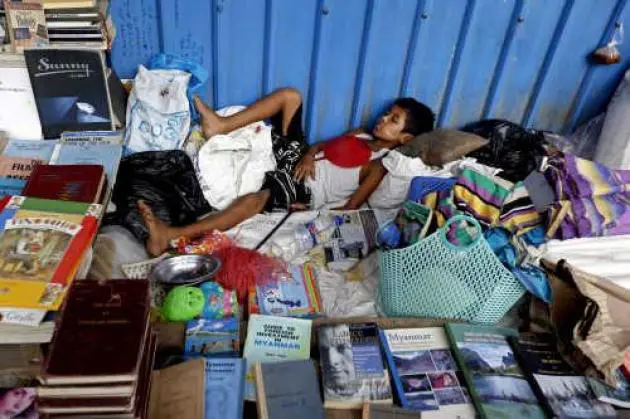


Once the region's most literate people, Burmese were weaned off the habit of reading
At 6pm each evening, U Cho opens his book-rental shop below the bottom staircase of the decrepit apartment building where he lives with his family in downtown Yangon. A few elderly customers wait patiently outside.
"I’d like to stay open all day, but it’s no longer viable to rent a place for thing kind of business," says Cho, 69. For years he rented the ground-floor apartment in the ramshackle building, but dwindling demand forced him to sub-let to a video-games parlour and shift his book collection to the stairwell. Cho, a bibliophile himself, has been running book-rental shops since he was 18.
"There were many rental shops in Yangon back then, and also in the other cities," Cho says, harking back to his first years in the business, when Myanmar, then called Burma, boasted Southeast Asia’s most literate population, before the repressive military rule of 1962-2010.
During British colonial rule and during the nation’s first fling with democracy under Prime Minister U Nu, money was scarce among Burmese for "luxuries" such as books.
Book-rental shops started to appear before the independence of 1948, says Hla Shwe, 75, a former political prisoner who, like many elderly Burmese, is an avid reader. Teachers in charge of student hostels at Yangon University would rent their books to the students who couldn’t afford to buy them, he says.
The practice then spread outside the university, especially to teashops in the nearby Hledan quarter. Shop owners rented books to students as they sipped their tea or, at a daily rate, to enjoy in their homes or hostels.
Under U Nu, the first full-time book-rental shops opened in Hledan and the business eventually spread across the nation. Passenger boats and ferries rented books to travellers. Not even the arrival of television hampered the practice, which continued until Burma was closed off to Western influences thanks to the xenophobic foreign policies of its military rulers.
"TV reached the country in 1980, but there was no serious effect on book rentals because TV was very limited at that time," says Than Than Mon, who has run the Myat Mon book-rental shop since 1989.
"But when TV became more popular in cities and then in the villages in the late 1990s, many book shops went under," she says. The decline of the business was further accelerated by the spread of pirated VCDs and DVDs as the military’s control over the flow of information deteriorated in the past decade.
Reforms implemented by the quasi-civilian government of President Thein Sein since 2011 have freed up the publishing industry, which had been heavily censored, but more mundane factors are preventing are revival of reading and book rentals.
"Now you can publish any kind of book, but the prices are too steep for low-income people," says Thant Thaw Kaung, chief executive of Myanmar Book Centre. Many former book-rental shops have switched to renting VCDs and DVDs.
"With only 200 kyat [Bt8] the whole family can enjoy a day’s entertainment if we rent a DVD, but you must spend more than 500 or 1,000 kyat when you rent different books for everyone," says Tin Htwe, 43. He’s a father of three who lives on the outskirts of Yangon.
The trend away from reading is worrisome not just for book renters but also opposition leader Aung San Suu Kyi, the Nobel laureate, who has taken steps to revive the country’s once-flourishing reading culture.
"We must create a literature atmosphere for our people, especially among the youth, for the sake of the country’s future," Suu Kyi said in January at the launch of a second fleet of mobile libraries in the capital, Nay Pyi Taw.
The project aims to provide easy access to books, especially in remote areas. "I believe they will enjoy reading again if they can easily and cheaply access books," Suu Kyi said.
For many Burmese, that is exactly what the book-rental shops did. "We are not so familiar with libraries," says Hla Shwe. "We are more used to depending on the book-rental shops."
