
You've never looked so good


Play
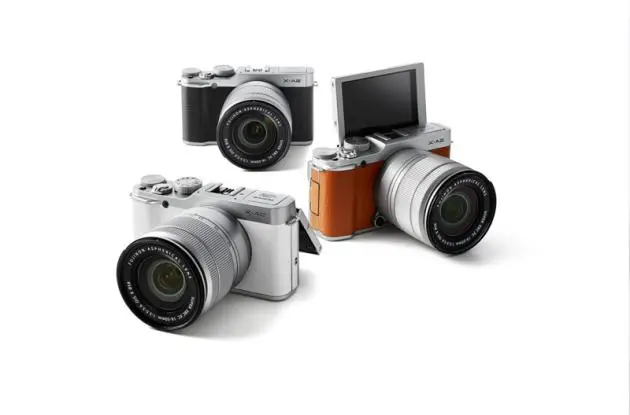
The new Fujifilm X-A2 camera comes complete with an LCD screen that flips up 175 degrees for superb selfies
THE LATEST BUDGET mirrorless interchangeable lens camera to hit the market, Fujifilm’s X-A2 captures pleasing quality photos and is fun to use.
Like the X-A1, which it replaces, the X-A2 uses a conventional Bayer-pattern APS-C CMOS sensor with 16-megapixel resolution but comes with an LCD screen that tilts upwards to 175-degrees for selfies.
Other improvements include the addition of Fujifilm’s new Classic Chrome film simulation mode, which is characterised by deep colours and rich tones, higher sensitivity and a larger battery.
The 3-inch titling screen with 920K-dot works well with the new XC16-50mm kit lens with 24mm equivalent wide-angle focal length.
To further assist the selfie-mad, the camera’s Eye detection AF function is automatically activated when you rotate the tilting LCD panel and helps to achieve superior selfies by focusing on the eyes. There are three options of Eye detection – Auto, Left Eye Priority and Right Eye Priority.
It also boasts a Portrait Enhancer mode that makes the skin look brighter and smoother. Even better, you access it from the mode dial, making it very convenient to shoot beautiful portraits.
The X-A2 has good performance too, taking just 1 second to start up and take the first shot. Shutter time lag is about 0.05 seconds.
It also comes with a quick start mode that’s automatically activated when you turn the power knob from On to Off. The X-A2 enters “sleep” mode for a maximum of 24 minutes and wakes up instantly the moment you turn it on again, reducing the normal start up time to just 0.5 seconds.
It also has a high-speed continuous shooting mode that can capture moving subjects, such as children and pets, at the rate of 5.6 frames per second for up to 30 frames.
The X-A2 is easy to operate with a dial that provides convenient access to several shooting modes. Apart from Portrait Enhancer, the dial provides access to Landscape, Night, and Sport shooting modes. Other exposure modes accessible from the mode dial are Programme AE (P), Aperture Priority (A), Shutter Priority (S), Manual (M), Custom, Scene Position, Advanced Mode, and Advanced SR Auto.
Experienced users can enjoy P, A, S and M modes while new comers can have fun using the Advanced SR Auto or Advanced Mode.
Advanced SR Auto automatically optimises shutter speed, aperture and other settings. It instantly recognises 58 scene types and then selects the most appropriate settings. But when the non-OIS lens is attached, the number of scene types is reduced to 54.
The Advanced mode is not for advanced users but for accessing shooting modes with advanced filters and the Multiple Exposure mode. The available advanced filters for artistic photography include Toy Camera, Miniature, High Key, Low Key, Dynamic Tone, Soft Focus, Pop Colour and Partial Colour (red/orange/yellow/ green/blue/purple).
For example, the Toy Camera filter |creates shaded borders as if you were |taking a photo on a toy camera while |Pop Colour emphasises contrast and colour saturation.
And you can get creative with multiple exposures. This mode allows you to shoot one photo then seamlessly merge it with another for an expressive and artistic look. Composing the second frame is made |easier because the camera displays the |first image on the screen.
Apart from using the Advanced SR Auto for the camera to recognise scenes for you, you can turn the mode dial to Scene Position to select scene modes on your own.
The available scene modes under the Scene Position dial include Portrait, Sunset, Night (Tripod), Party, Flower, Text and Fireworks.
Do be aware that Night (Tripod) is different from the Night mode that is accessible on the mode dial. The Night (Tripod) mode requires you to use a tripod and take clear shots of night scenes with a slow shutter speed.
The Night on the mode dial does not require a tripod. Instead it makes use of the high sensitivity performance of the APS-C CMOS sensor and EXR Processor II to let you capture low-light scenes with crisp clarity, free from noise.
The camera provides a Q button to |provide easy access to quickly recall up to 16 settings. These are dependent on the current exposure mode and include shooting mode, focus mode, ISO, Highlight tone, Shadow tone, colour, sharpness, image quality, film simulation, dynamic range, and flash mode.
The X-A2 also provides a Fn button that can be customised for depth-of-field preview, sensitivity, dynamic range, |self-timer, focus mode location info search, metering and film simulation.
Like other models in Fujifilm’s popular X series, the X-A2 uses Fujifilm’s film |simulations as picture styles. These include Provia (standard), Velvia (vivid), Astia (soft) and the newly introduced Classic Chrome simulation.
I tested the X-A2 with the Fujinon XC16-50mm F3.5-5.6 OIS II lends and the XC50-230mmF4.5-6.7 OIS II.
The X-A2 has 1.5x crop factor so the |16-50mm lens has focal length of 24mm to 75mm. The 24mm-focal length lens captured beautiful landscapes during the test.
The 50-230mm lens has equivalent focal length of 75mm to 345mm, so it is good for telephotography and for |capturing portraits.
Like most new cameras, the X-A2 has built-in Wi-Fi. Simply download and install Fujifilm apps to your smartphone and use the phone to browse pictures on the camera and copy the pictures to the phone for sharing with your online friends.
When the X-A2 is linked to your smartphone, you can download location data from the smartphone to tag your photos.
The X-A2 can also print wirelessly to Fujifilm instax Share SP-1 portable instax film printer. Fujifilm X-A2 with the Fujinon lens XC16-50mm F3.5-5.6 OIS II retails for Bt21,990. Pay B6,000 more and you also get the XC50-230mm F4.5-6.7 OIS II lens.
Key specs:
Image sensor: 23.6mm x 15.6mm (APSC) CMOS with primary colour filter with 16.3million effective pixels
Lens mount: Fujifilm X mount
Storage media: SD memory card / SDHC memory card / SDXC (UHSI) memory card
Sensitivity: ISO2006400 and extended ISO100 / 12800 / 25600
Exposure control: TTL 256zone metering, Multi / Spot / Average
Exposure mode: Programmed AE / Shutter priority AE / Aperture priority AE / Manual exposure
Shutter speed (with mechanical shutter): 30 sec to 1/4000 sec; Bulb: max. 60 min.
Focus Mode: Manual Focus / Area AF / Multi AF / Continuous AF / Tracking AF
Focus Type: TTL contrast AF, AF assist illuminator available AF frame selection
Focus Area: AF (49 areas with 7 x 7), Changeable AF frame size
LCD monitor: 3.0inch, Aspect ratio 3:2, Approx. 920Kdot Tilt type TFT colour LCD monitor (Approx. 100percent coverage)
Movie recording: 1920 x 1080 30p, Continuous recording: up to approx. 14 min.
Terminal: USB 2.0, HDMI mini connector
Power supply: NPW126 Liion battery
Dimensions: 116.9mm (W) x 66.5mm (H) x 40.4mm (D)
Weight: Approximately 350g (including battery and memory card)
