
Shanghai Tang shows its Chinese DNA


Play
The much-loved Hong Kong brand draws on Mongolian nomads for its new winter collection
FOR MANY fashion-conscious women in the country, China-inspired fashion is a go-to choice for special occasions, but can it fit in an everyday wardrobe?
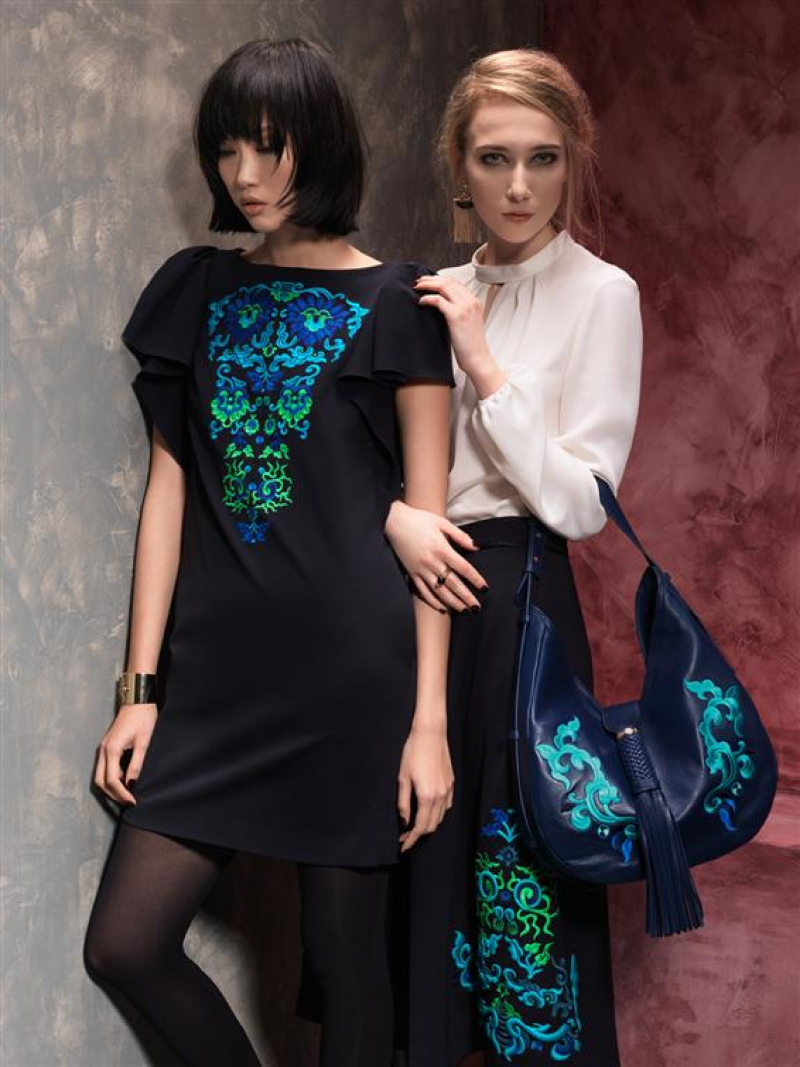
Shanghai Tang, a Hong Kong-based brand, is trying to provide the answer, and recently held a preview of its 2016 autumn-winter collection in Beijing, the first by its new creative director Raffaele Borriello. Borriello’s collection was inspired by the Mongolian nomadic mood as well as the area’s colours and textiles.
While Shanghai Tang is best known for its elaborate qipao (cheongsam), Borriello reinterpreted the garment using new materials and more body-conscious cutting.
His collection also includes a versatile daywear line that highlights Mongolian embroidery and prints.
“When you see the architecture and fabrics the Mongolians use, it’s incredibly inspiring – specially the very rich and strong visual elements. So, it was easy for me to get ideas,” Borriello explains.
Raphael le Masne de Chermont, executive chairman of Shanghai Tang, says he hopes Borriello will “take the brand to the next level of sophistication and fashion”.
“We need to inject some true international flair into the brand ... People might think that we make only traditional qipao, but that’s not what we do. We want to show people who we are today,” he says.
“Shanghai Tang, for many years, was very touristy as it targeted a Western audience. But today, it is truly a fashion brand that is based in China and sells to the global market.”
Founded in Hong Kong in 1994, Shanghai Tang is now owned by Swiss luxury giant Richemont. In its early days, most of its customers were Westerners. But now, about 60 per cent of its clientele is Chinese.
“The designs in the early days were a bit cliched with dragons everywhere,” Le Masne de Chermont admits.
He joined the brand in 2002 and quickly began to transform it into a Chinese lifestyle label with an international outlook.
“It was a very conscious decision. Our DNA is Chinese. But we are talking to global citizens with a modern interpretation of China.”
Having lived in Hong Kong for 21 years, he says he wants to make Shanghai Tang a Chinese luxury brand that the Chinese are proud of.
“Shanghai Tang belongs to China. There are a lot of cliches about China in the Western world. People don’t understand China. But we are ambassadors of a positive, dynamic China and we want to show it to the world.”
The brand is not the only one to capitalise on its Chinese origins. Emerging Chinese designers like Guo Pei are also making their presence felt in the global fashion world.
But Le Masne de Chermont says he does not see other Chinese luxury brands as competition. Instead, he considers them as allies who can help him open doors to the rest of the world.
Shanghai Tang, which celebrated its 20th anniversary last year with collections created in collaboration with Chinese designers Wang Peiyi and Masha Ma, now has about 50 stores worldwide, most of which are in Asia.
It also has one store in London and another in Miami and is now looking for a location in Paris. Despite a noticeable slowing in the luxury industry, Le Masne de Chermont says Shanghai Tang is keeping well afloat thanks to Chinese customers who just keep buying.
Dresses are the best-selling items for the brand worldwide, especially those with signature elements like embroidery and jade buttons.
Shanghai Tang now has 25 boutiques in China. It plans to open four more in Beijing and some second-tier cities in the near future.
