
Thailand’s concert boom tests venues, standards and who really benefits
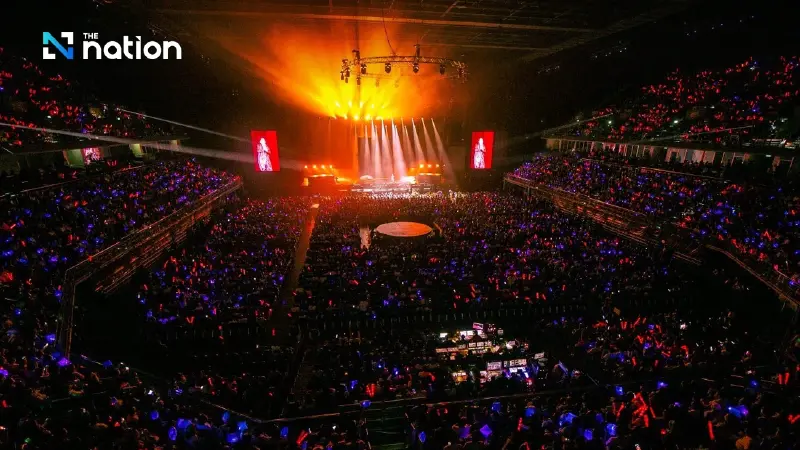


Thailand is entering a peak year for concerts and music festivals, with more than 300 music-related events expected in 2026 and global acts such as Post Malone, The Weeknd, BTS and Tomorrowland Thailand driving momentum. However, industry insiders warn that limited venues, rising foreign capital and weak local value capture could become major challenges.
Concert boom puts Thailand at a turning point
Thailand is entering a peak year for concerts and music festivals, with global acts such as Post Malone, The Weeknd, BTS and Tomorrowland Thailand driving momentum, but industry insiders warn that limited venues, rising foreign capital and weak domestic value capture could become major challenges.
The second half of 2026 is expected to be particularly active. Post Malone is scheduled to perform at Rajamangala National Stadium on September 22, while The Weeknd has announced two concerts at the same venue on October 11 and 12.
The end of the year will bring another major highlight for K-pop fans, with BTS set to return for three concerts on December 3, 5 and 6. That will be followed by Tomorrowland Thailand, which is scheduled to be held in Pattaya from December 11 to 13, marking the first time the global electronic dance music festival is staged in the country.
Industry players estimate that Thailand could host no fewer than 300 music-related events this year when concerts, fan meetings and music festivals are counted together.
More than 300 events expected this year
Data from Rocket Media Lab shows that Thailand hosted 526 concerts and fan meetings between 2023 and 2024. The number rose from 242 events in 2023 to 284 in 2024.
In 2023, Thailand hosted 220 concerts and 22 fan meetings. In 2024, the number of concerts increased to 268, while fan meetings totalled 16.
The T-pop segment has also continued to expand. SCB EIC reported that the number of major concert rounds by T-pop artists rose from 37 in 2024 to 51 in 2025. In the first half of 2026, more than 30 concert rounds had already been held.
Rachata Thunyavuthi, founder and chief executive officer of One Asia Ventures Co Ltd, organiser of the Siam Songkran Music Festival and holder of the rights to stage Tomorrowland Thailand, said Thailand now hosts at least 300 events a year.
He said the figure came from beverage-brand sponsors, who found that the number of events they supported alone exceeded 300. The actual total across the country is therefore likely to be higher.
In some weeks, as many as 30 events may be staged nationwide at the same time. However, major electronic dance music, or EDM, events remain limited, with no more than around 15 large-scale EDM events expected throughout the year.
Venue shortage remains a key bottleneck
Despite the strong growth, Thailand’s ambition to become a regional concert and festival hub faces a major infrastructure challenge.
Rachata said concert venues in Thailand remain limited and are now at a critical stage of development. When people think of major concert venues in the country, only a small number of indoor and outdoor locations usually come to mind.
Outdoor venues in urban areas are particularly difficult to find. Large open-air sites in city centres are scarce, while major events for around 30,000 people can create severe traffic problems if they are held in locations without access to mass transit.
As a result, many EDM organisers have to build temporary event spaces from scratch, adding to costs and complexity.
Rachata said Thailand had not previously invested heavily in purpose-built event infrastructure because the country already had many natural tourist attractions and entertainment destinations. This differed from Singapore, which had to invest in infrastructure to draw visitors.
However, he said the outlook was improving. The arrival of Tomorrowland Thailand has helped boost confidence among the public and private sectors, showing that concerts and festivals are no longer small businesses but key drivers of tourism and the wider economy.
He said there were already discussions about developing some sports stadiums into dome-style venues, adding that Thailand could see new purpose-built event venues emerge within the next one to two years.
Chinese capital raises industry concerns
The rapid growth of Thailand’s concert economy has also raised concerns about foreign capital, particularly Chinese investment, entering the local event and fan-meeting market.
Fan communities have increasingly pointed to Chinese-backed organisers entering both small and large-scale concerts and fan meetings, with concerns focusing on ticket prices, event-management systems and crowd-control standards.
Rachata said more Chinese investors were now looking for opportunities in Thailand’s event and music festival market. He described the issue as one of the industry’s emerging pain points, although he said the music festivals under his management had not yet been directly affected because Chinese organisers had not entered the festival segment at that scale.
He said One Asia Ventures had previously been approached by several Chinese investment groups, both to act as an event organiser and to explore joint ventures. However, the company rejected the proposals after studying their business models and concluding that the long-term impact could outweigh short-term benefits.
“At first, we saw it as a possible opportunity because new capital could help the market grow faster and create new business opportunities. But after studying the actual operating models, we found there were many issues that required deeper consideration beyond immediate returns,” he said.
Who benefits from the concert economy?
Rachata said the key question was not simply competition between Thai and foreign operators, but the structure of the industry itself.
Some foreign organisers bring in their own teams, production systems, suppliers and business networks, leaving Thai companies with only a limited role in the value chain. That means money from major events may not be distributed widely to local crews, contractors, suppliers or service providers.
He acknowledged that the issue is complex. In some cases, artist agencies require organisers to use their own teams or equipment, including lighting, sound systems and stage structures. In the past, Thailand was not always fully ready to supply everything required for major international shows, leading to the import of equipment and specialist teams.
Import-tax exemptions for certain event-related equipment have also made the process easier.
However, industry observers say Thailand must now consider how to ensure that the benefits of its concert boom are captured more broadly within the domestic economy.
