
Netflix sees Thailand as a potential creative hub like South Korea


Netflix has invested about US$200 million in Thailand and urges rights protection, creative freedom and partnerships to take Thai content global.
- Netflix identifies Thailand's potential as a creative hub, similar to South Korea, due to its skilled professionals, production infrastructure, unique filming locations, and government support.
- The company has backed this belief by investing approximately US$200 million in Thailand, which supports local jobs, licenses Thai content, and funds skills development programs.
- A Netflix executive urged Thailand to strengthen intellectual property (IP) protection and ensure creative freedom to help the industry build confidence and compete internationally.
- Developing this creative hub could boost Thailand's economy and tourism, as global exposure to Thai stories increases interest in the country and its culture.
Netflix believes Thailand has the potential to become a global creative-industry hub like South Korea, citing the country’s talented professionals, production networks, filming locations and government support. Andrew Ure, the company’s vice president of global affairs for Asia-Pacific, outlined that assessment at a Bangkok forum on October 13, 2026.
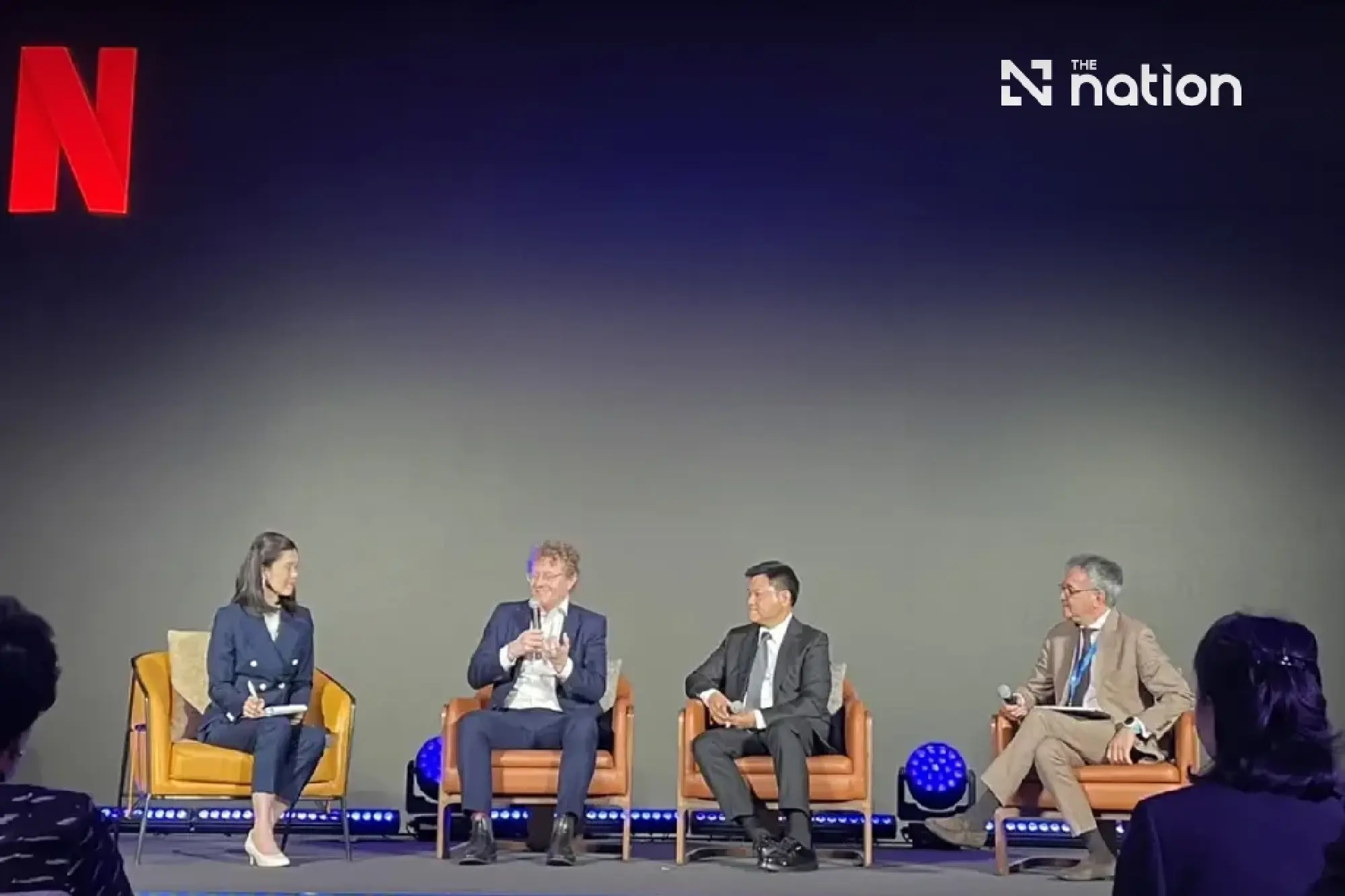
Ure was speaking at “CREATIVITY AS CAPITAL: Driving the Next Growth Frontier”, an affiliated programme of the 2026 Annual Meetings of the International Monetary Fund (IMF) and World Bank Group. He addressed a frequently raised question about Thailand’s creative industries and soft power: whether the country could follow South Korea’s example.
Thailand’s experience in television drama production and distinctive storytelling provide foundations for work that can reach international audiences, Ure said. He emphasised the importance of private-sector partnerships in turning those strengths into business opportunities.
Netflix’s US$200 million investment supports Thai jobs
Netflix has invested approximately US$200 million in Thailand, supporting employment from production crews to drivers and related businesses, according to Ure. The company has also purchased licences for content from Thai producers, generating income for local companies and supporting the wider production industry.
Netflix has partnered with Thailand’s Creative Economy Agency (Public Organization), or CEA, on content-industry skills programmes, including Content Lab. Ure cited around 500 people trained, highlighting the importance of developing talent alongside production infrastructure and industry support.
For Ure, bringing Thai content to global audiences offers more than an opportunity to export entertainment. It can generate economic value, create jobs, develop skills and strengthen the country’s soft power over the longer term.

Netflix urges stronger rights protection and creative freedom
Thailand’s investment incentives rank among the world’s leading schemes, Ure said, while calling for stronger intellectual property (IP) protection and effective enforcement to build confidence among producers and rights holders.
Regulations in Thailand should give businesses and creators the freedom to develop a diverse range of work capable of competing internationally, according to Ure. He sees cooperation between the government and private-sector partners as important to the industry’s long-term development.
Thai content could boost tourism and cultural understanding
Thailand’s creative economy offers benefits in three areas: economic development, culture and diplomacy, Ure explained. Connecting Thai stories with international viewers could increase interest in the country and its filming locations while encouraging understanding between cultures.
World Bank figures cited at the forum indicated that people who watched content from a particular country were twice as likely to visit its filming locations.
Thailand’s varied filming locations and established tourism industry give it an advantage in attracting that interest, according to Ure. Further investment in creative industries could increase tourism-related value and help distribute income to different parts of the country.
Netflix sees partnerships with Thai companies and creators as an opportunity to showcase local capabilities and help overseas audiences discover and appreciate Thai stories. Ure highlighted the role of content in connecting people from different cultural backgrounds.
Netflix sees AI as a tool rather than a replacement for creators
Ure described artificial intelligence (AI) as a production tool rather than a substitute for human creativity. Storyboarding and post-production were among the stages where the technology could support creative work.
Smaller creators and producers with limited budgets could use AI to strengthen their production capabilities and bring more complex or ambitious ideas to the screen, Ure said.
Netflix continues to prioritise high-quality, human-centred content, Ure stressed. While AI can support the production process, people’s creativity and skills remain central to developing the work.
