
Wok this way: Thailand’s shophouses shape Bangkok’s Michelin dining scene
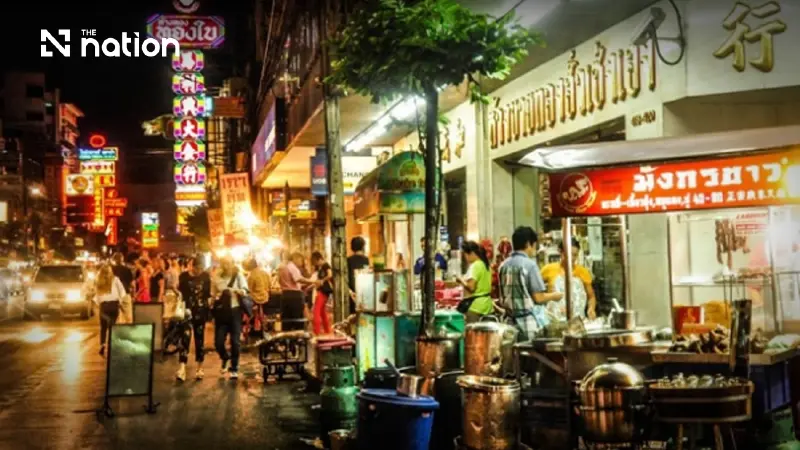


Thailand’s historic shophouses are redefining Michelin-level dining, turning Bangkok’s heritage, wok craft and street-side energy into culinary capital.
- Traditional Thai shophouses are being transformed into prominent venues for Bangkok's acclaimed and Michelin-recognized restaurants.
- This trend creates a unique "high-low" dining experience, blending the authentic energy of street-style wok cooking with the precision of fine dining.
- Chefs are leveraging the heritage of family-owned shophouses, turning inherited spaces and traditions into a core part of the modern, Michelin-level culinary concept.
- The Michelin Guide's expansion in Thailand increasingly recognizes this fusion, where local settings and cooking methods are central to the fine dining scene.
In Bangkok, the dining room of the moment does not always arrive polished in marble and glass. It may sit behind a narrow frontage, up a steep old staircase, beside the roar of a wok, or inside a building that still carries the memory of trade, family and neighbourhood life.
The Thai shophouse, once regarded as everyday urban architecture, is becoming one of the country’s most valuable culinary stages. Its appeal lies in a delicious contradiction: food can be precise without becoming sterile, and refined without losing the heat, smoke and instinct that made Bangkok one of the world’s great eating cities.
Where street fire meets star power
Jay Fai, the one-Michelin-starred restaurant in Bangkok’s Phra Nakhon district, remains the clearest symbol of this high-low movement. Its fame rests not on theatrical plating, but on command of flame, timing and ingredients.
The crab omelette has become a Bangkok legend, while wok-fried seafood, curries and noodle dishes show why the experience stays in the memory long after the queue has ended. The wait is part of the ritual; the reward is food that proves street-side confidence can stand beside global fine dining.
In Yaowarat, Potong, another one-Michelin-starred restaurant, offers a different but equally powerful expression of the same idea. Led by Chef Pichaya “Pam” Soontornyanakij, the restaurant occupies her family’s former Chinese herbal-medicine building, turning inheritance into a contemporary Thai-Chinese dining language.
Its design philosophy is built around juxtaposition, placing distinct elements side by side to create meaning through contrast. Across the food, ambience, drinks and service, Potong uses this idea to show how memory can be transformed into a modern dining experience.

Heritage becomes Thailand’s culinary capital
For restaurant managers and food-focused travellers, this is more than nostalgia. It is intellectual property on a plate. Thailand’s strongest culinary brands are increasingly built from things that cannot be copied easily: a grandmother’s method, a seasoned wok, a shop sign, a lane, a building, a neighbourhood rhythm.
The Michelin Guide Thailand’s expansion reinforces that point. Fine dining here is no longer confined to hushed rooms and imported rituals. Bangkok’s energy comes from a broader ecosystem in which street food, chef-led casual dining, restored buildings and ambitious tasting menus strengthen one another.
That is Thailand’s advantage. It does not need to choose between the plastic stool and the white tablecloth. Its next-generation dining scene is raw and refined, informal and exacting, local and global.
